TheJakartaPost
Please Update your browser
Your browser is out of date, and may not be compatible with our website. A list of the most popular web browsers can be found below.
Just click on the icons to get to the download page.


Popular Reads
Top Results
No results found. Please check your search term and try again
Can't find what you're looking for?
View all search results
Popular Reads
Top Results
No results found. Please check your search term and try again
Can't find what you're looking for?
View all search resultsWomen unite to promote sanitation in East Jakarta
UPRIVER: Kampung Pulo residents use floating community toilets on the Ciliwung River to bathe and wash clothes
Change text size
Gift Premium Articles
to Anyone
Share the best of The Jakarta Post with friends, family, or colleagues. As a subscriber, you can gift 3 to 5 articles each month that anyone can read—no subscription needed!

UPRIVER: Kampung Pulo residents use floating community toilets on the Ciliwung River to bathe and wash clothes. (JP/Tertiani ZB Simanjuntak)
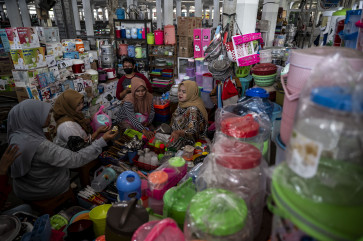
Female residents of Kampung Pulo, a flood-prone neighborhood in Kampung Melayu subdistrict, East Jakarta, banded together Thursday to determine the cause of their area's frequent floodings and lack of drinkable water.
The group of about 100 women, mostly comprised of housewives, put aside their daily activities for two hours and put their heads together to find a solution to the water crisis plaguing their poor, densely populated neighborhood.
"We're still mapping the problems and their doable solutions before another meeting next week, when we'll draw up a plan," said Neneng, 53, a mother of three who runs a kiosk selling cellular phones and phone credit vouchers.
Over the past two months, during the height of the rainy season, the neighborhood, which sits on the banks of the Ciliwung River, has been frequently submerged in floodwater between 50 centimeters and 1.5 meters deep.
The housewives at the meeting appeared to have all the answers to the problem.
"It's either dredging the waste-clogged river or building embankment walls. Of course, no more throwing garbage into the river.
"But the main problem, we think, is neither the lack of money or tools to do it, but rather a lack of awareness among residents, especially men," Neneng said.
Thanks to Quadrant Utama, an NGO which has provided advocacy and education on water, sanitation and environmental issues since 2005, the 100 women who regularly attend the NGO's discussion classes have become aware of their right to clean water and proper sanitation.
The women have also taken action to mobilize residents to clean up the neighborhood before the rainy season starts and after flooding.
Quadrant team leader Rossy said the women had started to question the role of the government in protecting their rights.
"They realized it was no use waiting around for the government to help alleviate the problem, so they agreed they would be better off taking matters into their own hands," she told The Jakarta Post on the sidelines of the discussion.
The meeting's attendees said there was a lack of clean, affordable water sources in the neighborhood.
Many of the women, those who work as clothes washers or snack sellers in front of their homes because their husbands are unemployed, can not afford tap water subscriptions and cited the alternative groundwater as oily and contaminated with household waste.
An alternative for them is to buy a 15 liter water container costing Rp 3,500 (US 30 cents) which can sustain a family for two days, and kerosene priced at Rp 5,000 per liter to boil the water.
"We have received the central government's free package of gas stoves and 3-kilogram cylinders of liquefied petroleum gas (LPG), but most of the residents can not operate them for fear of a possible explosion, so we still rely on kerosene as cooking fuel," said Ade Effendi, a community chief in the neighborhood.
The government is phasing out the much-subsidized kerosene in households and micro businesses, replacing it with LPG.
"Fewer and fewer residents take water from the river to cook or to drink, while the number of occurrences of sanitation-related diseases, including diarrhea and dengue fever, has dropped," said Mohamad Yunus, another community chief in the area.
There is still a long way to go before residents can treat their own water sources for safe consumption.
"We haven't reached the point where they can take the initiative themselves to treat the water because one or two of them continue to bleach the river water they use to wash dishes and vegetables. But they are getting there," said Dewi, a Quadrant tutor.