TheJakartaPost
Please Update your browser
Your browser is out of date, and may not be compatible with our website. A list of the most popular web browsers can be found below.
Just click on the icons to get to the download page.


Popular Reads
Top Results
No results found. Please check your search term and try again
Can't find what you're looking for?
View all search results
Popular Reads
Top Results
No results found. Please check your search term and try again
Can't find what you're looking for?
View all search resultsOn-year inflation hits 22-month high in July
On-year inflation hit a 22-month high in July as the second-round effects of the May fuel price increases were yet to fully materialize, providing leeway for the central bank to raise its benchmark interest rate
Change text size
Gift Premium Articles
to Anyone
Share the best of The Jakarta Post with friends, family, or colleagues. As a subscriber, you can gift 3 to 5 articles each month that anyone can read—no subscription needed!

On-year inflation hit a 22-month high in July as the second-round effects of the May fuel price increases were yet to fully materialize, providing leeway for the central bank to raise its benchmark interest rate.
A higher Bank Indonesia (BI) rate would mean the interest rates of bank loans would also be adjusted upward, discouraging lending for both consumers and companies and adding a threat to economic activities in a country where consumption is the main driver of growth.
The Central Statistics Agency (BPS) reported Friday that inflation in July rose 11.9 percent from a year earlier, up from 11.03 percent in June, due mostly to the increasing prices of food and fuel.
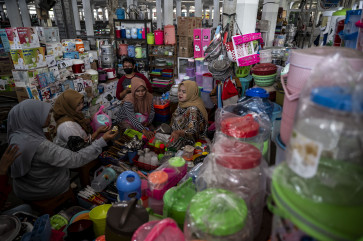
"Foods, particularly eggs and chickens, contributed to inflation ... caused by supply shock, as the prices of (chicken) feeds soared," BPS chairman Rusman Heriawan said.
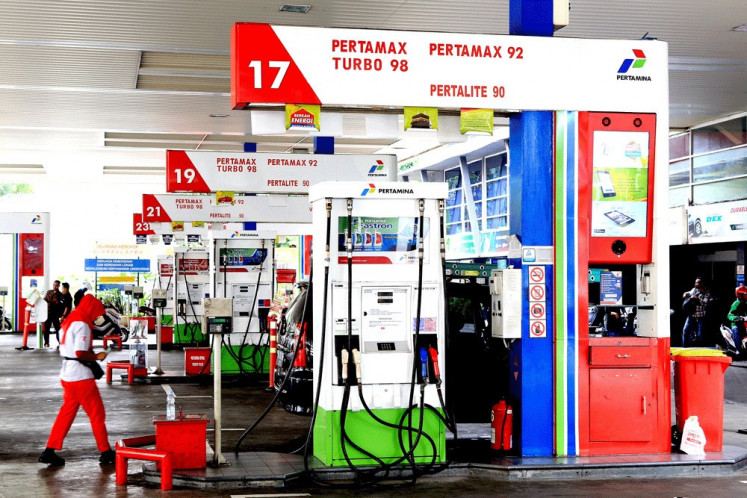
State oil and gas firm PT Pertamina raised the price of 12-kilogram-cylinder liquefied petroleum gas (LPG) by 24 percent on July 1.
Monthly inflation in July rose 1.37 percent from June. BPS surveyed 66 cities, all of which suffered inflation. Manokwari in West Papua had the highest rate at 4.33 percent, while Banda Aceh had the lowest at 0.25 percent.
From January to July, inflation accumulated to 8.85 percent, meaning the government may face difficulties in keeping full-year inflation below its 11.4 percent target.
"It will depend on the next five months. There will be the fasting month (in September), Idul Fitri (in October) and Christmas (in December). If the government wants to keep inflation at around 11 percent, it must keep supply chains," Rusman said.
Danareksa Research Institute chief researcher Purbaya Yudhi Sadewa said inflation in June was "above expectations".
"The (second-round) effects of the fuel prices hike, surprisingly, was seen in July. Increasing price, and shortages, of LPG made inflation worse," Purbaya said.
"Rumors of a rise in electricity rates and another rise in fuel prices also increased inflation expectations."
The central bank, Purbaya said, would likely raise its interest rate by 25 basis points to 9 percent at its collegial meeting next week to cushion inflation expectations.
BI had raised its interest rate by 25 basis points for three consecutive months from May.
As long as BI maintains its key rate below 9.5 percent, the economy will still grow, while dampening inflation expectations, Purbaya said.