TheJakartaPost
Please Update your browser
Your browser is out of date, and may not be compatible with our website. A list of the most popular web browsers can be found below.
Just click on the icons to get to the download page.


Popular Reads
Top Results
No results found. Please check your search term and try again
Can't find what you're looking for?
View all search results
Popular Reads
Top Results
No results found. Please check your search term and try again
Can't find what you're looking for?
View all search resultsBudget bottlenecks result in more congestion
Many residents were irked by the decision of the city administration to begin repairing a number of main thoroughfares, which involves digging up and closing the roads, right in the middle of the wet season
Change text size
Gift Premium Articles
to Anyone
Share the best of The Jakarta Post with friends, family, or colleagues. As a subscriber, you can gift 3 to 5 articles each month that anyone can read—no subscription needed!

M
any residents were irked by the decision of the city administration to begin repairing a number of main thoroughfares, which involves digging up and closing the roads, right in the middle of the wet season.
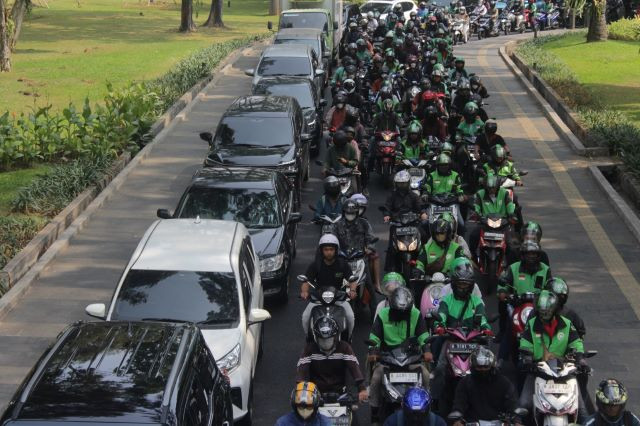
“Didn’t they think the work would worsen the already bad traffic in the area?” quipped Cecilia Putri Agustioko, 24, who works at an office on Jl. Thamrin, Central Jakarta.
Cecilia went on to complain that the worsening traffic had taken up more of her time during rush hours even when she rides her motorcycle from her home in Kuningan, South Jakarta.
“It must be even worse for motorists who drive,” she told The Jakarta Post.
Rindu Ragilia, 26, who takes public transportation to her office on Jl. Kebon Sirih, voiced a similar
concern.
She said that due to the repair works, afternoon traffic had become more frustrating.
“They start a project in an area where the city’s traffic jams are centered,” she said.
Some of the work is part of the City Public Works Agency’s project to dredge and widen a number of underground sewers, including the ducts that cut through Jl. Thamrin, Jl. Sabang and Jl. Jaksa.
Similar work is also being done in areas like Jl. Rasuna Said in South Jakarta, Jl. Pangeran Jayakarta in West Jakarta and Jl. Medan Merdeka Timur in Central Jakarta, all known for congestion.
Head of the City’s Public Works Agency Ery Basworo told the Post that the agency was not to blame for all the mess, saying it was how the bureaucracy works.
“After the budget for our proposed projects is approved in January, we need to wait for the tenders to be completed in August or September before we can sign contracts with the winners of the bids,” he said.
The wet season usually starts in September and reaches its peak from December to March.
For 2010, the city administration has earmarked Rp 1.7 trillion (US$190.4 million) for construction and repair projects conducted by the Public Works Agency.
Among the agency’s main projects are the Angke flyover in North Jakarta and Kalibata Bridge in South Jakarta.
Data from the Finance Ministry reveals that bureaucratic red tape has resulted in more than 35 percent of local budgets being spent in the first half of the fiscal year, less than the expected 50 percent.
In the past five years, local administrations, including Jakarta, have only been able to spend an average of 90 percent of their budgets, and a spending spree regularly occurs at the end of the year.
The government is trying to solve the problem by revising regulations related to the procurement of goods and services, construction services and state budget management.
President Susilo Bambang Yu-dhoyono said earlier this year that the revised regulations were expected to come into effect for next year’s budget.
Ery said that the revision would allow the Jakarta administration to hold tenders early in the year and start its projects sooner.
It appears that Cecil, Rindu and all Jakartans will have to bear with the snarling traffic a bit longer.