TheJakartaPost
Please Update your browser
Your browser is out of date, and may not be compatible with our website. A list of the most popular web browsers can be found below.
Just click on the icons to get to the download page.


Popular Reads
Top Results
No results found. Please check your search term and try again
Can't find what you're looking for?
View all search results
Popular Reads
Top Results
No results found. Please check your search term and try again
Can't find what you're looking for?
View all search resultsGreen gold: Making millions out of plants
Change text size
Gift Premium Articles
to Anyone
Share the best of The Jakarta Post with friends, family, or colleagues. As a subscriber, you can gift 3 to 5 articles each month that anyone can read—no subscription needed!
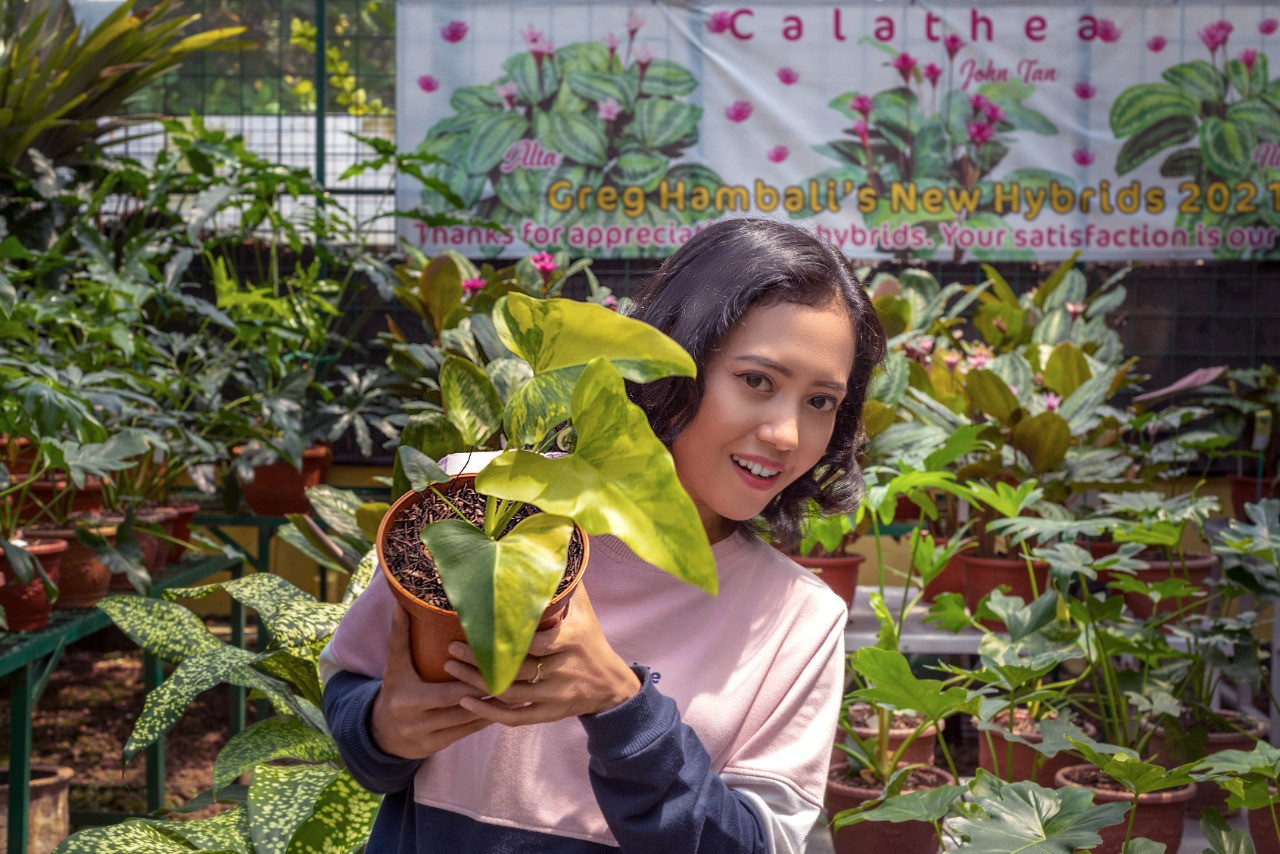
Costing millions, sales of plants such as monstera, aglaonema, succulents and scindapsus have thrived during the pandemic.
Homegrown greenery is a welcome trend for Hidayatun Mustagfiroh, who prefers to be called Firoh. Previously, she faced a financial slump when she had to close her numerous beverage stalls and their franchisees in Yogyakarta, Makassar, Depok and Bogor.
"The malls were closed, so we closed [our business] as well. It was difficult to turn it into a home business, so I took a break," said the mother of two. "During that break, I took care of the plants, initially cheap plants and then I became more and more aware of other types of plants."
Firoh bought her first expensive green baby out of curiosity. "I got hooked on this one plant which, in my opinion, was expensive and I thought that price was too ridiculous. I bought it for 1 million rupiah [US$70]. It was a monstera."
As her business knowledge grew, Firoh changed gears from being a customer to a seller. She can even sell plants that are not yet in her possession. "I once wanted to buy the plants in a nursery that I [liked but could buy because] they were very expensive. I posted it on my social media, the response was good — people thought I was selling."
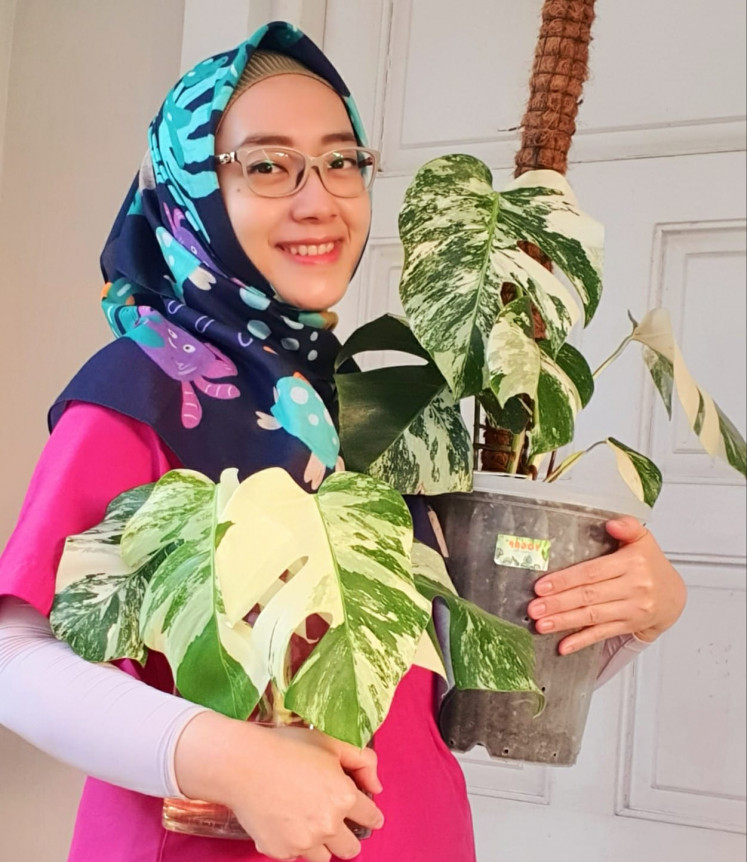
And now sell them she does. "My net turnover as of this month is almost Rp 100 million [$7,060]," she even once sold a pot for Rp 130 million ($9,180).
Wall Street vibe
Muhammad Sibaweh was a herbal and handicrafts entrepreneur before he started his plant business in 2019. The 21-year-old is now a known seller among plant lovers in Southeast Asia, especially Thailand, Malaysia and Vietnam.
"I started posting for fun in various Thai and Malaysian plant groups. Alhamdulillah [praise be to God], in March 2021, I got my first customer from Nakhon, Thailand," said the resident of Jember regency, East Java.
Neither Firoh nor Sibaweh have their own plant nursery. "These [plant] farmers I know do not want the hassle of online business. If we can sell, they will provide photos for me," said Firoh. "In this plant business, almost no capital is needed, only guts. Anyone can do this, and I'm grateful to know that."
Firoh visits her affiliated greenhouses to take pictures of the plants for sale, and she posts them on a certain Facebook group of plant enthusiasts. She spends some of her allowance on cheaper plants or the ones she personally likes.
"I buy plants that have prospects, and when an offer comes up, I will sell them," she said. "I once bought a single-leaf Janda Bolong [Monstera adansonii] for 20 million [$1410]. [It grew and] the number of leaves increased, so I chopped it up [into several baby plants]. I earned much more than what I spent."
The business is not without risk. Selling living things, especially fussy and frail goods like exotic plants, means that they might perish any time.
"Before [each export] transaction, I establish a commitment contract with the importer [from the other country]. If the goods are damaged due to my mistake and negligence, it is my responsibility," Sibaweh explained.
"I would replace the item, or they may pay less for it. But if it is damaged due to negligence of the delivery party, then it is beyond my responsibility, and the importer bears the risk."
Firoh also has a strict refund policy. After all, although she focuses her business on domestic collectors, there are a lot of unwanted possibilities when it comes to shipping potted plants.
"I once sent one to a collector in Riau, the packaging was neat, but the leaves were damaged. I asked for the item to be returned to me, and only after it arrived did I give the refund," said Firoh." I asked them to return it since I might be able to revive the plant and sell it again."
No price tags for hobby
The pandemic draws some people closer to nature, and even those without previously proven green thumbs now bend down on one knee and spray plant vitamins on their plant beauties of choice.
"I started collecting at the beginning of the pandemic, around 2020," said Tania Paramita, a pediatrician in South Jakarta. "[I started with] the Monstera family, the regular green ones — deliciosa or ursiana — and Monstera variegata. I also like Syngonium and Philodendron.”
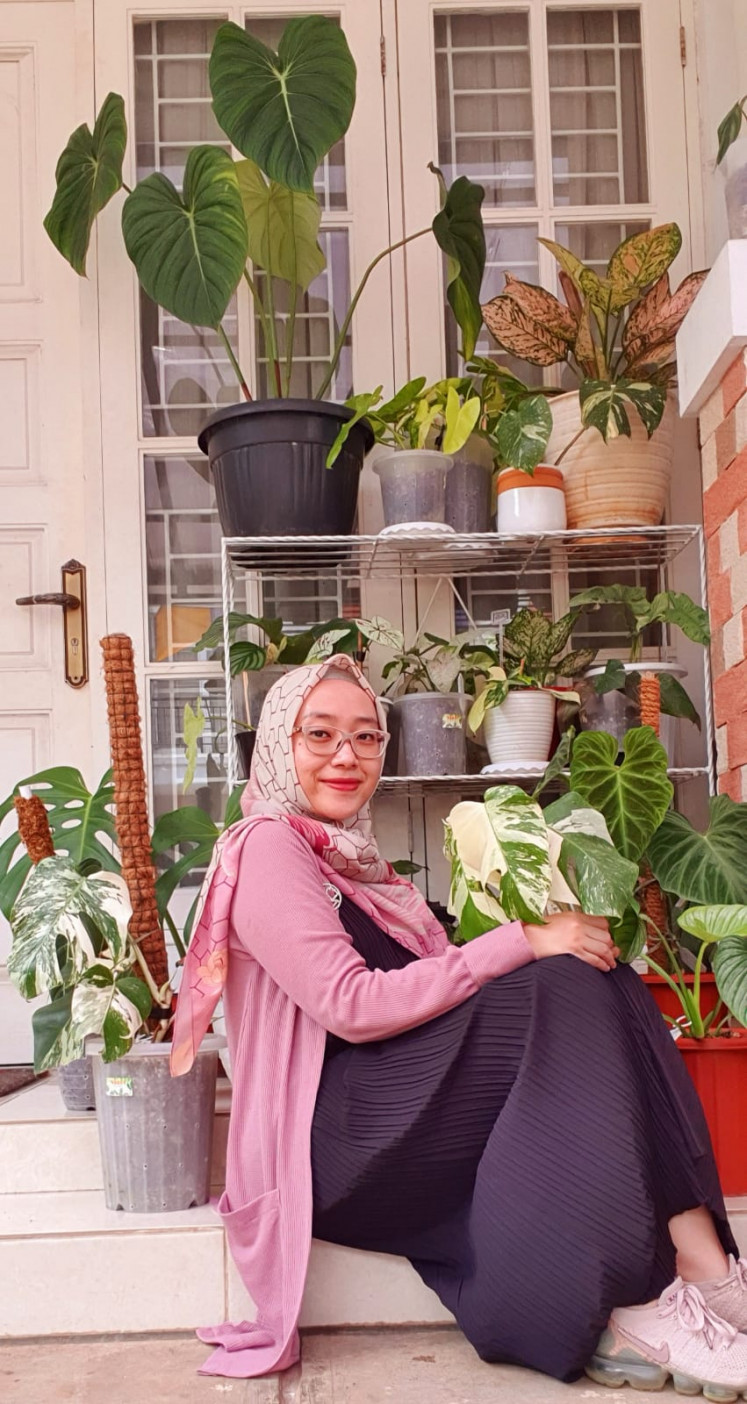
Tania herself never spends more than Rp 15 million [$1060] a pot, but she knows that several collectors are willing to pay hundreds of millions for these exotic plants. She tends to her pricey collection carefully, including strategic placement of each pot so they get adequate shade or sunshine.
Ivo Anjani Putrie, who collects Anthurium regale, or painter's palette, admits that nursing these green babies can be tricky. "I can spend hundreds of thousands to millions of rupiah just to take care of them," said the housewife. "My husband sometimes complains, especially if the plant dies and I ask to buy a new one."
[gal:3]
Despite the risk, both Ivo and Tania share the same happiness as their house gets greener. There's the prospect of profit as well. "If I manage to grow them [well], I can propagate and resell them," Ivo explained.
The hobby is not cheap, and some people would sneer at the idea of spending millions on these plants. "It annoys me sometimes when people say, 'It's better to donate to the poor [than spend money on plants],' but if people can afford it, it must mean that they are doing pretty decent financially. Besides, we can't judge people based on their hobby spending."
Sibaweh decided to brush the negative comments aside. "I just don't care. After all, I started [this business] from a hobby, not from mere wishful thinking."
ohmg