TheJakartaPost
Please Update your browser
Your browser is out of date, and may not be compatible with our website. A list of the most popular web browsers can be found below.
Just click on the icons to get to the download page.


Popular Reads
Top Results
No results found. Please check your search term and try again
Can't find what you're looking for?
View all search results
Popular Reads
Top Results
No results found. Please check your search term and try again
Can't find what you're looking for?
View all search resultsSafe and sound ‘mudik’ in the new normal era
The concern is whether villages are well prepared to receive the influx of so many urban people, especially if rural people are not yet fully vaccinated against COVID-19.
Change text size
Gift Premium Articles
to Anyone
Share the best of The Jakarta Post with friends, family, or colleagues. As a subscriber, you can gift 3 to 5 articles each month that anyone can read—no subscription needed!
N
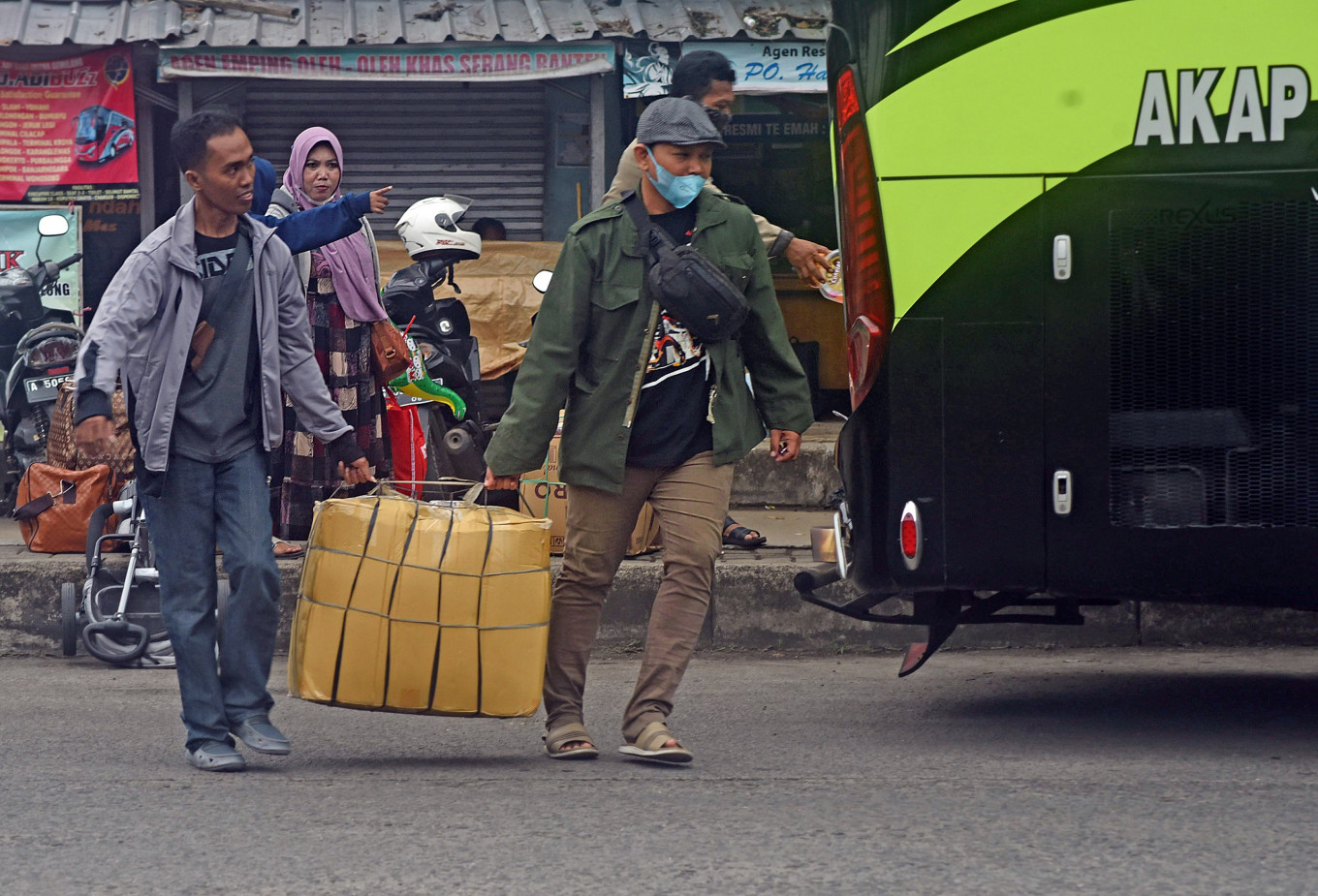
o one thought the tradition of mudik (exodus) – the returning to one’s hometown, usually to spend Idul Fitri or Lebaran with the family that has characterized Indonesian society since the colonial era – would suddenly stop in 2020 and 2021 because of the COVID-19 pandemic.
Luckily, this year the pandemic is starting to subside, prompting the government to allow the annual Idul Fitri exodus to resume this year. It is important therefore to observe the mudik phenomenon in this “new normal” era, in particular those who are traveling and the situation in their hometowns.
Although urban people have their own udik (roots), they cannot return home at any time they wish during the pandemic. Therefore, even if the pandemic is easing, the door to rural areas cannot just open or close at any time. This door seems to have a schedule when to open and accept the urbanites as honorable guests. Those who arrive outside of the normal schedule could be seen as uninvited visitors.
A person has to have a valid reason why when returning to their hometown, such as to visit ailing parents, take the kids for a holiday, for a family event or reunion or to celebrate Idul Fitri.
Of course, the parents’ door in the home village is always open for their children and grandchildren. But still, they need some reasons for the unscheduled homecoming, or else neighbors will ask, if not gossip around.
In the absence of clarity or lack thereof about the reasons for an unscheduled mudik, both parents and their visiting children feel uncomfortable. It is quite common for surrounding neighbors to speculate that the children came back to their home village because they could not survive in the city.
Fortunately, in the lexicon of Indonesians, especially for the Javanese and Sundanese, there is a term rural people are familiar with — tetirah, which in general means to rest one’s mind or to seek mental relaxation.
This word seems to have magic power. The parents in the hometown, and the person going back for a visit without a reason, immediately gain acceptance for why someone would go back home outside the normal agenda.
Tetirah also refers to a situation in which a person needs time for physical and spiritual rest by moving away from a hectic routine. In religious terms, this is called uzlah or hijrah (transformation). Therefore, it is usually applied to a person who is in a process of recovery from a physical or mental or emotional/spiritual condition or illness.
Mudik is often a reason for city dwellers to periodically engage in tetirah. As is commonly known, people narrate Idul Fitri as a moment of returning to the starting point. Sociologically, mudik is also often interpreted as a time to display the results of one’s hard work elsewhere. Consequently, mudik is a time to “show off” success.
Whatever the conditions of life of the urbanized people in their city of residence, the old folks in the village have to be ready to welcome them back. Parents oftentimes display their acceptance of their returning children by providing them with physical and spiritual logistics.
Some holiday revelers are really successful and therefore make their parents proud when returning home. For others, mudik is a time to enjoy nostalgic moments and recharge their spiritual batteries after a year-long struggle.
The talk of banning mudik to break the chain of COVID-19 transmission seems to be irrelevant now. The Transportation Ministry has estimated this year’s Idul Fitri exodus will involve about 85 million people, up from the pre-pandemic level of 50 million in 2019. As usual Java’s towns are the destination of most holidaymakers.
The concern is whether villages are well prepared to receive the influx of so many urban people, especially if rural people are not yet fully vaccinated against COVID-19. Worse still, in rural areas the government efforts to fight the virus have been met with hesitancy as many people deny the existence of COVID-19.
About a year ago, when the Delta variant was spreading fast, I conducted preschool teachers’ empowerment training in a rural area. Participants of the training refused to take swab tests and were only willing to wear masks. Many local people stared at us who always wore masks as if the health protocol was “city folks’ behavior”, which they deemed as excessive.
Another thing to consider is the economic recovery of the holiday revelers. Many of them may not have fully regained their feet due to the harsh impact of COVID-19. It is very understandable if they return home for tetirah because they only have their hometowns as a healing place after living through the storm of the pandemic.
Perhaps the central and regional governments need to anticipate some travelers potentially deciding to stay longer in their hometowns, waiting for the economy to improve or return to the pre-pandemic level.
Let’s hope that mudik in this new normal era will help rebuild the fighting spirit of the Indonesian people, who have actually proven their resilience after more than two years of the pandemic.
But tetirah or recovery through Lebaran is not just for those who will eventually resume their struggle in the cities, but also for the villages themselves, because they will have to deal with the problems that come with the Idul Fitri exodus.
Anyway, enjoy your mudik!
***
The writer is a researcher at Rumah KitaB.