TheJakartaPost
Please Update your browser
Your browser is out of date, and may not be compatible with our website. A list of the most popular web browsers can be found below.
Just click on the icons to get to the download page.


Popular Reads
Top Results
No results found. Please check your search term and try again
Can't find what you're looking for?
View all search results
Popular Reads
Top Results
No results found. Please check your search term and try again
Can't find what you're looking for?
View all search resultsIndonesia's population is officially aging
The share of the elderly population continues to climb and exceed10 percent for the first time in 2025.
Change text size
Gift Premium Articles
to Anyone
Share the best of The Jakarta Post with friends, family, or colleagues. As a subscriber, you can gift 3 to 5 articles each month that anyone can read—no subscription needed!
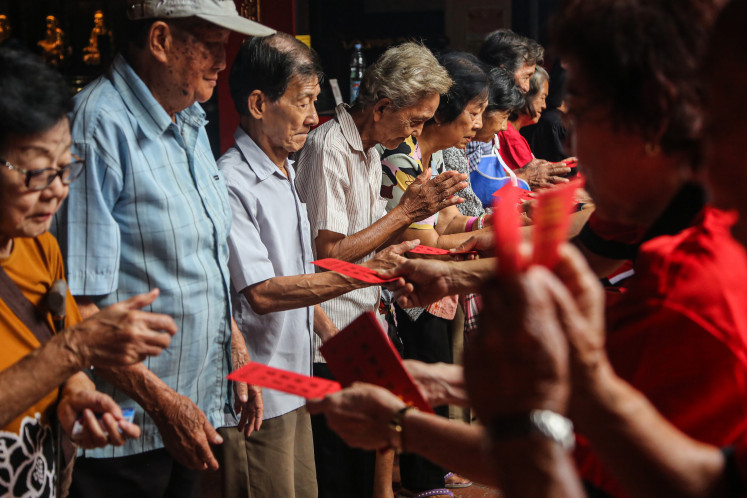
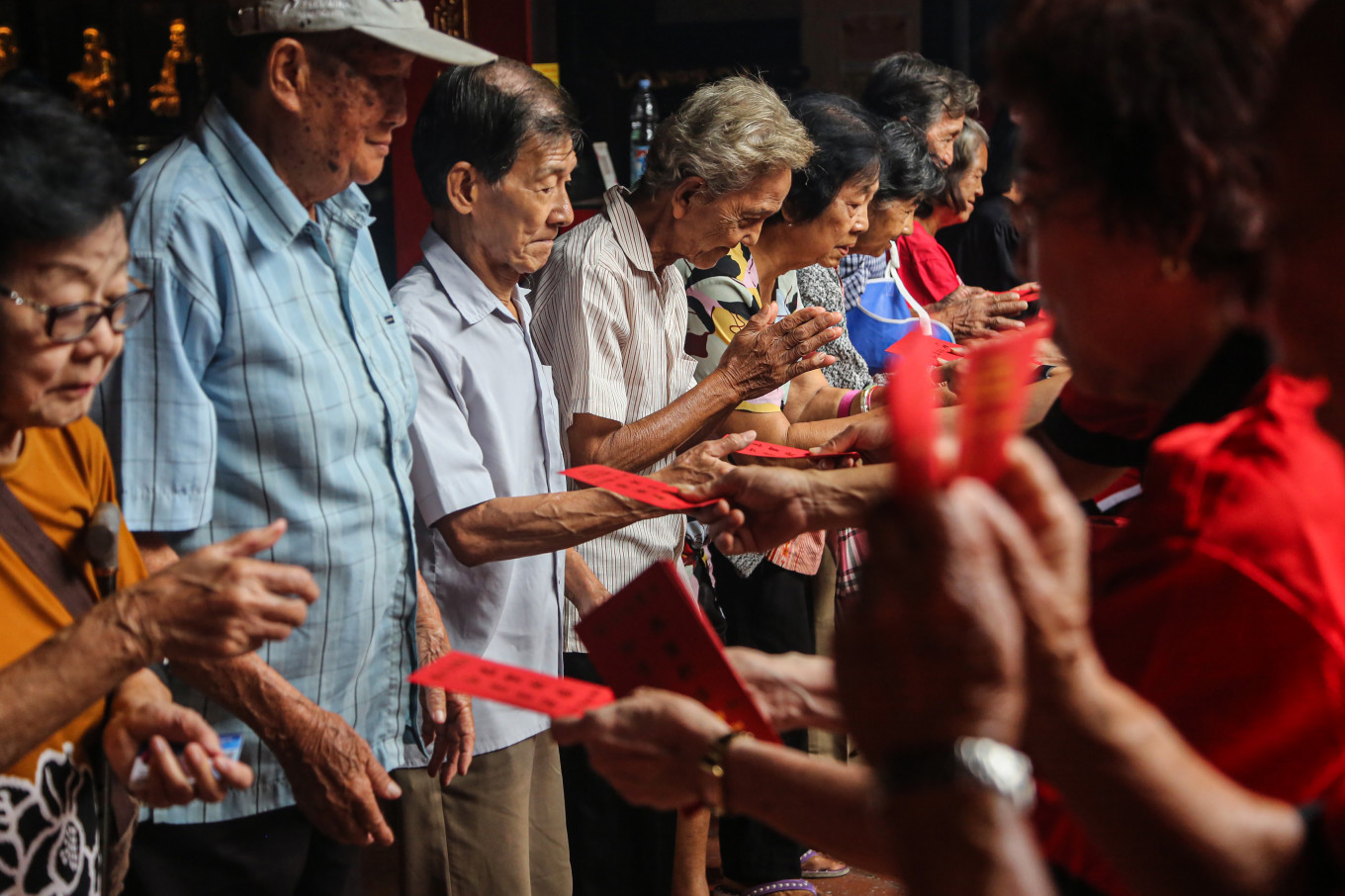 Everyone wins: Elderly residents receive cash-filled red envelopes from Tay Kak Sie Chinese Temple Foundation officials on Feb. 1 during an event to distribute angpao at the grand temple in Semarang, Central Java. The tradition also includes the distribution of basic food staples for about 1,500 elderly people and underprivileged residents as an expression of social care ahead of the Lunar New Year. (Antara/Makna Zaezar)
I
ndonesia has officially entered the phase of an aging population, which spells trouble for economic development if the country fails to make use of its remaining demographic dividend.
The 2025 Intercensal Survey (SUPAS) published by Statistics Indonesia (BPS) on Tuesday shows that the percentage of the elderly population has climbed to 11.97 percent, breaching for the first time the 10-percent threshold used to differentiate between a young population and an aging one.
BPS head Amalia Adininggar Widyasanti told The Jakarta Post on Thursday that the threshold was defined in reference to the United Nations Department of Economic and Social Affairs. The body, and a 1998 Indonesian law, define elderly as anyone aged 60 or above.

The elderly population share has continued to climb in the survey conducted every five years, from 7.59 percent in 2010 to 8.47 and 9.93 percent in the subsequent surveys, before reaching the current level.
Amalia revealed that Indonesia’s population, recorded at 284.67 million in 2025, had grown at an average 1.08 percent per year over the survey’s five-year horizon. The number is the result of births and deaths as well as migration into and out of the country.
The total fertility rate (TFR) has gradually declined from 2.41 in 2010 to 2.13 last year, inching ever closer to what is known as the replacement level, generally cited as 2.1 children per woman, which is the level generally required for a population to replace itself from one generation to another without migration.

Countries with a severe population decline, like South Korea, China and Japan have TFRs around 0.8, 1.02 and 1.2, respectively.