TheJakartaPost
Please Update your browser
Your browser is out of date, and may not be compatible with our website. A list of the most popular web browsers can be found below.
Just click on the icons to get to the download page.


Popular Reads
Top Results
No results found. Please check your search term and try again
Can't find what you're looking for?
View all search results
Popular Reads
Top Results
No results found. Please check your search term and try again
Can't find what you're looking for?
View all search resultsLegal challenge looms for new police law
The new police law is likely to face a legal challenge at the Constitutional Court, as critics question the rushed deliberation process and controversial provisions allowing an expanded role for active-duty police officers in civilian posts.
Change text size
Gift Premium Articles
to Anyone
Share the best of The Jakarta Post with friends, family, or colleagues. As a subscriber, you can gift 3 to 5 articles each month that anyone can read—no subscription needed!
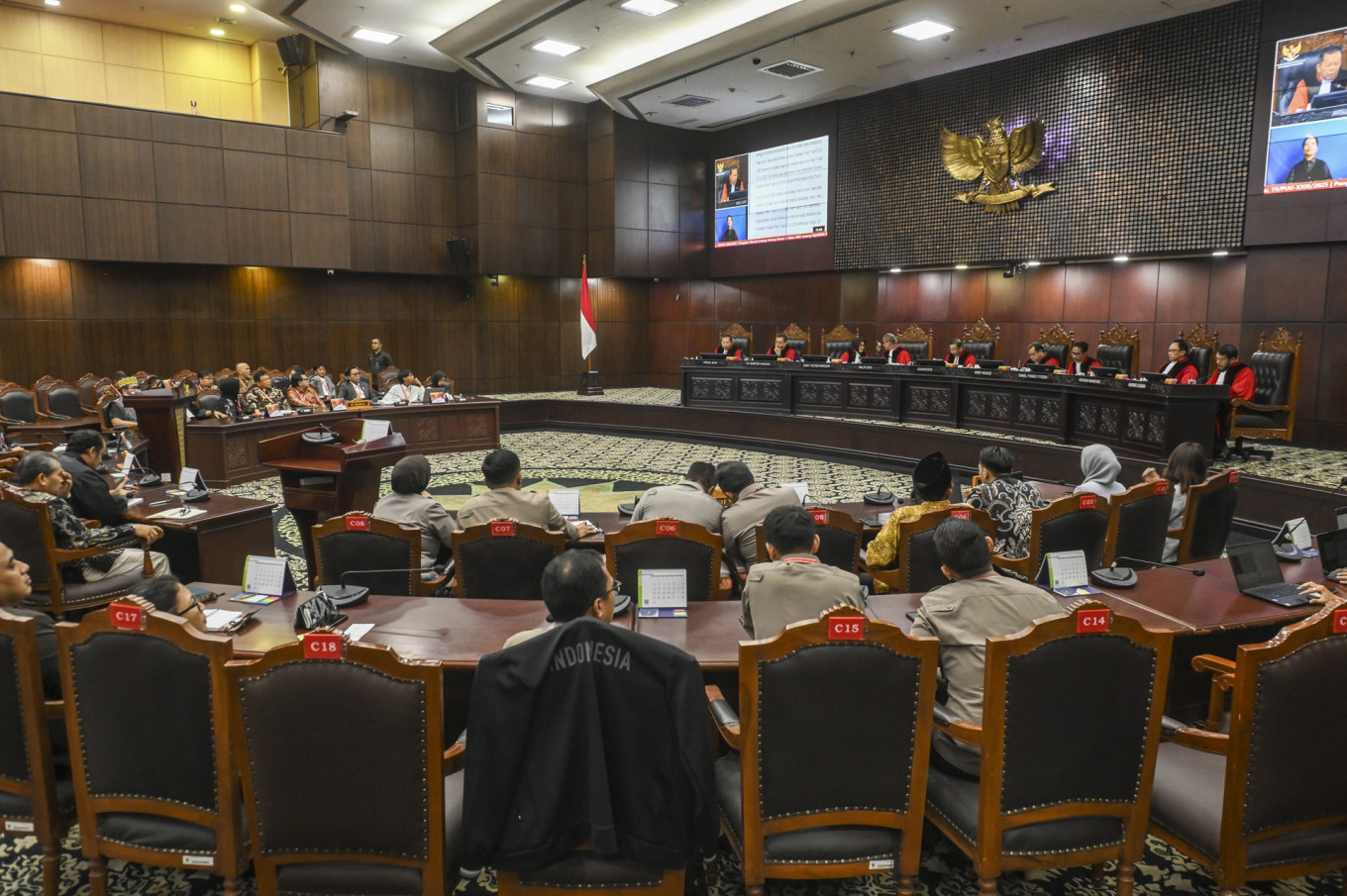 The hearing for a judicial review challenging the 2002 National Police Law is seen in session on Nov. 13, 2025, at the Constitutional Court building in Jakarta. Constitutional Court justices granted the petition and barred active police officers from holding additional government posts without retiring or resigning from the force. (Antara/Hafidz Mubarak A)
T
he new police law is likely to face a legal challenge at the Constitutional Court as critics question the rushed deliberation process and controversial provisions allowing an expanded role for active-duty police officers in civilian posts.
The House of Representatives passed an amendment to the 2002 Police Law in a plenary session on Tuesday, after only deliberating the bill in just two meetings. The law immediately drew criticism for its perceived rushed legislative process without transparent public consultation.
Under the prevailing law on the drafting of laws and regulations, lawmakers are required to ensure meaningful public participation in legislative process, guaranteeing the public’s right to be heard, to have their views considered and to get explanations regarding the legislation.
Constitutional law expert Bivitri Susanti of Jentera School of Law said the legislation process behind the new law was “highly problematic” for its hasty deliberation, which reflects a recurring pattern in the current House.
Last year in March, the House passed a controversial amendment to the Indonesian Military (TNI) law after brief and closed-door deliberations. In September, a revision to the state-owned enterprises (SOEs) law, which served as the basis to establish state asset fund Danantara, was passed just three days after lawmakers began discussing the bill.
“There is no fixed minimum duration for drafting a law, but the process must be participatory, and that participation must be meaningful,” Bivitri told The Jakarta Post on Thursday, adding that such procedural shortcomings provide grounds for a judicial review at the Constitutional Court.

Read also: New law expands police role in civilian offices