TheJakartaPost
Please Update your browser
Your browser is out of date, and may not be compatible with our website. A list of the most popular web browsers can be found below.
Just click on the icons to get to the download page.


Popular Reads
Top Results
No results found. Please check your search term and try again
Can't find what you're looking for?
View all search results
Popular Reads
Top Results
No results found. Please check your search term and try again
Can't find what you're looking for?
View all search resultsSelf-inflicted wound: When ignorance sells the forest
The floods are the bill we are paying for decades of cultivated ignorance.
Change text size
Gift Premium Articles
to Anyone
Share the best of The Jakarta Post with friends, family, or colleagues. As a subscriber, you can gift 3 to 5 articles each month that anyone can read—no subscription needed!
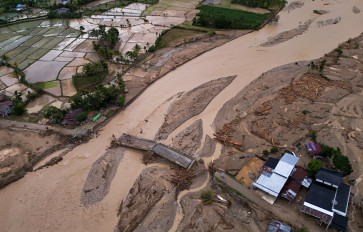
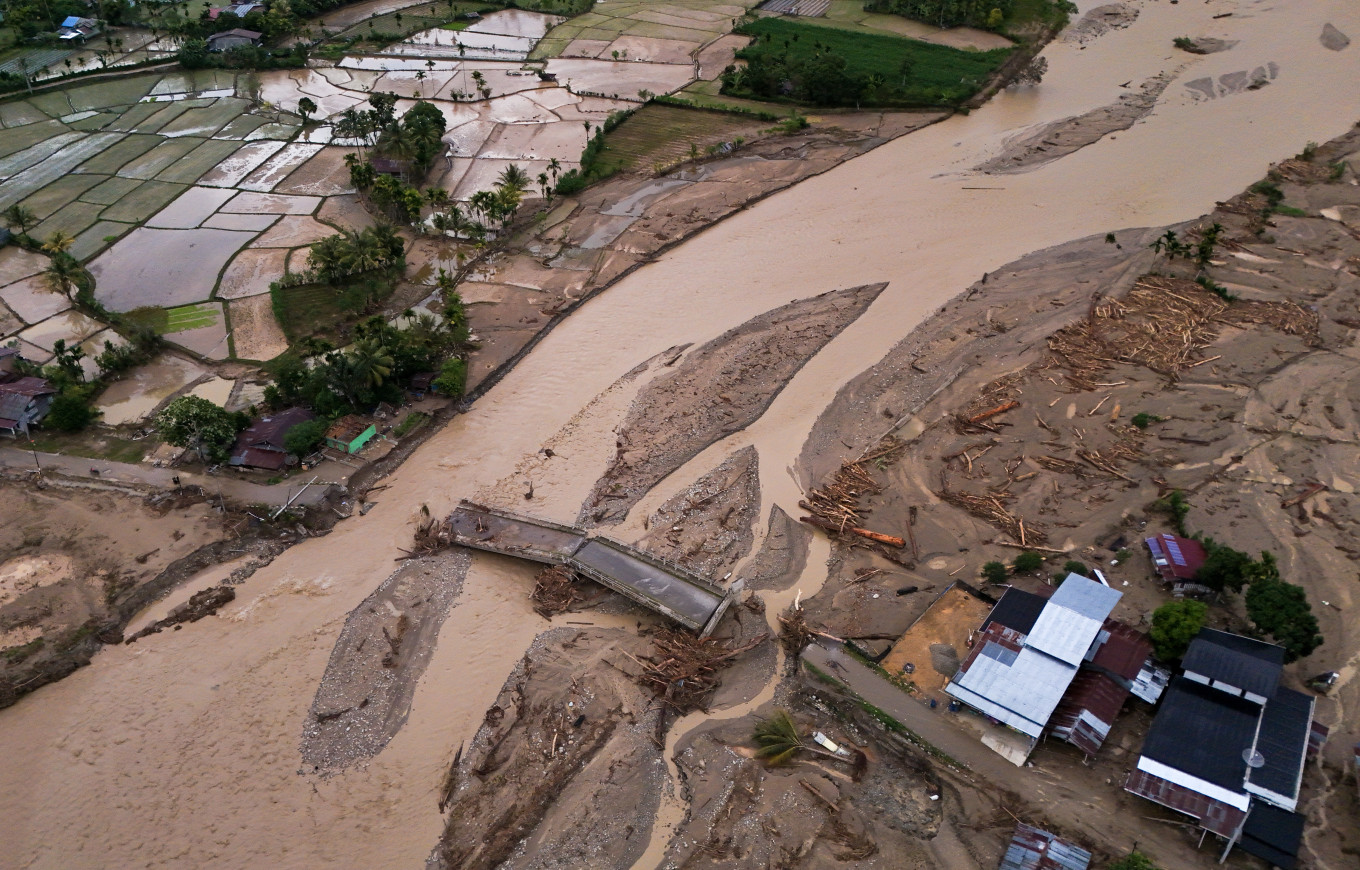 An aerial photo shows damage left by a flash flood on Dec. 2 in Rigeb, Blangkejeren, Gayo Lues regency, Aceh. (Antara/Taufik Hidayat)
T
he floods that recently drowned entire districts in Indonesia are not “natural disasters.” They are the bill we are paying for decades of cultivated ignorance. It is an ignorance so deep that a nation with one of the world’s richest biocultural endowments now behaves like it has nothing to learn from its own land or its own people.
Indonesia contains one of the three largest biodiversity concentrations on Earth. Our forests hold thousands of plant species, intricate ecological systems and cultural practices that evolved to manage them. They should be the engine of our future economy. Instead, we have spent decades treating forests as obstacles to be cleared or commodities to be liquidated.
This is not an accident. It is the direct legacy of colonial rule, which reduced forests to timber and plantations and dismissed indigenous wisdom as “primitive.” Post-independence elites inherited the same worldview. Logging concessions were handed out like lottery tickets, peatlands were drained, local communities were pushed aside.
And today, the rewards flow to a tiny circle of business elites who live like sultans with their luxury cars, private jets and endless displays of wealth on social media, while ordinary Indonesians wade through chest-high floods and watch their houses slide off hillsides.
But the world has already shown that another future is possible. When traditional ecological knowledge (TEK) is combined with modern science, ecosystems thrive and people prosper.
In the Amazon, studies show that indigenous-managed forests have far lower rates of deforestation and higher carbon stocks than adjacent state-managed lands. In Thailand, community forest programs boosted household incomes and sharply reduced illegal logging once management rights were returned to local communities. In Vietnam, agroforestry systems merging local practice with soil science outperform monoculture plantations in long-term productivity.

These findings are echoed across more than a hundred case studies worldwide: the forests that survive are the forests managed by people who understand them.