TheJakartaPost
Please Update your browser
Your browser is out of date, and may not be compatible with our website. A list of the most popular web browsers can be found below.
Just click on the icons to get to the download page.


Popular Reads
Top Results
No results found. Please check your search term and try again
Can't find what you're looking for?
View all search results
Popular Reads
Top Results
No results found. Please check your search term and try again
Can't find what you're looking for?
View all search resultsThe case for universalism in a fragmenting world
In country after country, political leaders increasingly dehumanize migrants and refugees, casting people fleeing poverty, persecution and conflict as a mortal threat.
Change text size
Gift Premium Articles
to Anyone
Share the best of The Jakarta Post with friends, family, or colleagues. As a subscriber, you can gift 3 to 5 articles each month that anyone can read—no subscription needed!
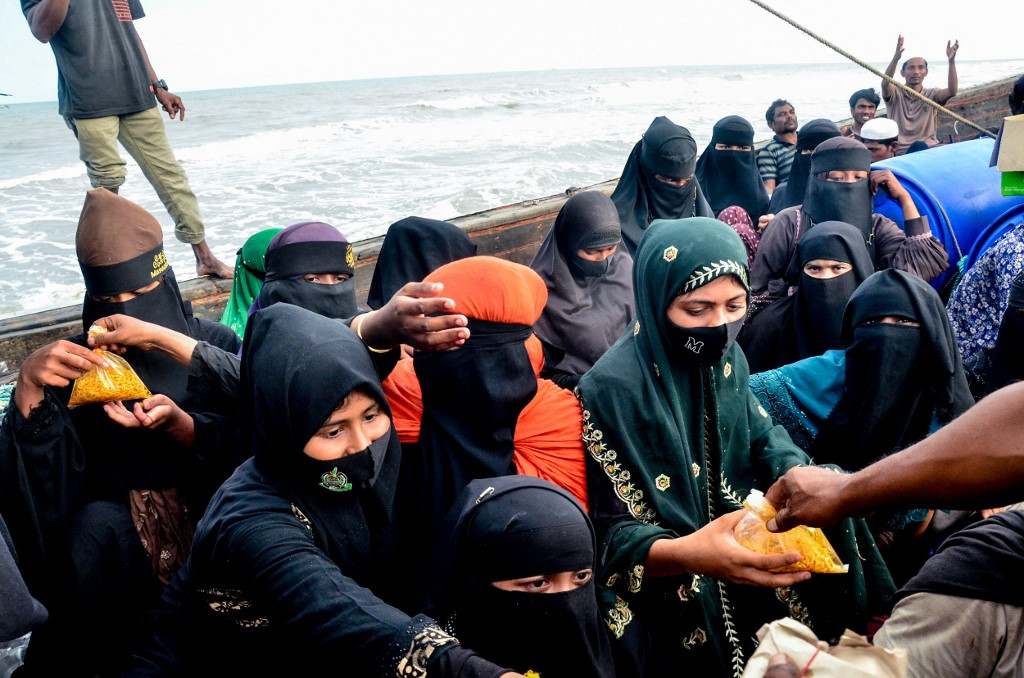 Newly-arrived Rohingya refugees receive food on Jan. 29, 2025, while on their boat after authorities prevented the refugees from disembarking and ordered them to remain on board the vessel at Leuge Beach in Aceh. (AFP/Cek Mad)
A
t the cusp of a new year, the global outlook appears increasingly grim. Escalating conflicts and resurgent authoritarianism are undermining domestic and international institutions alike, while rising wealth inequality is deepening economic insecurity and eroding social cohesion.
Perhaps the most dispiriting development is the growing hatred of the “other.” In country after country, political leaders increasingly dehumanize migrants and refugees, casting people fleeing poverty, persecution and conflict as a mortal threat.
Such rhetoric brings to mind W. H. Auden’s Refugee Blues. Written on the eve of World War II, a period when refugees were similarly blamed for economic insecurity and social decline, the poem depicts a speaker at a public meeting who warns, “If we let them in, they will steal our daily bread.”
The rise of xenophobic populism is not occurring in a vacuum. It is at least partly driven by a profound structural shift that is often overlooked by social scientists who assume the inevitability of the nation-state.
It is easy to forget that the nation-state is a relatively recent idea that emerged when travel was slow and limited. At the time, it made sense to imagine the world as a collection of communities, each responsible for the welfare of its own members. Governing these units effectively required the cultivation of a shared identity, and nationalism emerged to fill that role.
But globalization has put this arrangement under growing strain, as the freer movement of goods, money, information and people, together with the digital revolution, enables companies, workers and consumers to connect across borders. Paradoxically, it is precisely that fragility that is fueling the current wave of hyper-nationalism, which represents a rear-guard effort to revive a model the world has outgrown.

We have seen this before. Claims of racial superiority were once considered normal but now provoke widespread revulsion. While it remains common for people to declare their countries the greatest on earth, assertions of national primacy will, in time, come to sound just as crude and indefensible.