TheJakartaPost
Please Update your browser
Your browser is out of date, and may not be compatible with our website. A list of the most popular web browsers can be found below.
Just click on the icons to get to the download page.


Popular Reads
Top Results
No results found. Please check your search term and try again
Can't find what you're looking for?
View all search results
Popular Reads
Top Results
No results found. Please check your search term and try again
Can't find what you're looking for?
View all search resultsThe ocean has finally entered the global climate debate
The ocean increasingly suffers the effects of absorbing over 90 percent of the excess heat trapped by greenhouse-gases and about one-quarter of annual carbon dioxide emissions.
Change text size
Gift Premium Articles
to Anyone
Share the best of The Jakarta Post with friends, family, or colleagues. As a subscriber, you can gift 3 to 5 articles each month that anyone can read—no subscription needed!
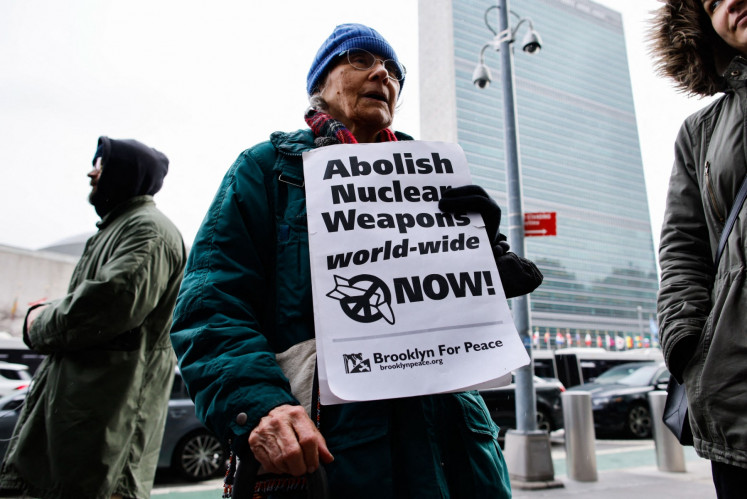
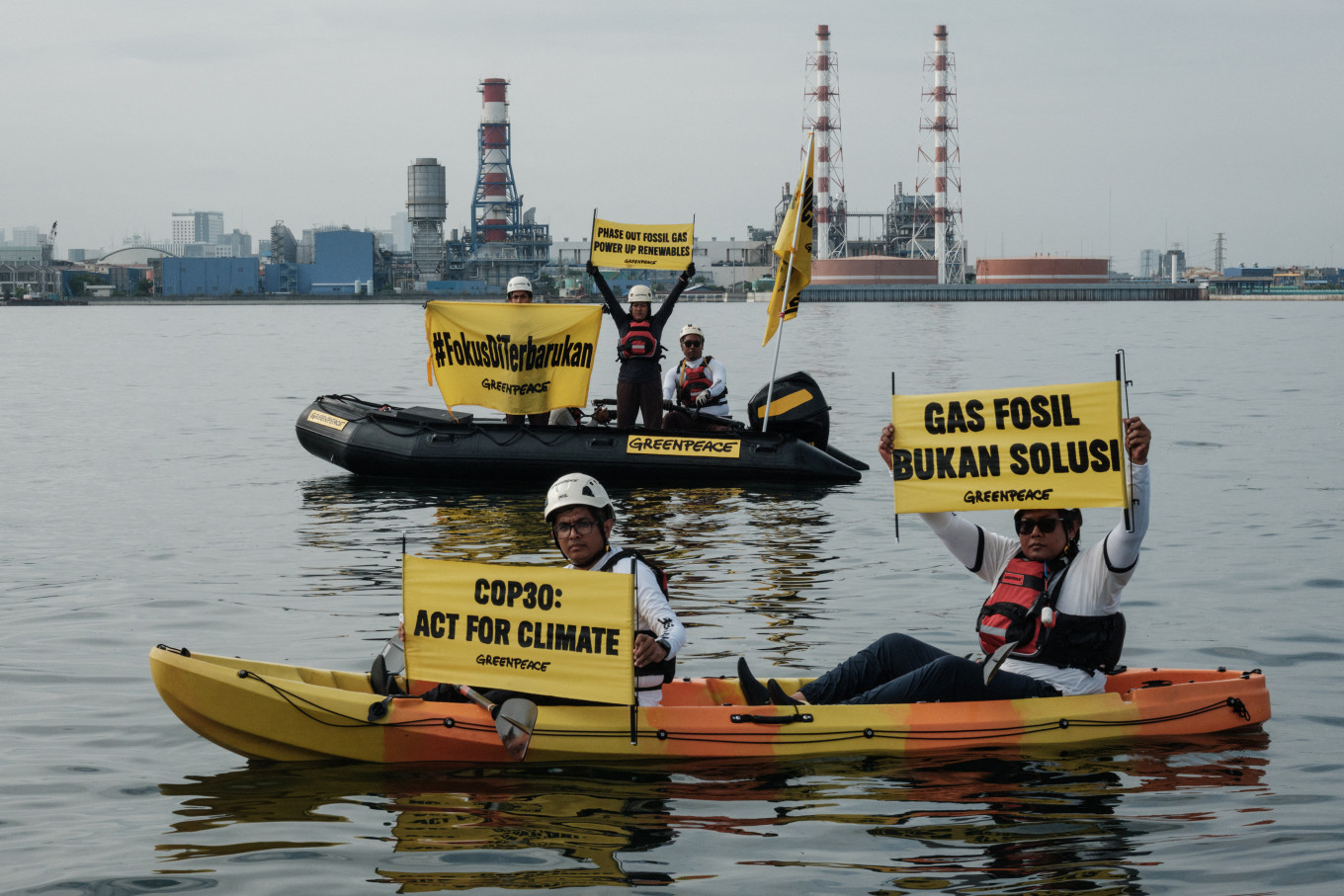 Greenpeace Indonesia activists protest on Nov. 18, 2025, in front of the Muara Karang gas-fired power plant in North Jakarta. The protest had been against the inconsistency of national energy policies, calling for an end to dependence on fossil fuels ahead of the COP30 United Nations Climate Change Conference in Belém, Brazil. (AFP/Yasuyoshi Chiba)
I
n global climate policy, the ocean was long treated as an afterthought, too vast to manage effectively and too resilient to be degraded. Instead, the focus was almost exclusively on reducing greenhouse-gas emissions and preserving forests. That era is now over.
At the most recent United Nations Climate Change Conference (COP30) in Belém, Brazil, the ocean moved from the margins to the mainstream of climate governance. It featured prominently in national climate plans, adaptation frameworks, the follow-up to the first “global stock take” under the Paris climate agreement and even the evolving architecture of climate finance.
This shift in the global agenda was likely inevitable, as the ocean increasingly suffers the effects of absorbing over 90 percent of the excess heat trapped by greenhouse-gases and about one-quarter of annual carbon dioxide emissions. The consequences include warming, acidification, deoxygenation, collapsing fisheries and coastal erosion. But small island developing states and least developed countries, many of which are extremely vulnerable to sea level rise, accelerated the shift by framing ocean governance as a matter not just of environmental management, but of survival and justice.
Consider, for example, COP30’s headline political declaration, the Global Mutirão, which frames climate change, biodiversity loss and land and ocean degradation as interconnected crises demanding shared solutions and collective action. It explicitly recognizes the role of marine ecosystems in climate stability and sustainable development, giving governments the political cover to integrate ocean and coastal issues into their national climate strategies, development plans and funding proposals.
A new baseline has been established. For the first time in the UN climate process, the official synthesis of national climate plans contains a section dedicated to the ocean. Roughly three-quarters of these national plans include marine references, such as blue carbon, offshore renewables, fisheries resilience and maritime decarbonization. The next step is to move toward quantified ocean-based targets, measurable blue-carbon accounting and concrete investment pledges for coastal communities.
At COP30, governments also adopted the Belém Adaptation Indicators to track action and progress under the Global Goal on Adaptation. While these indicators are sector-neutral, they are still highly relevant to the health of coastal ecosystems, the resilience of fisheries, the vulnerability of coastal infrastructure and livelihoods and early-warning coverage. Crucially, climate funds, including the Green Climate Fund, the Global Environment Facility and the Adaptation Fund, have been encouraged to align their support with these indicators. This could give rise to a new generation of bankable ocean-adaptation projects.

Moreover, ocean-based solutions are attracting more resources. The One Ocean Partnership, which launched at COP30, aims to mobilize US$20 billion for coastal resilience, blue-carbon ecosystems and ocean protection; create 20 million blue jobs worldwide; and restore 20 million hectares of marine ecosystems by 2030. More consequential was the UN Standing Committee on Finance’s announcement that its 2026 forum will focus on financing climate action in water systems and the ocean, a formal push for blue investment that would have been unthinkable a decade ago.