TheJakartaPost
Please Update your browser
Your browser is out of date, and may not be compatible with our website. A list of the most popular web browsers can be found below.
Just click on the icons to get to the download page.


Popular Reads
Top Results
No results found. Please check your search term and try again
Can't find what you're looking for?
View all search results
Popular Reads
Top Results
No results found. Please check your search term and try again
Can't find what you're looking for?
View all search resultsThe grandeur and misery of international law
Too often, international law fails to prevent stronger states from acting as they please, as in the case of the US attack on Venezuela and kidnapping of President Maduro.
Change text size
Gift Premium Articles
to Anyone
Share the best of The Jakarta Post with friends, family, or colleagues. As a subscriber, you can gift 3 to 5 articles each month that anyone can read—no subscription needed!
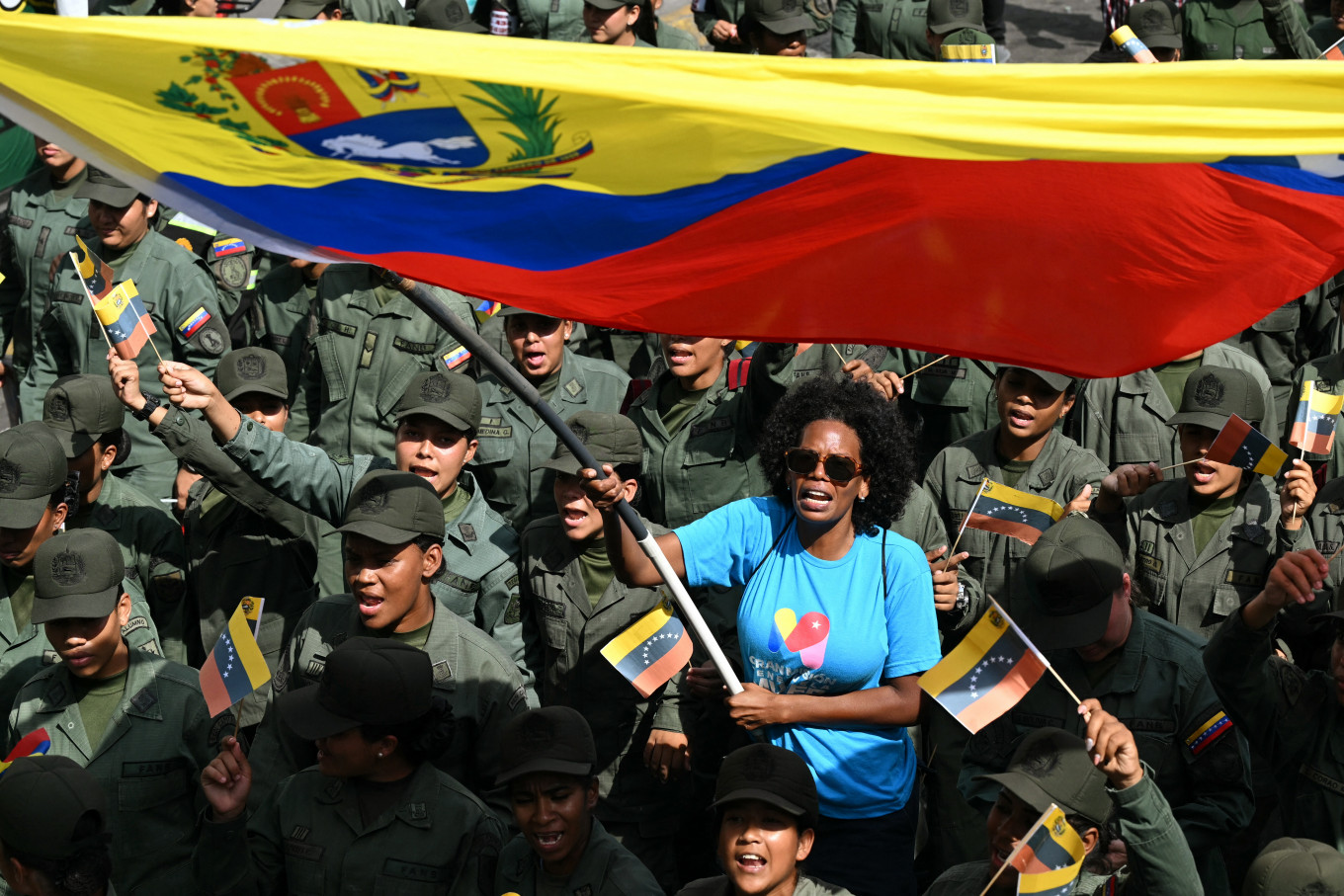 A woman waves a Venezuelan flag among members of the National Bolivarian Armed Forces during a rally on Jan. 6, 2026, in support of seized Venezuela President Nicolas Maduro and his wife Cilia Flores, in Caracas. United States forces reportedly killed 55 Venezuelan and Cuban military personnel in the raid to capture Maduro. (AFP/Ronaldo Schemidt )
F
ollowing the United States strike on Venezuela and the abduction of President Nicolas Maduro, Indonesia expressed grave concern over actions involving the use of force. Its statement implied a clear and firm position: such conduct constitutes a violation of international law and risks setting a dangerous precedent in international relations.
The US has argued that the operation was a law-enforcement action carried out pursuant to criminal indictments against President Maduro and Cilia Flores. From this perspective, Operation Absolute Resolve was an exercise of extraterritorial jurisdiction by the US justice system rather than an act of war governed by international law. Accordingly, Washington maintains that it is not at war with Venezuela or its people.
For many, however, the operation represents a unilateral action against a sovereign state and undermines the credibility of the contemporary international legal order. Several foundational rules of international law appear to have been disregarded.
The first is the principle of sovereign equality, enshrined in Article 2(1) of the United Nations Charter. This principle lies at the heart of international law and affirms that all states are legally equal members of the international community, regardless of differences in size, power or economic capacity.
The second is the prohibition on the use of force set out in Article 2(4) of the charter, which requires all states to refrain from the threat or use of force against the territorial integrity or political independence of any state, except in cases of self-defense or when authorized by a UN Security Council resolution. This prohibition is not merely a treaty-based obligation. It is also a cornerstone of customary international law, as affirmed by the International Court of Justice (ICJ) in cases such as Nicaragua v. US (1986).
The third is the doctrine of immunity for heads of state under customary international law. Under this doctrine, serving heads of state or government are immune from the criminal jurisdiction of foreign states. The ICJ reaffirmed the status of this rule in the Arrest Warrant case (2002).

These principles, rules and doctrines form the foundation of the post–World War II international legal order and serve as its main structural framework. They are also the benchmarks by which the promise and the “grandeur” of international law are measured.