TheJakartaPost
Please Update your browser
Your browser is out of date, and may not be compatible with our website. A list of the most popular web browsers can be found below.
Just click on the icons to get to the download page.


Popular Reads
Top Results
No results found. Please check your search term and try again
Can't find what you're looking for?
View all search results
Popular Reads
Top Results
No results found. Please check your search term and try again
Can't find what you're looking for?
View all search resultsUnifying a diverse air fleet
The Indonesian Air Force has already demonstrated a unique capability to bridge these technological divides in real-world scenarios.
Change text size
Gift Premium Articles
to Anyone
Share the best of The Jakarta Post with friends, family, or colleagues. As a subscriber, you can gift 3 to 5 articles each month that anyone can read—no subscription needed!
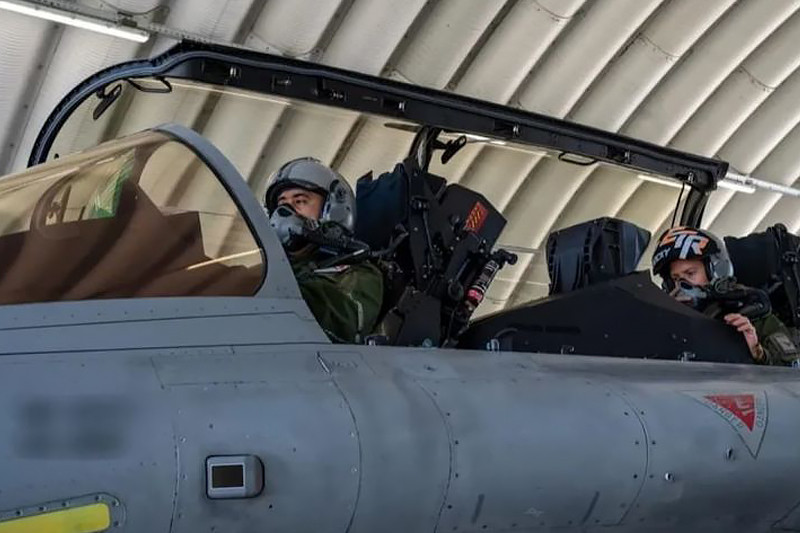 Air Force fighter jet pilots prepare to fly a Rafale aircraft at Escadron de Transformation Rafale (ETR) 3/4 Aquitaine, Base Aérienne 113, Saint-Dizier, France, in this file photo. (Antara/Handout/Indonesian Air Force/Antara/Handout/Indonesian Air Force)
T
he arrival of Indonesia’s first three Dassault Rafale fighters at Roesmin Nurjadin Air Force Base (AFB) in Pekanbaru, Riau, last week marks a pivotal chapter in the nation’s defense modernization. While the official welcoming ceremony is slated for a later date, the landing of the new aircraft signals the long-awaited commencement of the Air Force’s revitalization.
Faced with an aging fleet and a strategic imperative to expand its fighter squadrons, the Air Force is moving decisively to reshape its aerial backbone.
The Rafale is merely one piece of a complex procurement puzzle. Indonesia is reportedly pursuing a diverse array of platforms, including the United States-made Boeing F-15EX Eagle II heavy-weight multirole fighter.
Simultaneously, Jakarta is hedging its bets on developmental projects. This includes a continued interest in the Turkish Kaan fifth-generation fighter, despite Indonesia's existing partnership with South Korea on the KF-21 Boramae. The latter is already in production and scheduled to become operational later this year, whereas the Kaan remains a longer-term prospect.
The pursuit of the Turkish platform remains a point of debate, as Jakarta’s preference for indigenous Turkish engines, a move intended to bypass US International Traffic in Arms Regulations (ITAR), suggests the Kaan may not enter Indonesian service until 2036. This sits in stark contrast to earlier, now-defunct efforts to acquire Austrian Eurofighter Typhoons or Qatar’s legacy Mirage 2000-5 fleet.
Critics often argue that operating a boutique air force comprised of disparate platforms from various producers creates a logistical nightmare. However, the planned volume of these acquisitions suggests otherwise.

With orders ranging from 40 to 48 units per type, the scale allows for dedicated, sustainable ecosystems. For instance, the Rafale will be split between the 12th and 16th Squadrons at Roesmin Nurjadin AFB and the 1st Squadron at Supadio AFB in West Kalimantan. This distribution allows Roesmin Nurjadin to serve as a comprehensive maintenance and repair hub, while Supadio handles line maintenance through its engineering squadron, ensuring that three full squadrons justify the specialized supply chain.