TheJakartaPost
Please Update your browser
Your browser is out of date, and may not be compatible with our website. A list of the most popular web browsers can be found below.
Just click on the icons to get to the download page.


Popular Reads
Top Results
No results found. Please check your search term and try again
Can't find what you're looking for?
View all search results
Popular Reads
Top Results
No results found. Please check your search term and try again
Can't find what you're looking for?
View all search resultsWhat we owe each other: Scholars, the state and development
The controversy surrounding LPDP scholarship recipients reveals a fundamental flaw in Indonesia’s development strategy: a narrow focus on physical presence over strategic influence. To compete globally, Indonesia must shift from a framework of geographic compliance to one of borderless contribution.
Change text size
Gift Premium Articles
to Anyone
Share the best of The Jakarta Post with friends, family, or colleagues. As a subscriber, you can gift 3 to 5 articles each month that anyone can read—no subscription needed!
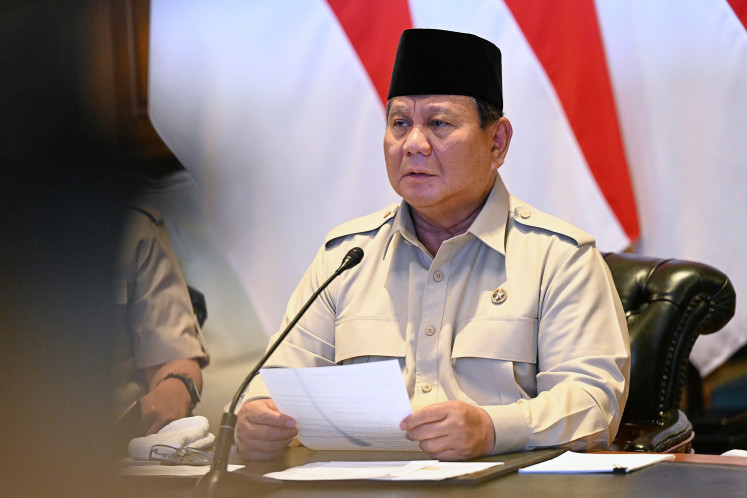
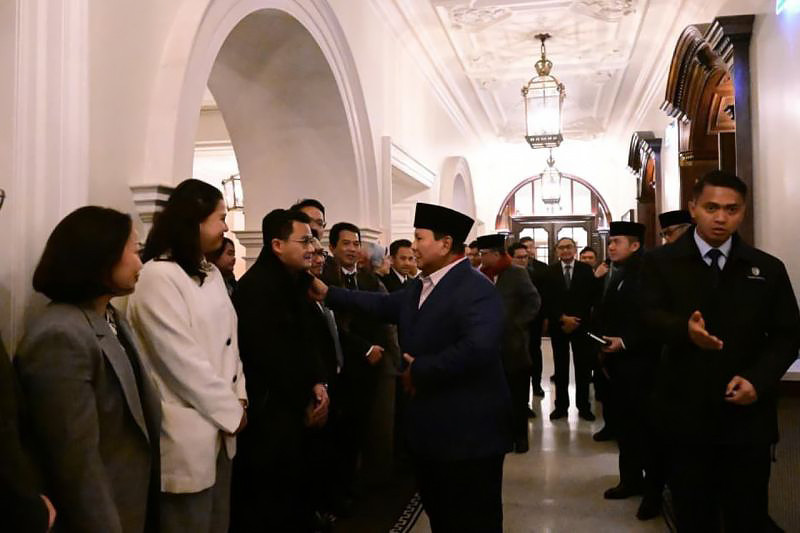 President Prabowo Subianto greets members of the Indonesian student diaspora on Jan. 18 at the hotel where he was staying in London. (Antara/Handout-Presidential Secretariat’s Media and Information Bureau./Antara/Handout-Presidential Secretariat’s Media and Information Bureau.)
A
social media post by an Indonesian LPDP alumna expressing her preference for her children to hold United Kingdom citizenship has drawn widespread public attention and prompted a government rebuke.
The individual and her husband both received funding through Indonesia's Endowment Fund for Education (LPDP) — a state program financed by public revenues and designed to cultivate high-caliber talent for national development. Officials opened an investigation into whether post-scholarship service obligations had been met, and the episode became a focal point for broader debate about the responsibilities of scholarship recipients and the meaning of national contribution in an era of global mobility.
The government's response is to a certain extent justified. Public scholarships carry a reasonable expectation of reciprocal service; publicly dismissing one’s citizenship while benefiting from taxpayer-funded education represents a breach of trust that LPDP is right to take seriously.
Service obligations exist for a reason and must be enforced to maintain the integrity of the social contract. Yet, the controversy also surfaces a largely unresolved tension in Indonesian policy: whether a framework predicated on physical return remains viable in a modern, hyper-connected talent economy. This structural question, distinct from the conduct of any individual, demands sustained and careful attention.
The economic data on diaspora contribution offers a useful starting point. Indonesia received US$14.47 billion in remittances in 2023 alone (Statista, 2024), a figure that has grown consistently and now constitutes a significant source of national foreign exchange.
These flows are generated by citizens living and working abroad. The data suggests that physical presence and meaningful contribution are not as closely correlated as prevailing policy frameworks tend to assume.

The experience of comparable economies reinforces this point. Indians and Chinese together account for over 40 percent of Silicon Valley's highly skilled technical workforce (Joint Venture SV 2025), and 16 Indian-origin executives currently lead Fortune 500 companies with combined revenues exceeding $1 trillion (Forbes, 2025).