TheJakartaPost
Please Update your browser
Your browser is out of date, and may not be compatible with our website. A list of the most popular web browsers can be found below.
Just click on the icons to get to the download page.


Popular Reads
Top Results
No results found. Please check your search term and try again
Can't find what you're looking for?
View all search results
Popular Reads
Top Results
No results found. Please check your search term and try again
Can't find what you're looking for?
View all search resultsThe case for a long-term ASEAN envoy on Myanmar
The Philippines has indicated that ASEAN is considering appointing a long-term special envoy on Myanmar to replace the current system of annual rotation.
Change text size
Gift Premium Articles
to Anyone
Share the best of The Jakarta Post with friends, family, or colleagues. As a subscriber, you can gift 3 to 5 articles each month that anyone can read—no subscription needed!
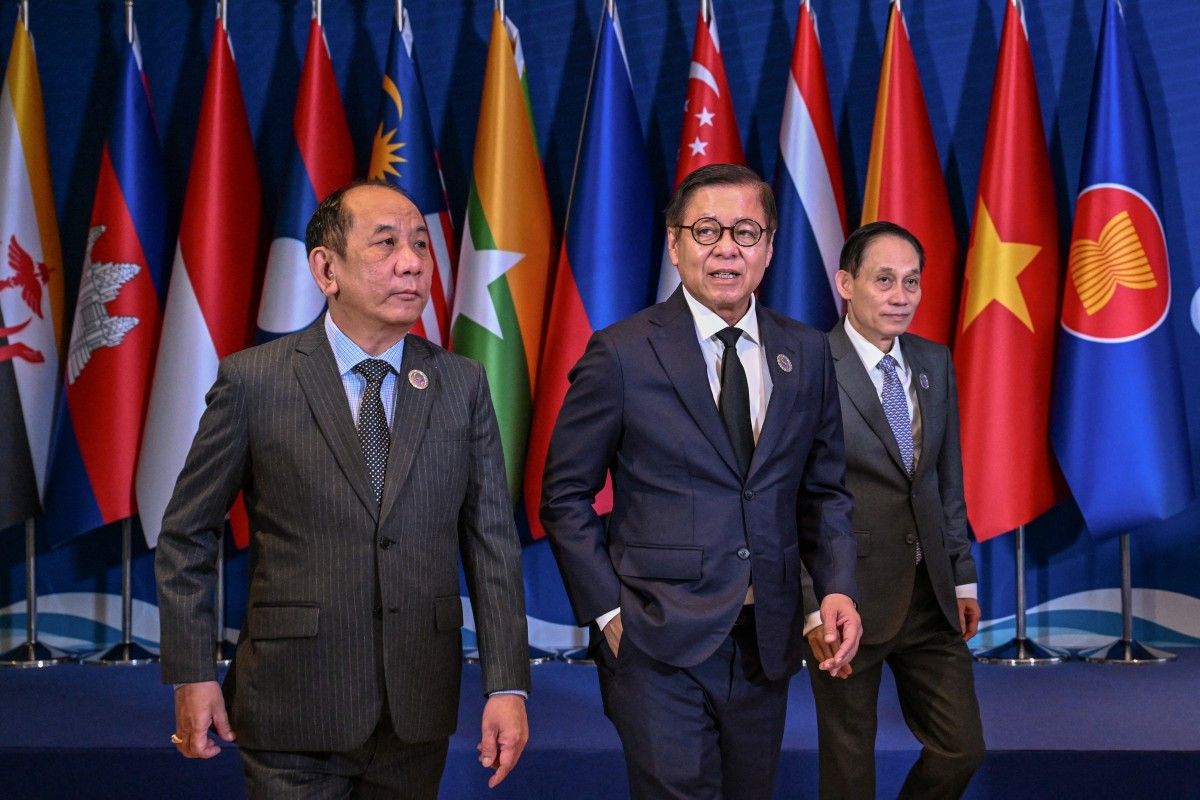 Myanmar's Permanent Secretary of the Ministry of Foreign Affairs Hau Khan Sum (left) walks with Thailand's Minister of Foreign Affairs Sihasak Phuangketkeow (center) and Vietnam's Foreign Minister Le Hoai Trung after the group photo during the ASEAN Foreign Ministers' Meeting (AMM) in Cebu City, the Philippines on Jan. 29, 2026. (AFP/Pool/Jam Sta Rosa)
F
ive years after Myanmar’s 2021 military coup, ASEAN faces a difficult truth: the Five-Point Consensus (5PC) has not moved the country closer to peace. Violence continues, political dialogue remains stalled and humanitarian access is inconsistent. The critical question now is whether ASEAN’s current diplomatic framework is adequate to deal with a prolonged and deeply fragmented civil war.
Philippine Foreign Secretary Maria Theresa Lazaro, whose country is currently the bloc’s chair, has indicated that ASEAN is considering appointing a long-term special envoy on Myanmar to replace the current system of annual rotation. The discussion reflects growing recognition that the existing structure may be ill-suited to the crisis’s complexity. Rather than abandoning the 5PC, the proposal seeks to strengthen the institutional support needed to implement it effectively.
Under the current arrangement, the incumbent national chair appoints a special envoy for a one-year term, a pragmatic compromise when the 5PC was adopted at the ASEAN Leaders’ Meeting in April 2021. Even then, disagreements surface over mandate, authority and resources.
Linking the envoy to the sitting chair provides immediate political weight and flexibility. Decisions can be made swiftly, and diplomacy can adjust to shifting conditions. Yet this model also places logistical and institutional burdens on the chair’s foreign ministry.
The debate over the first envoy exposed deeper tensions within ASEAN. Indonesia proposed former foreign minister Hassan Wirajuda, seen as a figure of diplomatic gravitas. Thailand preferred Virasakdi Futrakul, viewed by some as more acceptable to the Myanmar military. Malaysia put forward Razali Ismail, a seasoned diplomat and former United Nations envoy to Myanmar.
These differences reflected competing views about access, leverage and representation. Several democratic member states insisted that the envoy must engage all stakeholders, including Aung San Suu Kyi, a demand the junta rejected, citing legal proceedings. Concerns also arose about tenure: an annually rotating envoy would struggle to ensure continuity. The eventual compromise in August 2021, appointing then-ASEAN chair Brunei Darussalam’s foreign minister, Erywan Yusof, underscored ASEAN’s instinct for consensus, even at the expense of durability.

Since then, each chair has shaped the envoy’s approach. Brunei drew a firm line when access to Aung San Suu Kyi was denied, leading to the unprecedented exclusion of Myanmar’s political representatives from ASEAN summits. Cambodia prioritized humanitarian access, opening limited space for aid delivery while facing criticism for perceived accommodation. Indonesia invested heavily in quiet diplomacy, engaging more than 150 stakeholders across political and ethnic divides. Laos adopted a cautious, stability-oriented posture. Malaysia later reasserted pressure and strengthened coordination through the Troika mechanism linking past, present and future chairs.