TheJakartaPost
Please Update your browser
Your browser is out of date, and may not be compatible with our website. A list of the most popular web browsers can be found below.
Just click on the icons to get to the download page.


Popular Reads
Top Results
No results found. Please check your search term and try again
Can't find what you're looking for?
View all search results
Popular Reads
Top Results
No results found. Please check your search term and try again
Can't find what you're looking for?
View all search resultsThe information technology stakes in the US-Indonesia trade deal
The recently signed agreement, without saying so outright, institutionalizes a process through which US threat assessments can shape Indonesia's ICT procurement, illustrating the increasingly blurred line between national security and commercial decisions.
Change text size
Gift Premium Articles
to Anyone
Share the best of The Jakarta Post with friends, family, or colleagues. As a subscriber, you can gift 3 to 5 articles each month that anyone can read—no subscription needed!
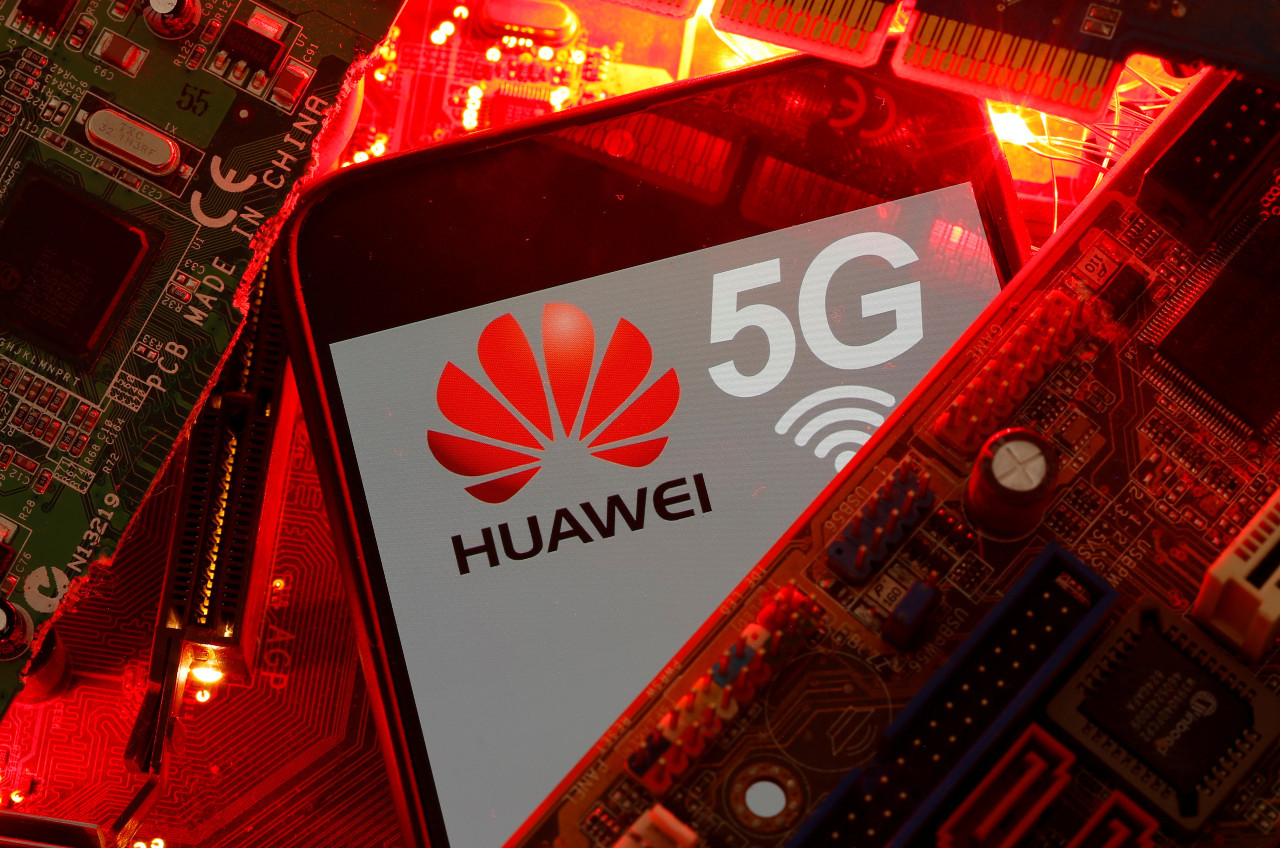 The Huawei logo and a 5G wireless internet icon appear on a smartphone amid a pile of PC motherboards, in this photo illustration created on Jan. 29, 2026. (Reuters/Dado Ruvic)
T
he Feb. 19 trade agreement between Indonesia and the United States was signed amid legal turbulence in Washington. The US Supreme Court has ruled parts of the administration’s tariff framework unlawful, prompting President Donald Trump to reimpose tariffs under an alternative authority.
Yet even if the tariff provisions are diluted, the structural clauses in the Agreement on Reciprocal Trade (ART), particularly those concerning information and communications technology (ICT), are likely to endure. Over time they could prove consequential, as they might reshape how Indonesia selects technology suppliers, regulates sensitive infrastructure and aligns its digital ecosystem with US security standards.
The centerpiece is Article 5.2 on “Equipment and Platform Security”. Indonesia is to use only communication technology suppliers that do not compromise the security and intellectual property of ICT infrastructure, explicitly covering 5G and 6G networks, communication satellites and undersea cables. Jakarta must also consult with Washington regarding suppliers that fail to meet these standards.
This is not neutral language. Vendor choice is framed as a matter of espionage and intellectual property risk. Telecom core networks, satellite links and subsea cables underpin modern intelligence collection and global data flows. Access to these layers can create systemic visibility across entire digital ecosystems.
The consultation mechanism does not give Washington a formal veto, but it institutionalizes a process through which US threat assessments can shape Indonesian procurement decisions.
The agreement extends this logic to ports, logistics tracking systems and commercial fleets, which must use digital platforms that guard against cybersecurity threats, unauthorized data disclosure, national security risks and access by other foreign governments.

For a trade agreement, this is unusually explicit. Digital infrastructure is treated not merely as commercial plumbing but as a potential intelligence vector.