TheJakartaPost
Please Update your browser
Your browser is out of date, and may not be compatible with our website. A list of the most popular web browsers can be found below.
Just click on the icons to get to the download page.


Popular Reads
Top Results
No results found. Please check your search term and try again
Can't find what you're looking for?
View all search results
Popular Reads
Top Results
No results found. Please check your search term and try again
Can't find what you're looking for?
View all search resultsIndonesia’s dilemma in the age of privatized diplomacy
As Indonesia leans into informal diplomatic forums like the Board of Peace, it risks trading its historic "independent and active" principles for a personalized foreign policy that blurs the line between strategic leadership and quiet alignment.
Change text size
Gift Premium Articles
to Anyone
Share the best of The Jakarta Post with friends, family, or colleagues. As a subscriber, you can gift 3 to 5 articles each month that anyone can read—no subscription needed!
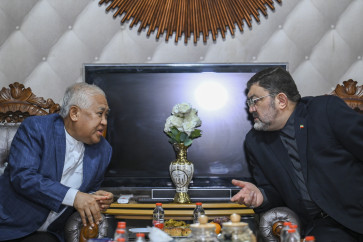
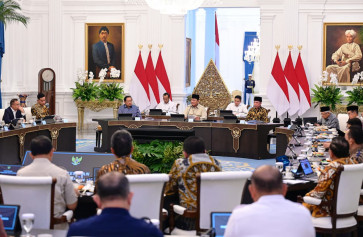
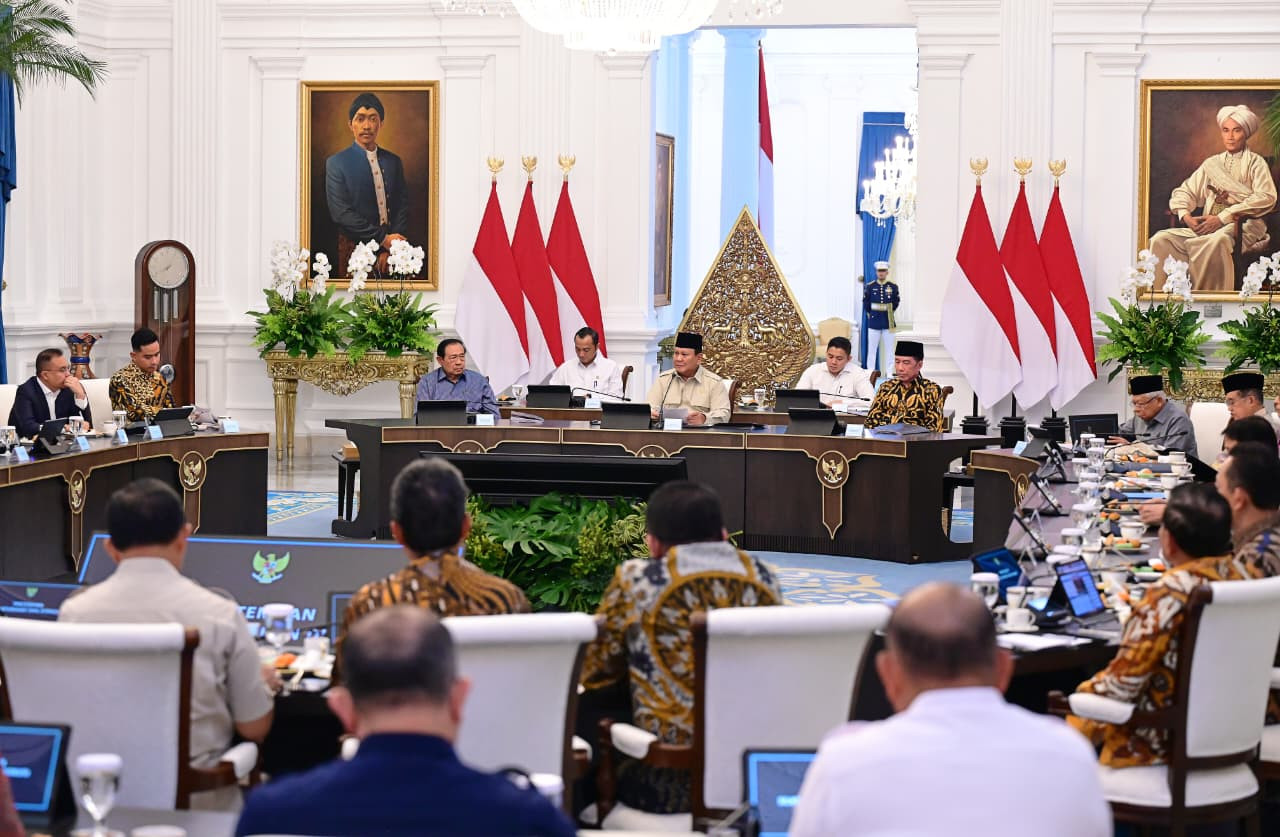 President Prabowo Subianto (center), sitting between former presidents Susilo Bambang Yudhoyono (third left) and Joko “Jokowi“ Widodo (third right), speaks Feb. 3, 2026, during a meeting with top political and business figures on latest geopolitical development at the Merdeka Palace in Central Jakarta. During the meeting, Prabowo discussed the impact, including disruption to energy and food supplies, of an escalated war between the United States-Israel and Iran. (Courtesy of Presidential Secretariat/Muchlis Jr)
I
ndonesia’s decision to join the Board of Peace (BoP), an initiative promoted by United States President Donald Trump to resolve the Gaza conflict, may at first appear consistent with Jakarta’s long-standing tradition of supporting global peace. However, this move has ignited a firestorm of domestic criticism that challenges the very heart of the nation’s foreign policy identity.
In a significant escalation of domestic concern, the Indonesian Ulema Council (MUI), alongside prominent academics and diplomats, has publicly urged the government to reconsider its involvement in the board, especially after the US and Israel, both are members of the BoP, started the war against Iran on Feb. 28.
The pressure became so palpable that on the night of March 5, President Prabowo Subianto convened a high-level gathering at the Merdeka Palace, inviting former presidents, vice presidents and over 160 Islamic scholars to evaluate the nation’s strategic posture.
During the briefing, the President offered a pragmatic defense, arguing that after decades of advocating for Palestine from the outside, Indonesia must now attempt to influence the process from the inside. Yet, in a nod to the growing public outcry, Prabowo issued a crucial caveat, vowing that Indonesia will withdraw from the board if it fails to deliver tangible progress toward an independent Palestinian state or if it begins to undermine Indonesia’s national interests.
The more fundamental question is, however, whether involvement in the board remains consistent with Indonesia’s long-standing foreign policy doctrine: of a bebas aktif (independent and active) foreign policy. The Preamble of the 1945 Constitution tasks the Republic with participating in the establishment of a world order based on independence, lasting peace and social justice.
In 1948, founding father Mohammad Hatta asserted that bebas aktif did not mean passive neutrality. Indonesia must remain free to determine its own position without binding itself to any great power bloc. During the Cold War, the principle led Indonesia to refuse military alliances, choosing instead to be a bridge for dialogue.

The key question today is whether participation in the Board of Peace, an ad hoc forum initiated by a specific political leader rather than a formal multilateral body like the United Nations, still falls within that tradition.