The Jakarta Post
Please Update your browser
Your browser is out of date, and may not be compatible with our website. A list of the most popular web browsers can be found below.
Just click on the icons to get to the download page.


Popular Reads
Top Results
No results found. Please check your search term and try again
Can't find what you're looking for?
View all search results
Popular Reads
Top Results
No results found. Please check your search term and try again
Can't find what you're looking for?
View all search resultsPrabowo and the military
As the TNI moves toward high alert seemingly without a presidential mandate, Indonesia’s hard-won civilian supremacy faces its most critical test yet.
Change text size
Gift Premium Articles
to Anyone
Share the best of The Jakarta Post with friends, family, or colleagues. As a subscriber, you can gift 3 to 5 articles each month that anyone can read—no subscription needed!
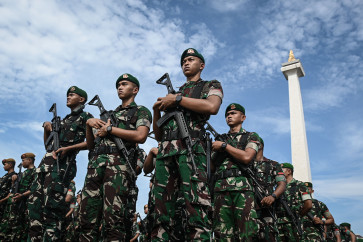
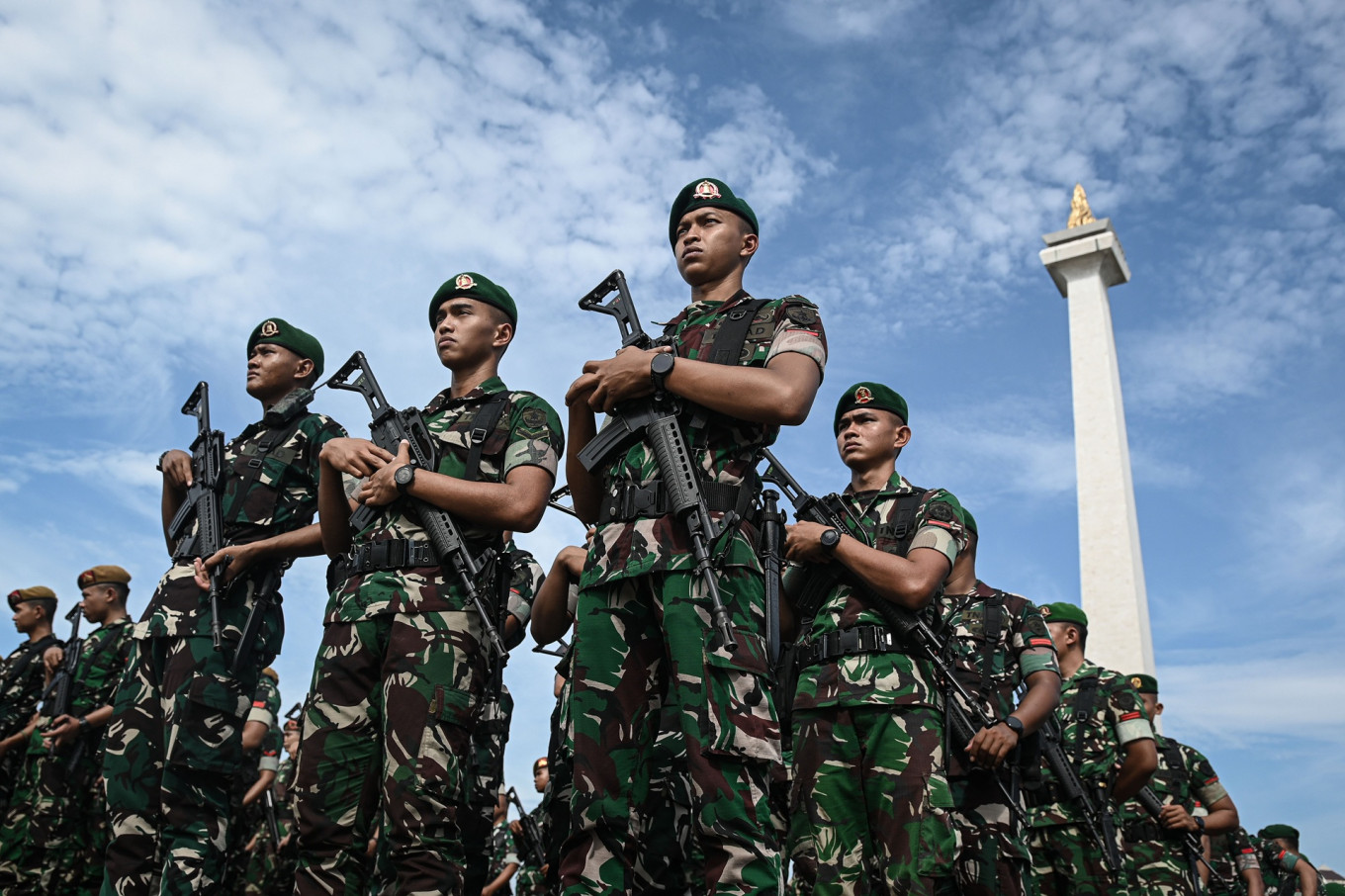 Indonesian Military (TNI) personnel attend a Christmas security briefing at the National Monument (Monas) complex in Jakarta on Dec. 24, 2025. (Antara/Sulthony Hasanuddin)
I
ndonesia’s democracy and its heralded civilian supremacy have taken a troubling turn following two recent, interconnected events. On March 1, Indonesian Military (TNI) commander Gen. Agus Subiyanto placed the armed forces on high alert for an indefinite period, citing the escalating conflict in the Middle East. Shortly thereafter, on Monday, President Prabowo Subianto called on the nation to prepare for the global turmoil resulting from that same conflict.
Acting on the commander's order, the Jakarta Military Command has initiated early detection and prevention measures against groups that might exploit the Middle Eastern situation. Consequently, a conspicuous military presence has emerged across several parts of the city. Jakarta remains the de facto capital of Indonesia, despite the legal relocation of the seat of power to Nusantara in East Kalimantan.
Debate has since surged on social media, with many accusing the TNI chief of overstepping the President’s authority as the supreme commander. Notably, President Prabowo has not publicly addressed the specific alert status, and the media only recently gained access to the TNI chief’s official letter of order.
Regardless of the rationale behind the high-alert status, the TNI’s unilateral move sets a dangerous precedent. The commander’s order and the ensuing troop deployment have sparked widespread anxiety rather than the sense of security the policy was intended to promote. This move comes amid lingering fears regarding the return of the military’s dwifungsi (dual function), evidenced by the frequent appointment of active and retired officers to public office and state-run enterprises. Simultaneously, there are growing concerns that law enforcement is being weaponized to silence critical voices.
The TNI chief’s order is cause for serious concern because it lacks a clear constitutional basis. The mobilization of military force is a power vested solely in the president. Under Article 10 of the 1945 Constitution, the president holds supreme authority over the Army, Navy and Air Force. This mandate is further codified in Article 17 of Law No. 34/2004 on the TNI (as amended by Law No. 3/2025), which stipulates that the authority to deploy military forces resides with the president, acting in coordination with the House of Representatives.
Consequently, the responsibility for assessing national security and geopolitical dynamics, and the subsequent decision to deploy troops, must be shared by the president and the House. Under this framework of civilian supremacy, the TNI lacks the legal standing to independently evaluate national threats for the purpose of mobilizing forces.

To add insult to injury, no official explanation followed the commander’s instruction, which should have remained an internal military matter. Without clarification, speculation will continue to mount as to whether Indonesia faces an imminent external threat or if the TNI is navigating internal rivalries.