TheJakartaPost
Please Update your browser
Your browser is out of date, and may not be compatible with our website. A list of the most popular web browsers can be found below.
Just click on the icons to get to the download page.


Popular Reads
Top Results
No results found. Please check your search term and try again
Can't find what you're looking for?
View all search results
Popular Reads
Top Results
No results found. Please check your search term and try again
Can't find what you're looking for?
View all search resultsTicking waste time bomb
As Jakarta’s 16-story "trash mountains" begin to collapse with fatal consequences, the city's long-ignored waste crisis has officially become a ticking time bomb.
Change text size
Gift Premium Articles
to Anyone
Share the best of The Jakarta Post with friends, family, or colleagues. As a subscriber, you can gift 3 to 5 articles each month that anyone can read—no subscription needed!
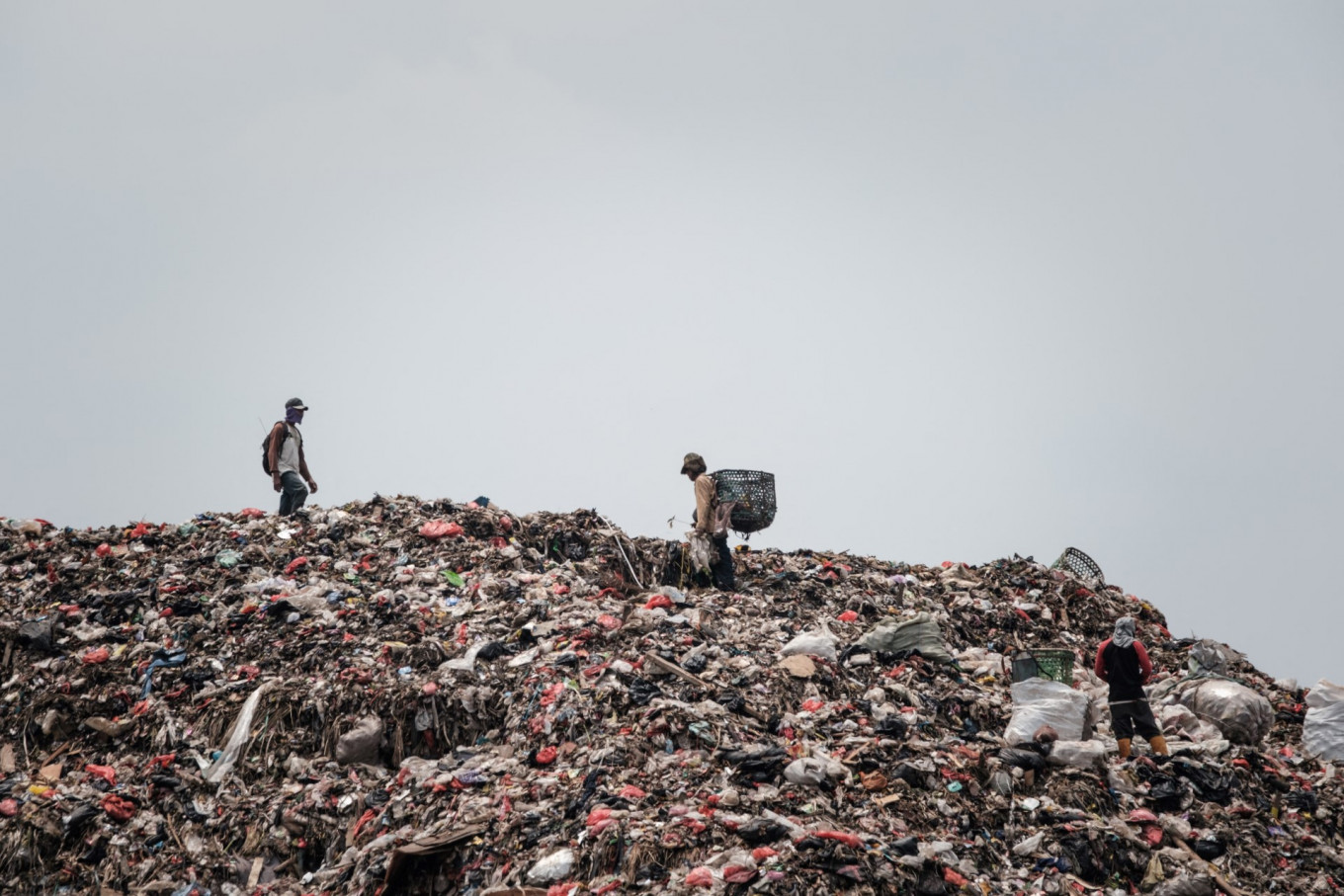 Registered scavengers, who mainly collect plastic waste to sell, walk on the Bantar Gebang landfill on Sept. 14, 2023, in Bekasi, West Java. (AFP/Yasuyoshi Chiba)
F
or years, experts have warned that Indonesian cities will face catastrophe if they do not manage their waste more effectively. Today, Jakarta reaps the bitter harvest of its protracted inaction in handling its refuse.
On Sunday, hours of torrential rain triggered a massive landslide at the Bantar Gebang Landfill in neighboring Bekasi, West Java, the final destination for 8,000 tonnes of trash generated daily by 11 million Jakartans. The disaster sent seven garbage trucks tumbling and trapped 13 people under mounds of debris. Seven fatalities have been confirmed, and parts of the facility remain shuttered pending a recovery operation.
While we send our thoughts and prayers to the victims and their families, we also call upon central and regional authorities to act with greater urgency. This waste crisis must be solved before a similar tragedy strikes again.
The Bantar Gebang landslide did not occur without warning. The landfill, which has operated for nearly 40 years, double its intended 20-year lifespan, now holds over 80 million tonnes of the capital’s waste. According to Environment Ministry figures, this is 30 million tonnes beyond its maximum capacity.
Originally designed as a "sanitary landfill" to process and bury waste, Bantar Gebang has devolved into an open dumping site where garbage is simply piled high. Some sections feature "trash mountains" 16 stories tall, prone to collapse at any moment.
This type of disaster is not unprecedented. In 2005, the Leuwigajah landfill in Cimahi, also in West Java, experienced a 60-meter garbage collapse triggered by a methane gas explosion and heavy rain. That incident claimed nearly 150 lives and buried two entire villages.

If left unchecked, these disasters will recur. Most landfills across the country are nearing or have already exceeded their limits. Recently, in South Tangerang, piles of trash were left rotting on city streets after the Cipeucang Landfill was closed due to overcapacity. Furthermore, 60 percent of the nation’s landfills operate as open dumps without proper treatment. This neglect risks seeing 35 percent of untreated waste polluting the environment. When garbage enters waterways and ecosystems, it threatens the health of citizens living far beyond the landfill borders.