TheJakartaPost
Please Update your browser
Your browser is out of date, and may not be compatible with our website. A list of the most popular web browsers can be found below.
Just click on the icons to get to the download page.


Popular Reads
Top Results
No results found. Please check your search term and try again
Can't find what you're looking for?
View all search results
Popular Reads
Top Results
No results found. Please check your search term and try again
Can't find what you're looking for?
View all search resultsAnalysis: Ramadan inflation surges, with geopolitics adding new risks
Change text size
Gift Premium Articles
to Anyone
Share the best of The Jakarta Post with friends, family, or colleagues. As a subscriber, you can gift 3 to 5 articles each month that anyone can read—no subscription needed!
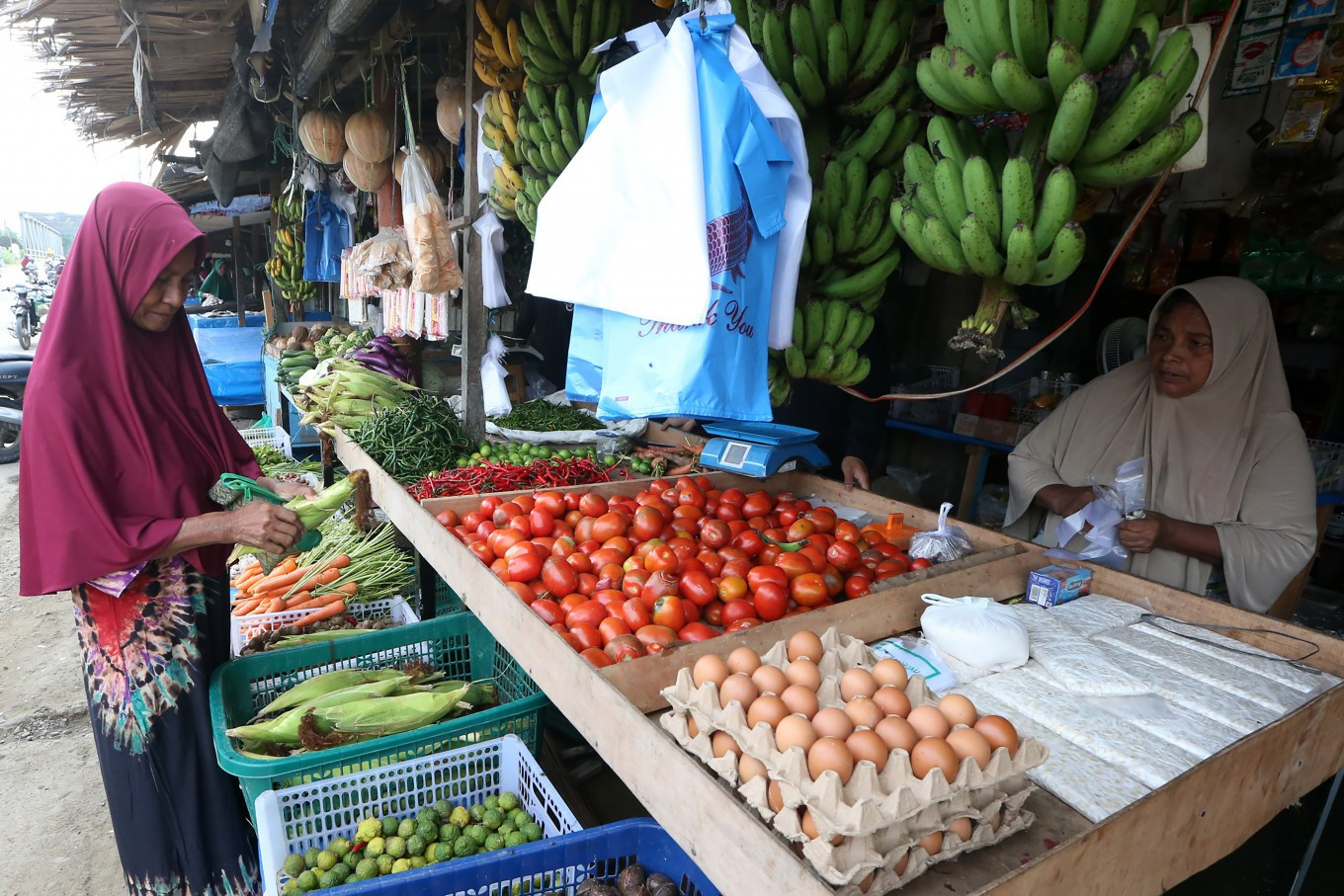 A woman selects vegetables sold by vendors on Dec. 9, 2025, at the Pangwa traditional market in Pidie Jaya, Aceh. (Antara/Irwansyah Putra)
I
ndonesia faces rising inflation during the Ramadan season every year, but inflationary pressures this year have been compounded by the government’s free nutritious meal program, pushing annual inflation to 4.76 percent. The situation may worsen as the ongoing United States-Israel war on Iran pushes up global commodity prices, particularly oil and gas, which could further fuel inflation in Indonesia.
Statistics Indonesia (BPS) reported that the Consumer Price Index (CPI) rose by 4.76 percent year-on-year (yoy) to 110.5 points in February 2026. Month-to-month (mtm) inflation reached 0.68 percent, while year-to-date (ytd) inflation stood at 0.53 percent. Core inflation grew by 2.63 percent yoy, 0.42 percent mtm and 0.8 percent ytd. Energy inflation contributed 2.08 percentage points (pp) to annual inflation but subtracted 0.05 pp from monthly inflation. Food inflation contributed 0.84 pp to yoy inflation and 0.42 pp to mtm inflation.
Regionally, Aceh recorded the highest provincial inflation at 6.49 percent yoy, while Central Aceh regency posted the highest inflation among cities and regencies at 8.44 percent yoy. The region continues to feel the impact of logistical disruptions caused by a natural disaster late last year. By contrast, Highland Papua recorded the lowest provincial inflation at 0.63 percent yoy, while Jayawijaya regency had the lowest inflation among cities and regencies at 0.63 percent yoy.
Gold jewelry was the commodity contributing the most to monthly inflation, adding 0.19 pp, while also contributing 1.06 pp to annual inflation. Meanwhile, electricity tariffs contributed the most to yearly inflation, accounting for 2.17 pp. Food prices have also begun to rise. Beef contributed 0.01 pp to monthly inflation. Data from the National Food Agency (Bapanas) shows that retail beef prices increased from Rp 136,533 per kilogram (kg) on Jan. 30 to Rp 137,733 per kg on Feb. 13.
Beyond seasonal Ramadan demand, rising beef prices may also reflect policy changes. The government sharply reduced the private sector’s beef import quota from 180,000 tonnes to 30,000 tonnes, while state-owned enterprises received a combined beef and buffalo meat import quota of 250,000 tonnes, causing elevated import prices. This policy may have amplified the impact of Tropical Cyclone Koji, which killed around 100,000 cattle in Australia, thereby affecting Indonesia’s beef supply.
The Indonesian Beef Traders Association (APDI) noted that Indonesia relies on imports to meet around 60 percent of its beef demand, leaving the domestic market vulnerable to global supply disruptions and exchange rate fluctuations. While Ramadan’s culture of celebratory feasts naturally increases food demand, analysts note that high logistics costs and weak connectivity infrastructure, especially outside Java, further exacerbate price increases.

The 4.76 percent yoy inflation rate in February exceeded the government’s and Bank Indonesia’s target range of 1.5–3.5 percent. BPS explained that electricity tariffs contributed the most to annual inflation due to a low base effect, as prices normalized after a 50 percent electricity discount for households using 450–2,200 volt ampere (VA) connections during January–February under the Prabowo Subianto administration.