TheJakartaPost
Please Update your browser
Your browser is out of date, and may not be compatible with our website. A list of the most popular web browsers can be found below.
Just click on the icons to get to the download page.


Popular Reads
Top Results
No results found. Please check your search term and try again
Can't find what you're looking for?
View all search results
Popular Reads
Top Results
No results found. Please check your search term and try again
Can't find what you're looking for?
View all search resultsIran war deals harder blow to natural gas than oil
Key gas infrastructure, liquefaction plants in particular, are more complex and expensive to build and repair than the oil equivalent.
Change text size
Gift Premium Articles
to Anyone
Share the best of The Jakarta Post with friends, family, or colleagues. As a subscriber, you can gift 3 to 5 articles each month that anyone can read—no subscription needed!
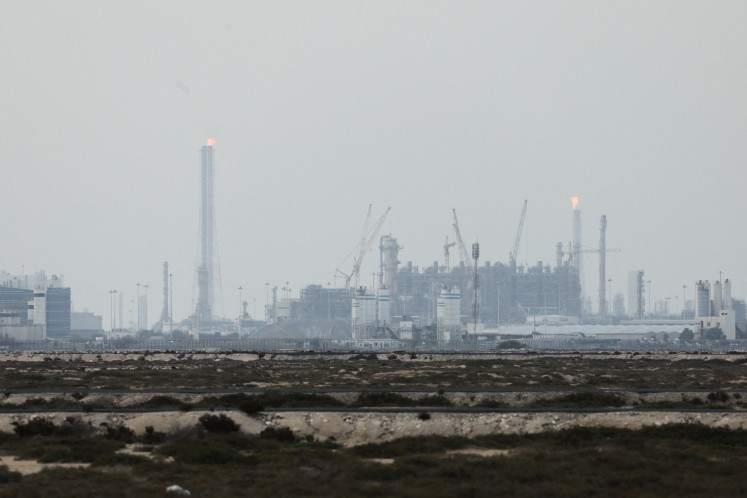
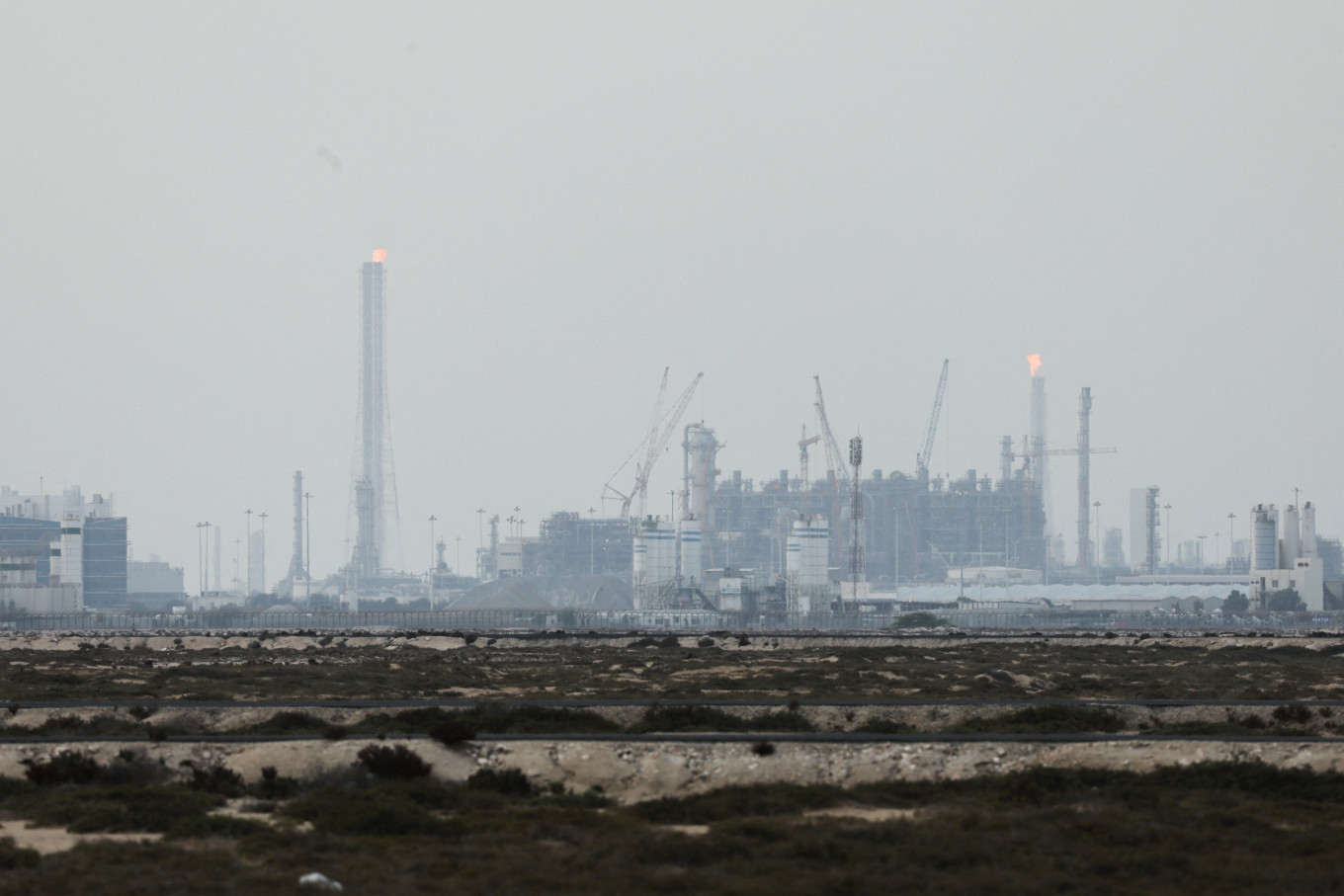 QatarEnergy's liquefied natural gas (LNG) production facilities were in operation on March 2 amid the US-Israeli war on Iran, in Ras Laffan Industrial City, Qatar. (Reuters/-)
A
t first glance, the Iran war appears to be hitting oil and gas with equal force, as missiles, drone strikes and shipping disruptions choke flows through the Strait of Hormuz.
But beneath that surface symmetry lies a critical imbalance. The global gas supply chain has fewer rerouting options and less storage capacity than the oil market, making the fallout for gas consumers considerably more acute.
Key gas infrastructure, liquefaction plants in particular, is more complex and expensive to build and repair than the oil equivalent. That means oil refineries can often resume operations more quickly than liquefied natural gas export hubs after a shutdown.
Prices have made the imbalance plain: European and Asian gas benchmarks have risen far more sharply than crude oil since the conflict began, a gap that signals gas faces a longer recovery than oil.
The timing of this disruption also could not be worse for gas.
Global gas demand has grown roughly twice as fast as oil demand over the past decade, according to the Energy Institute, driven by the build-out of pipelines and storage networks.

And that growth trajectory had been widely expected to continue, especially in emerging economies shifting away from coal.
Indeed, the upbeat demand prospects for gas were the chief driver behind the steady expansion of the global LNG industry.
However, LNG supplies from Qatar, the world's second-largest LNG exporter, have suddenly been choked off after Iranian attacks knocked out 17 percent of the country's export capacity for up to five years.
The resulting jump in gas costs has served as a warning to consumers of the risks of heavy import reliance and is likely to slow the addition of new gas-fired power capacity.
At the same time, utilities, homes and businesses have never had such an array of affordable alternatives to gas for electricity.
Solar panels and battery systems in particular offer power providers a much faster and cheaper way to boost electricity supplies than adding new gas capacity, which can take years to develop.
The costs for key gas power components, turbines especially, have also surged this decade, squeezed by global shifts in manufacturing capacity combined with surging demand from wealthier economies building out data centers.
These forces are already reshaping where new gas capacity is being built.
The US, the world's top natural gas producer and exporter, has increased its share of the planned pipeline for new gas capacity from around 10 percent in 2025 to over 33 percent as of the start of 2026, according to Global Energy Monitor.
The rush to boost electricity supplies for artificial intelligence applications has been a key driver, with US utilities and tech giants bidding up available gas power components.
That aggressive push is squeezing out more cost-sensitive markets. Fast-growing economies such as India, once expected to become a major gas consumer, have been cutting back plans to add gas capacity.
To offset this, India's power firms continue to add coal-fired capacity to the power mix alongside renewables. The country is also expanding its large oil refining base and is expected to grow fuel production and exports through the 2030s.
An additional challenge is that storing gas is much harder than storing oil.
Crude and refined products are liquids at room temperature and can be easily stored in various land-based storage tanks as well as on ocean tankers to build up buffers against supply disruptions.
In contrast, natural gas takes up far more space than oil when stored at room temperature and must be compressed or super-cooled into a liquid for more efficient storage.
That limits where gas can be stored and significantly raises the cost.
Gas consumption patterns are also heavily seasonal, with demand peaking during winter in most economies but then dropping sharply during the shoulder seasons when gas-fired power demand is at its lowest.
This contrasts with the much more regular usage patterns of refined fuels, demand for which is relatively consistent year-round in most major economies.
The large swings in gas usage make it harder for storage operators to time their purchases and sales profitably, compared with fuel storage firms that can reliably expect multiple tank-farm turnovers each year.
Both oil and gas flows have been significantly disrupted by the war. Oil looks set to recover more quickly.
Major Middle East oil suppliers are already rerouting supplies via pipelines to ports outside the Strait of Hormuz, which should help overall oil supplies bounce back even as the Iran conflict drags on.
In contrast, the global gas system has no way to quickly overcome the drop in Qatari supplies, which will send reverberations throughout gas supply chains and likely speed up the search for alternatives to gas by power firms and industry.
Even a swift end to the fighting would offer little relief for gas: Qatar's export damage alone will take years to repair, and buyers who have already begun pivoting away are unlikely to reverse course.
Some major economies such as the US can be expected to remain heavily gas-reliant regardless.
But more cost-sensitive markets may collectively curb their gas exposure in response to the recent supply cuts, leaving a lasting mark on an industry that, until very recently, had been gearing up for exactly the opposite.
---
The writer is a columnist for Reuters. The opinions expressed are personal.