TheJakartaPost
Please Update your browser
Your browser is out of date, and may not be compatible with our website. A list of the most popular web browsers can be found below.
Just click on the icons to get to the download page.


Popular Reads
Top Results
No results found. Please check your search term and try again
Can't find what you're looking for?
View all search results
Popular Reads
Top Results
No results found. Please check your search term and try again
Can't find what you're looking for?
View all search resultsLose and lose in the Strait of Hormuz
The pattern repeats: when political escalation occurs, Hormuz becomes a bargaining chip.
Change text size
Gift Premium Articles
to Anyone
Share the best of The Jakarta Post with friends, family, or colleagues. As a subscriber, you can gift 3 to 5 articles each month that anyone can read—no subscription needed!
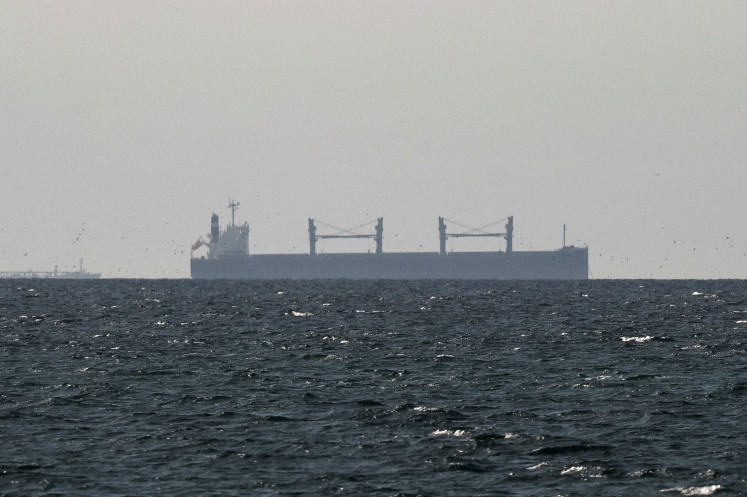
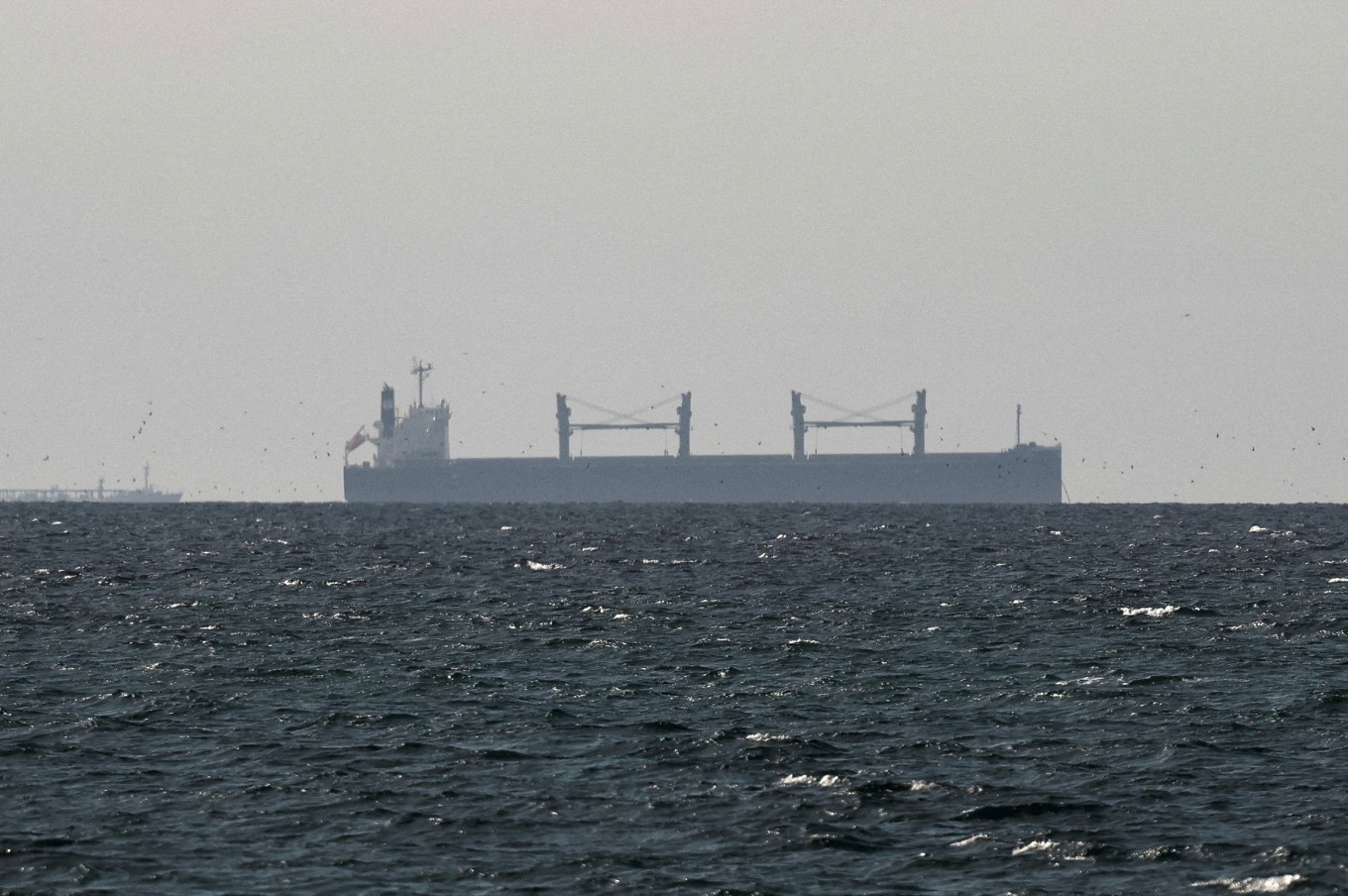 A cargo ship in the Gulf, near the Strait of Hormuz, as seen on March 11 from northern Ras al-Khaimah, near the border with Oman’s Musandam governance, in United Arab Emirates. (Reuters/-)
T
he Strait of Hormuz is the only seaway connecting the Persian Gulf in the west with the Gulf of Oman and the Arabian Sea in the east. The strait, at the heart of the Middle East, is flanked by the world's largest hydrocarbon producers and is inevitably traversed by shipping bound for Asia, Europe and the Americas.
Because of its narrowness, the strait can be easily blocked. During the Iran-Iraq War in the 1980s, Iran threatened to close the strait after Iraq disrupted shipping. In April 1988, a United States-Iran naval battle took place here. In the 1990s, a dispute between Iran and the United Arab Emirates over small islands sparked threats of closure. In December 2007–2008, a US-Iran naval incident occurred again. The pattern repeats: when political escalation occurs, Hormuz becomes a bargaining chip.
The Strait of Hormuz is not just a body of water, but a "barometer" of Middle East stability. Who controls it influences energy prices, global inflation and food security.
Legally, the 1982 United Nations Convention on the Law of the Sea (UNCLOS) guarantees the right of transit passage, but in practice it depends on the balance of power between Iran, Oman, the UAE and foreign patrolling fleets.
According to Part III of the 1982 UNCLOS, the Strait of Hormuz is a "strait used for international navigation." The applicable rule is not "innocent passage" as stipulated in Article 17. Rather, it is "transit passage" as referred to in Article 38 paragraph 1, which states that every ship and aircraft, both civilian and military, has the right to pass through the strait continuously, expeditiously and unhindered.
Article 44 of UNCLOS stipulates that coastal states may not impede or suspend "transit passage." Iran and Oman, as coastal states, do have jurisdiction up to 12 nautical miles, but that sovereignty is limited by the obligation to guarantee the right of transit passage. Therefore, from this perspective, the threat of unilaterally closing the Strait of Hormuz is not merely an energy policy issue, but a direct violation of treaty obligations that have become customary international law.

Philosophically, I agree with the 16th-century Dutch jurist Hugo Grotius, who stated that the sea is "res communis omnium," or belongs to all. The Strait of Hormuz must not be reduced to a military bargaining chip. In the current conflict, people worldwide are suffering from the effects.