TheJakartaPost
Please Update your browser
Your browser is out of date, and may not be compatible with our website. A list of the most popular web browsers can be found below.
Just click on the icons to get to the download page.


Popular Reads
Top Results
No results found. Please check your search term and try again
Can't find what you're looking for?
View all search results
Popular Reads
Top Results
No results found. Please check your search term and try again
Can't find what you're looking for?
View all search resultsTo strengthen climate resilience, focus on social protection
Change text size
Gift Premium Articles
to Anyone
Share the best of The Jakarta Post with friends, family, or colleagues. As a subscriber, you can gift 3 to 5 articles each month that anyone can read—no subscription needed!
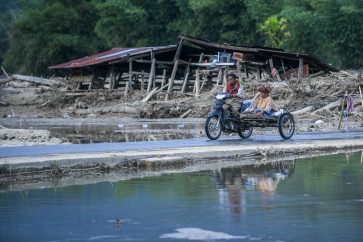
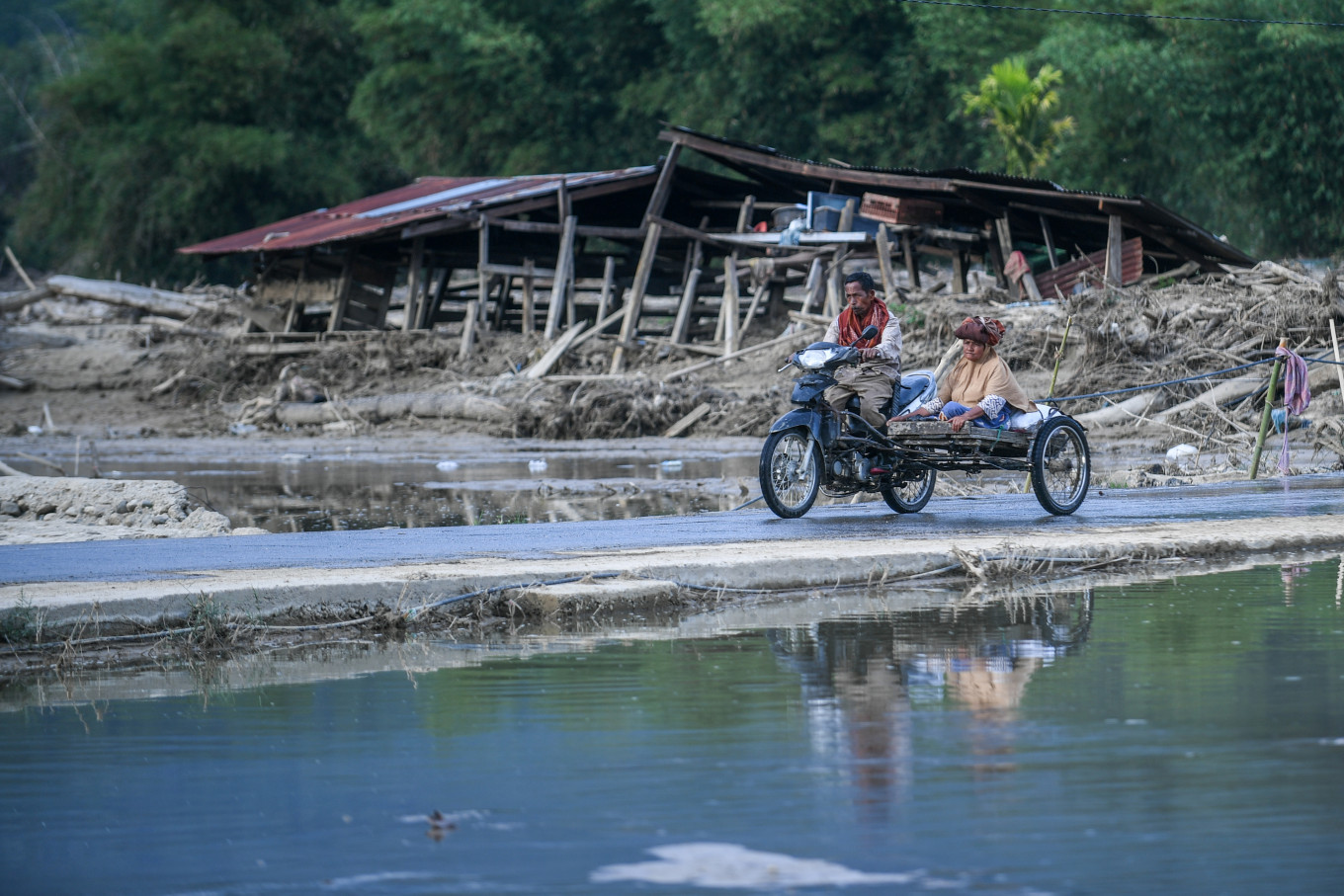 People ride past a destroyed house on Feb. 1, 2026, after flash floods in Kuta Lintang village, Blangkejeren district, Gayo Lues regency, Aceh. (Antara/Raisan Al Farisi)
T
he idea that the climate crisis is diverting global attention and funding away from the eradication of poverty and hunger perpetuates a dangerous misconception of both problems.
For millions of the world’s poorest people, climate change is not a future risk but a present reality, exacerbating the vulnerabilities and inequalities that block escape routes from extreme poverty. Unfortunately, the tendency to treat poverty and climate as separate issues has created policy silos, squandering opportunities to develop integrated strategies that create a virtuous circle of climate justice, strengthened resilience and inclusive growth.
The adverse impact of climate shocks on poverty is increasingly visible. In 2022, severe floods devastated Pakistan and caused at least US$30 billion in damage, ruining vast swaths of cropland, sweeping away homes, and destroying roads, schools and health clinics. Poverty rates surged from 21 percent before the floods to 28 percent today. In the same year, the Horn of Africa was experiencing its fifth consecutive failed rainy season, resulting in the worst drought in 40 years. Millions of children are now living with the effects of the acute malnutrition that followed.
Moreover, countries are increasingly confronting simultaneous climate shocks. In Brazil, drought in the Amazon Basin poses a real and immediate threat to the livelihoods of more than 30 million people, as well as the integrity of fragile ecosystems and hydropower assets. Meanwhile, the state of Rio Grande do Sul is still recovering from the devastating floods of 2024, which displaced over half a million people and led to rising poverty.
While no country or community is immune to climate shocks, the world’s poorest people are being hit first and hardest. According to one estimate, climate change could increase the number of people living in extreme poverty by up to 122 million by 2030, owing largely to crop losses and rising food prices in Africa and South Asia. In megacities like Lagos, Dhaka and Manila, densely populated informal settlements face acute risks from heat waves and floods.
Climate shocks trap poor households in a downward spiral. Droughts and floods not only wipe out crops but also destroy homes and kill livestock. Lacking insurance or access to safety nets, the poor are often forced into distress sales of the very assets they need for early recovery. Humanitarian aid may save lives, but it invariably delivers too little, too late to prevent people from falling deeper into poverty.

How do we prevent the climate crisis from reversing decades of progress on poverty reduction? In our view, there are two imperatives. First, we must keep the 2015 Paris climate agreement’s goal of limiting global warming to 1.5 degree Celsius within reach. That means we cannot afford to move at the pace of the most recalcitrant negotiators. Thus, Brazil has called for multilateral coalitions willing to work at the speed and scale required to accelerate the transition to net-zero carbon emissions.