TheJakartaPost
Please Update your browser
Your browser is out of date, and may not be compatible with our website. A list of the most popular web browsers can be found below.
Just click on the icons to get to the download page.


Popular Reads
Top Results
No results found. Please check your search term and try again
Can't find what you're looking for?
View all search results
Popular Reads
Top Results
No results found. Please check your search term and try again
Can't find what you're looking for?
View all search resultsHow not to securitize the Malacca Strait
When a finance minister invokes an Iranian blockade regime as a fiscal template, the institutional confusion itself is a securitization event.
Change text size
Gift Premium Articles
to Anyone
Share the best of The Jakarta Post with friends, family, or colleagues. As a subscriber, you can gift 3 to 5 articles each month that anyone can read—no subscription needed!
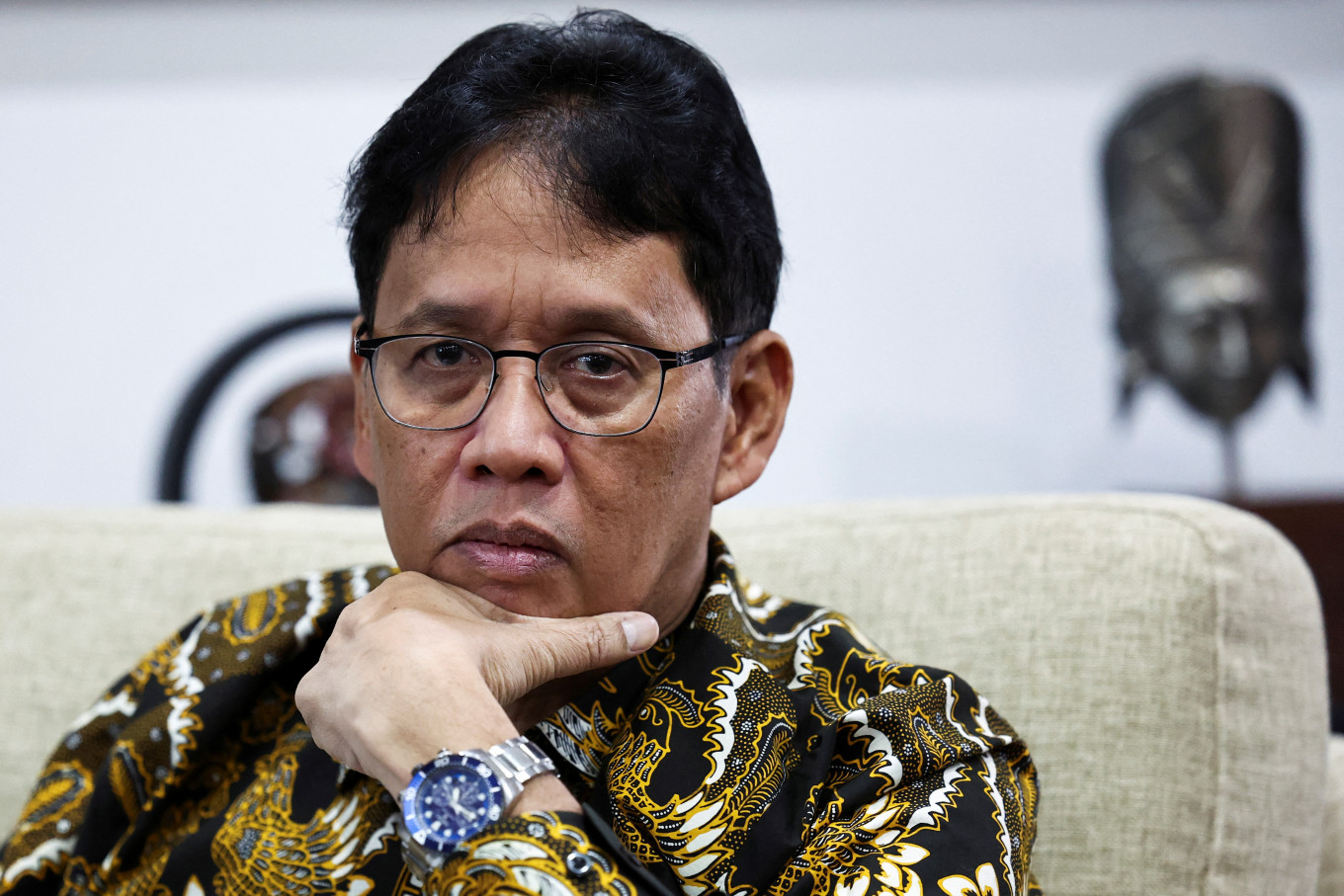 Finance Minister Purbaya Yudhi Sadewa looks on during an interview on March 3, 2026, with Reuters in Jakarta. (Reuters/Willy Kurniawan)
S
trategic goods do not become weapons overnight. They climb a ladder of five rungs, each representing a qualitative shift in political status.
Rung 1 is the normal good, circulating under market and regulatory logic, ships transiting straits under the 1982 United Nations Convention on the Law of the Sea (UNCLOS), data crossing commercial networks. Rung 2 is the strategic good, subject to selective state oversight through licensing, reserves or investment screening. Rung 3 is the securitized good, framed in existential language with bureaucratic control migrating from economic to security ministries.
Rung 4 is the weaponized good, actively deployed as coercive leverage, Russian gas against Europe in 2022, Chinese rare earths against Japan in 2010. Rung 5 is the militarized good, integrated into kinetic operational planning, as Iran attempted at the Strait of Hormuz in February.
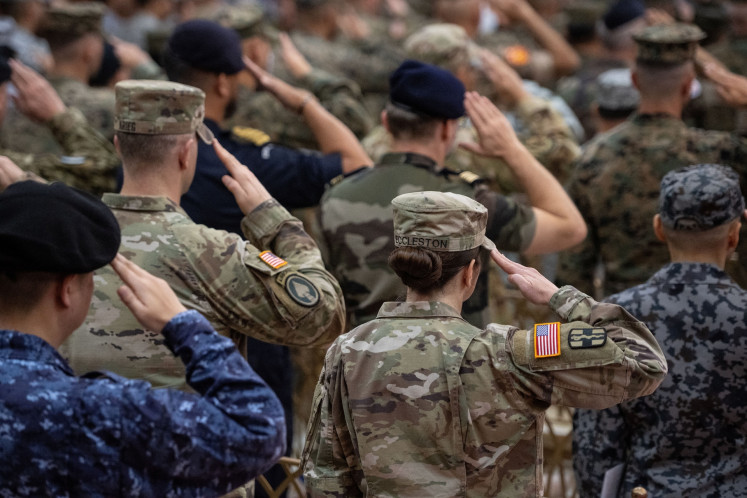
The nine days separating the Major Defense Cooperation Partnership (MDCP), signed by Defense Minister Sjafrie Sjamsoeddin on April 13, from Finance Minister Purbaya Yudhi Sadewa’s Malacca toll proposal on April 22 illustrate the ladder’s asymmetric dynamics. One minister tried to hold the line. The other, in a single symposium remark, moved it.
Indonesian sovereign airspace has occupied Rung 2 since the 1944 Chicago Convention. Overflight requests from foreign military aircraft have historically been evaluated case by case, with friction as the default. The most consequential decision embedded in the MDCP negotiation was not what Indonesia granted, but what it refused. Washington had pressed for blanket overflight, standing pre-authorization for United States military aircraft across Indonesian airspace. Such a clause would have elevated Indonesian airspace in a single stroke to Rung 4, converting a sovereign-discretion asset into a coalition-access asset and integrating it into another state’s contingency operations against a third party.
The clause was rejected. This decision deserves explicit recognition. In the capability calculus that governs adversary planning, a blanket overflight provision would have placed Indonesia, from Beijing’s analytical vantage, on the same rung as a formal US treaty ally. Its absence preserves the architecture of sovereign discretion that the bebas-aktif (independent and active) doctrine requires. Case-by-case clearance remains the operational default; each future overflight request must still clear an Indonesian review. The MDCP therefore represents a Rung 2 instrument, strategic hedging within the bounds of sovereign control, rather than the Rung 4 instrument it might have become.

This is disciplined statecraft of the kind the moment demanded. Sjafrie secured the strategic goods of the partnership, intelligence cooperation, interoperability and deterrent signaling, while refusing the single clause that would have punctured the legal-normative scaffolding of Indonesian neutrality. The defense minister held the ladder where it belongs.