TheJakartaPost
Please Update your browser
Your browser is out of date, and may not be compatible with our website. A list of the most popular web browsers can be found below.
Just click on the icons to get to the download page.


Popular Reads
Top Results
No results found. Please check your search term and try again
Can't find what you're looking for?
View all search results
Popular Reads
Top Results
No results found. Please check your search term and try again
Can't find what you're looking for?
View all search resultsProtecting 'the help'
After nearly a quarter century stuck in legislative limbo, the nation has finally passed a law guaranteeing the rights of domestic workers, but structural gaps and deep-seated social biases may still stand in the way of true protection.
Change text size
Gift Premium Articles
to Anyone
Share the best of The Jakarta Post with friends, family, or colleagues. As a subscriber, you can gift 3 to 5 articles each month that anyone can read—no subscription needed!
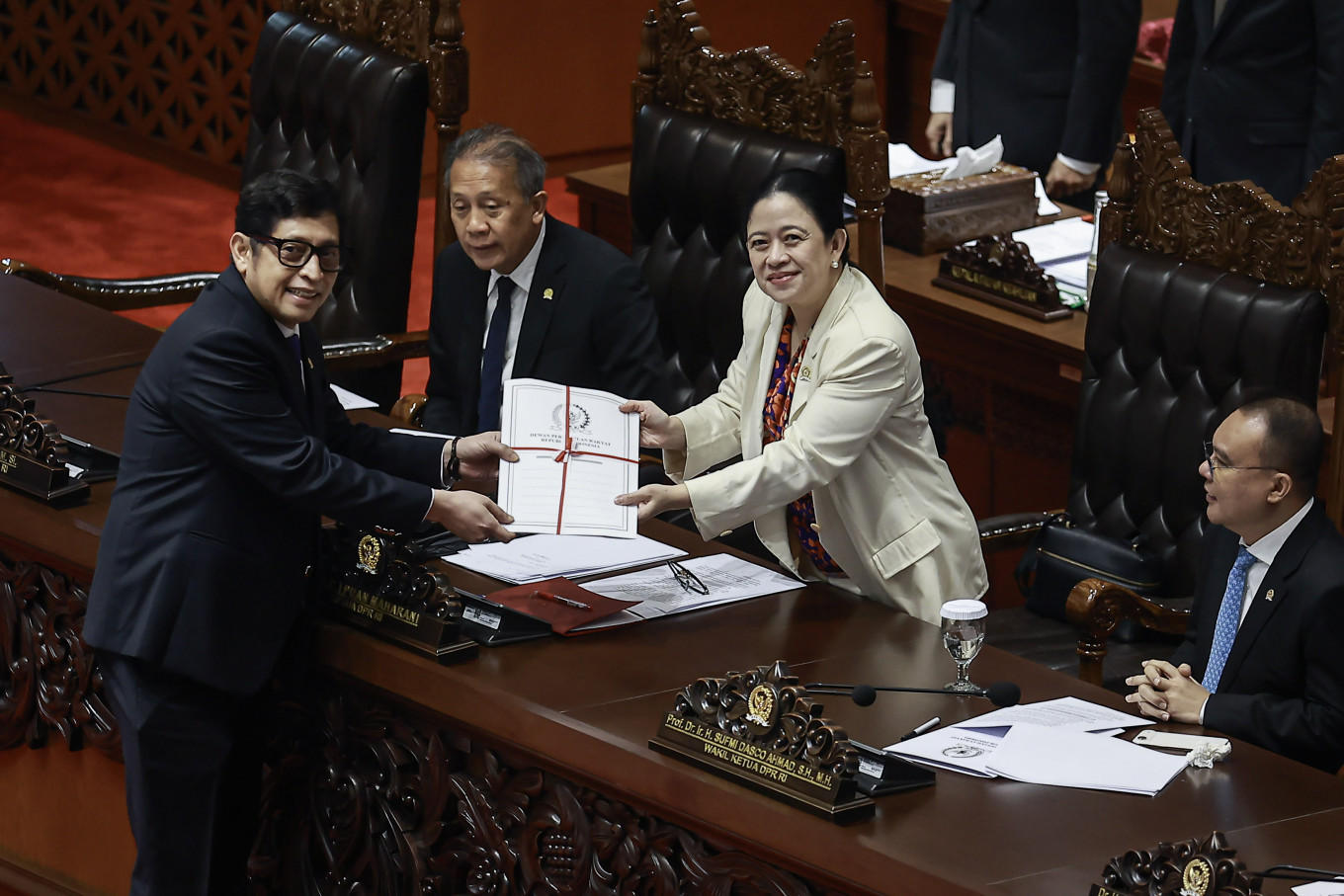 Final passage: House of Representatives Speaker Puan Maharani (right) receives a folio containing the Domestic Workers Protection Bill from Legislation Body (Baleg) chairman Bob Hasan on April 21, 2026, during a plenary session at the Senayan Legislative Complex in Central Jakarta. (Antara/Dhemas Reviyanto)
M
illions of Indonesian families, especially in urban areas, will have to change how they treat their housemaids, now that their right to protection and welfare have been formally recognized: The House of Representatives passed the Domestic Workers Protection Law (PPRT) on April 21, Kartini Day, honoring the icon of gender equality and women’s empowerment.
This milestone legislation is the fruit of decades of struggle to ensure protection for people who, owing to their limited education and poverty, enter domestic service.
The law also ends a long-standing paradox: While Indonesians demanded that foreign governments protect Indonesian migrant workers abroad, they remained silent on the rights of domestic workers at home.
Key points of the new law include formal recognition of domestic service as an occupation, a minimum age limit of 18, a minimum wage requirement, social security and regulated working conditions. The law also mandates government oversight down to the neighborhood unit (RT) level to monitor compliance and mediate employment disputes.
“The law aims to provide legal certainty for both domestic workers and employers and to prevent all forms of discrimination, exploitation and abuse,” Law Minister Supratman Andi Agtas told the House plenary session last Tuesday.
The government is obligated to ensure the law’s effective nationwide application by April 2027, and must issue technical and implementing regulations to fulfill this mandate. Furthermore, state agencies to the regional level are responsible for public dissemination of the new legislation. The yearlong time frame should give the government ample leeway to draft the necessary rules and guidance to implement the law.

The bill was first introduced in 2004 but took 22 years for it to become law, marking a new record for the House as the first legislation requiring more than two decades from proposal to enactment.