TheJakartaPost
Please Update your browser
Your browser is out of date, and may not be compatible with our website. A list of the most popular web browsers can be found below.
Just click on the icons to get to the download page.


Popular Reads
Top Results
No results found. Please check your search term and try again
Can't find what you're looking for?
View all search results
Popular Reads
Top Results
No results found. Please check your search term and try again
Can't find what you're looking for?
View all search resultsAnalysis: Why the news spotlight on ex-VP Jusuf Kalla?
Change text size
Gift Premium Articles
to Anyone
Share the best of The Jakarta Post with friends, family, or colleagues. As a subscriber, you can gift 3 to 5 articles each month that anyone can read—no subscription needed!
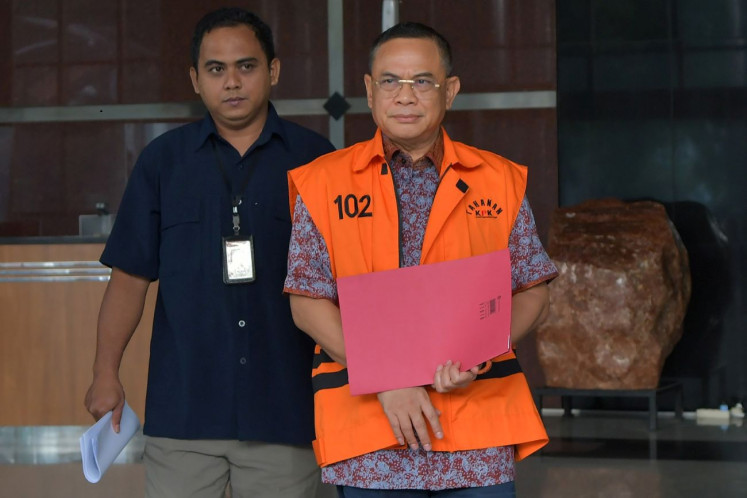
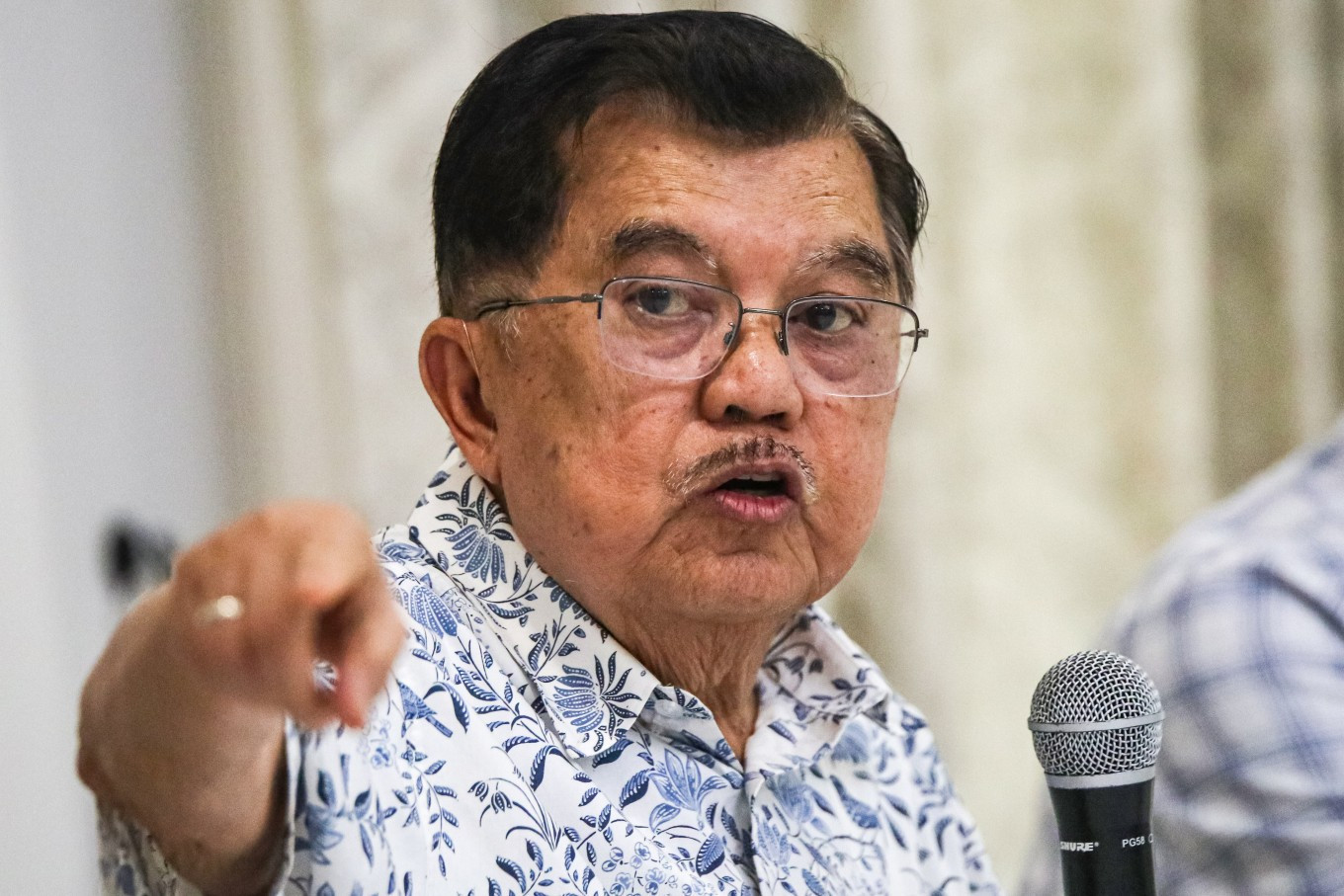 Former vice president Jusuf Kalla speaks to the press on April 18 in his residence in Jakarta. Kalla denies allegations of blasphemy over remarks he made during a public lecture in March and says his comments were taken out of context in a way that defames him. (Antara/Rakha Raditya Yahya)
J
usuf Kalla has been among the top trending news in recent weeks, reflecting the enduring relevance of one of Indonesia’s most seasoned statesmen. Kalla, who served as vice president a decade apart in 2004-2009 and 2014-2019, is still highly revered but now aged 83, it is unlikely that he will seek elected office again in 2029.
So, why the constant spotlight on him? Kalla may no longer have political ambitions, but his public stature makes him a convenient target to be portrayed as a boogeyman by some political elites gearing up for the next elections.
Kalla has been the target of virulent attacks, initially on social media, but several Protestant and Catholic groups have now reported him to the police for alleged blasphemy, a crime punishable by up to five years in prison.
Their complaint is based on a lecture Kalla delivered on March 5 at Gadjah Mada University (UGM), in which he talked about his experience in ending the sectarian violence between Christians and Muslims in Ambon in 2002. He described how the two sides used their respective faiths to justify the killings as “martyrdom”.
The Indonesian Protestant Youth Movement (GAMKI), which is leading the blasphemy charge, said Christianity did not justify killing under any pretext, including martyrdom.
Responding to the allegation, Kalla said his remarks on martyrdom were taken out of context: He was not describing any particular religious doctrine but only his observations during the negotiation process. A number of Christian leaders who were present at the signing of the Malino II Peace Accord in 2002 have also spoken up in Kalla’s defense.

Kalla has built his reputation as a peacemaker, first by ending the 1998-2001 conflict between Christians and Muslims in Poso, Central Sulawesi, followed by the 2002 Ambon peace deal. On both occasions, he was acting in his capacity as coordinating minister for people’s welfare under former president Megawati Soekarnoputri. Later in 2005, he was instrumental in ending the decades-long separatist conflict in Aceh during his tenure as vice president to Susilo Bambang Yudhoyono in 2004-2009. He is currently chair of the Indonesian Red Cross, a position he has held since 2009.