TheJakartaPost
Please Update your browser
Your browser is out of date, and may not be compatible with our website. A list of the most popular web browsers can be found below.
Just click on the icons to get to the download page.


Popular Reads
Top Results
No results found. Please check your search term and try again
Can't find what you're looking for?
View all search results
Popular Reads
Top Results
No results found. Please check your search term and try again
Can't find what you're looking for?
View all search resultsFatal crossings, failing signals
Safety should be a structural guarantee, not a matter of luck. The Bekasi train collision must finally end the country’s deadly reliance on level crossings.
Change text size
Gift Premium Articles
to Anyone
Share the best of The Jakarta Post with friends, family, or colleagues. As a subscriber, you can gift 3 to 5 articles each month that anyone can read—no subscription needed!
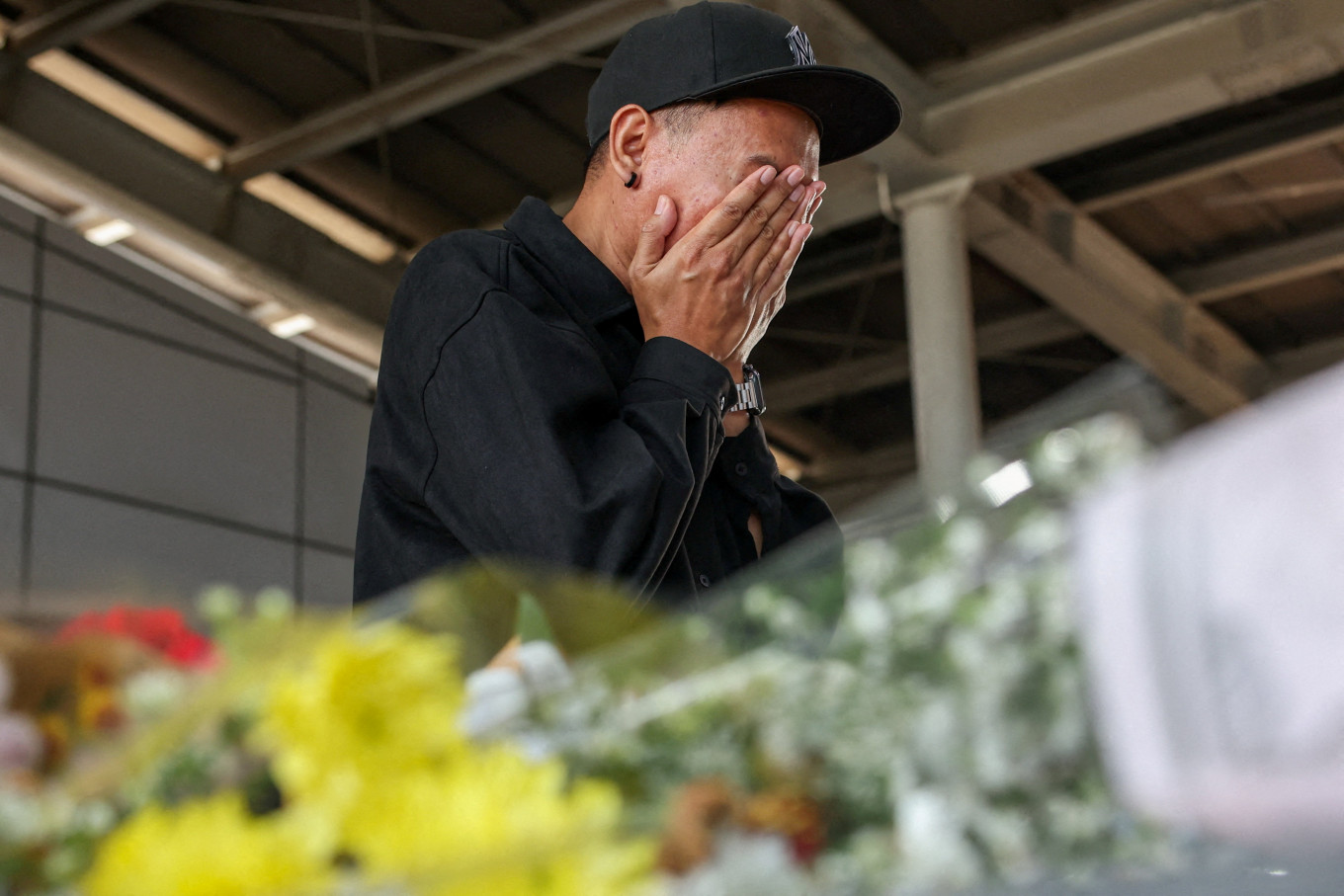 A passenger reacts near bouquets of flowers left in tribute for victims of the deadly collision between a commuter train and an intercity train, at Bekasi Timur Station in Bekasi, West Java, April 30, 2026. (REUTERS/Ajeng Dinar Ulfiana )
T
he train collision at Bekasi Timur Station in Bekasi, West Java, on Monday evening was not an anomaly. It was a failure foretold, by geography, infrastructure and decades of policy inaction.
The disaster began when an electric taxi stalled on a level crossing just over 200 meters from the station. It was struck by a Commuter Line train, triggering a chain reaction that ended with the Argo Bromo Anggrek, a long-distance intercity train, crashing into another stationary commuter train on the opposite track. The impact utterly destroyed the rear carriage, a designated women-only car. All of the 16 fatalities were women.
The victims were not mere statistics; they were individuals on an ordinary journey home. Their families deserve accountability and a system that ensures such a tragedy is never repeated. While President Prabowo Subianto has ordered a full investigation and acknowledged that some 1,800 level crossings across Java require urgent attention, these steps must lead to sustained, system-wide action.
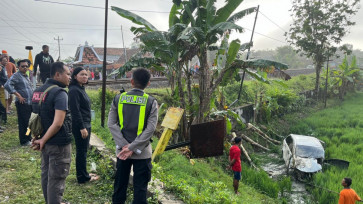
A look at the accident site reveals how vulnerable the network remains. The crossing near Bekasi Timur Station is a narrow two-way road, informally guarded by men working in shifts with a simple bamboo poll as barrier. Even with these guards, motorists often attempt to dash across as trains approach. This reflects a system that still relies dangerously on human judgment at critical failure points.
The pattern is tragically familiar. In 2013, a commuter train collided with a fuel tanker at a level crossing in Bintaro, South Tangerang, Banten, killing seven. That crossing was eventually replaced with an overpass, yet similar vulnerabilities remain elsewhere. Level crossings are not simply risks to be managed; they are structural flaws that must be designed out of the system entirely.
In nations with dense populations and legacy rail networks, such as Japan and India, crossings have been steadily eliminated, especially along busy commuter corridors. Where trains and vehicles no longer meet, collisions cease to be a part of the risk profile.

Indonesia has largely taken the opposite approach, treating crossings as acceptable interfaces between incompatible systems. We have layered them with barriers and warnings in the hope that vigilance can compensate for structural exposure. It cannot.






Your Opinion Matters
Share your experiences, suggestions, and any issues you've encountered on The Jakarta Post. We're here to listen.
Enter at least 30 characters
0
/ 30
Thank you
Thank you for sharing your thoughts. We appreciate your feedback.