TheJakartaPost
Please Update your browser
Your browser is out of date, and may not be compatible with our website. A list of the most popular web browsers can be found below.
Just click on the icons to get to the download page.


Popular Reads
Top Results
No results found. Please check your search term and try again
Can't find what you're looking for?
View all search results
Popular Reads
Top Results
No results found. Please check your search term and try again
Can't find what you're looking for?
View all search resultsAnalysis: Jokowi’s "safari politik": Strategy, motives and political impact
Change text size
Gift Premium Articles
to Anyone
Share the best of The Jakarta Post with friends, family, or colleagues. As a subscriber, you can gift 3 to 5 articles each month that anyone can read—no subscription needed!
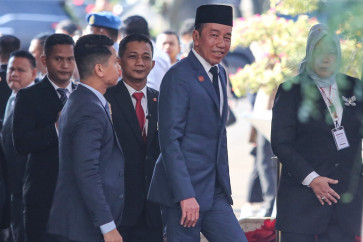
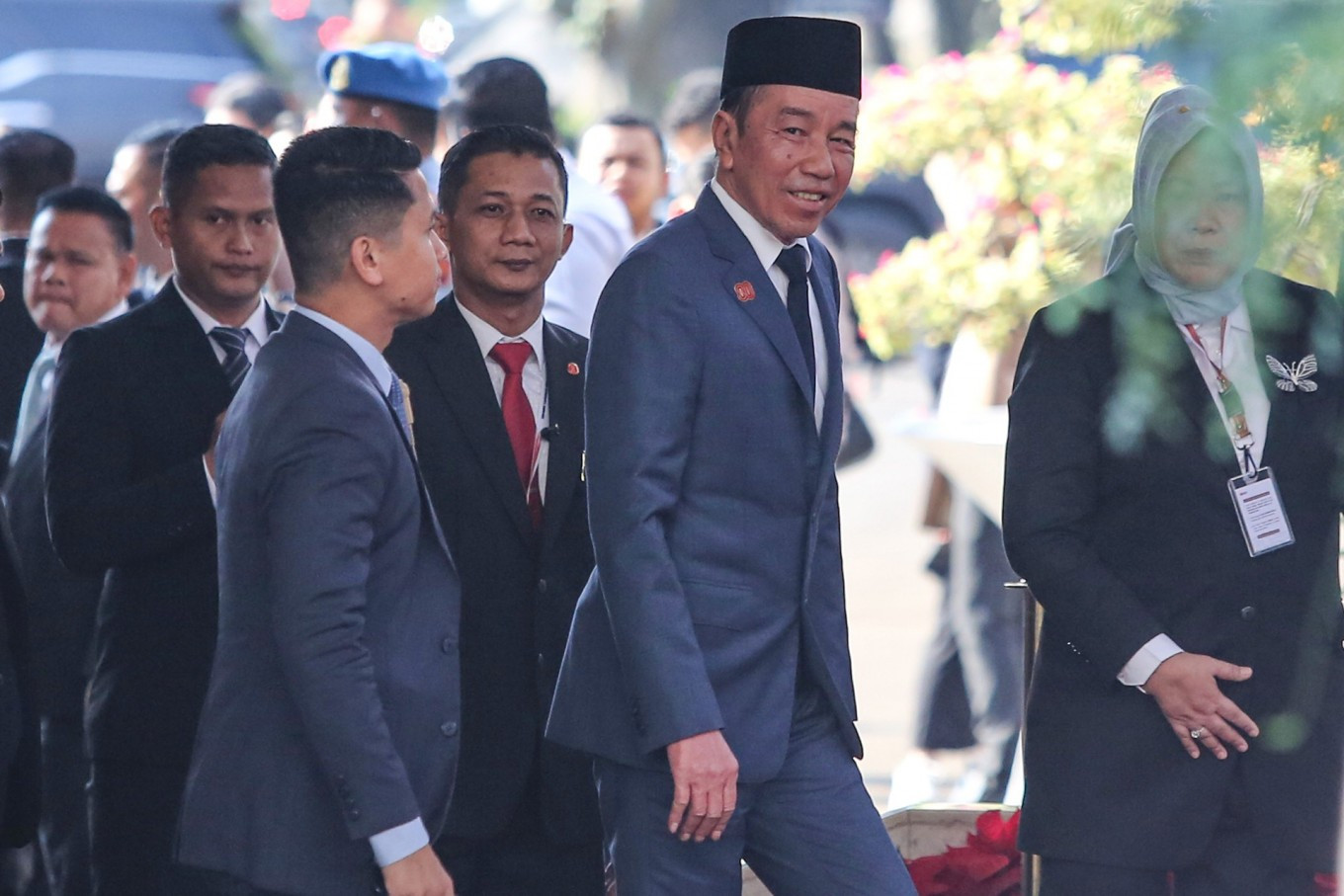 Former president Joko “Jokowi“ Widodo arrives at the Senayan Legislative Complex in Central Jakarta on Aug. 15, 2025, to attend President Prabowo Subianto's first State of the Nation address. (Antara/Asprilla Dwi Adha)
J
oko “Jokowi” Widodo’s "safari politik" (campaign tour) since June marks a significant turning point in Indonesia’s post-presidential politics. Although publicly framed as a series of visits to fulfil invitations and meet citizens, the former presidents tour reflects a calculated effort to sustain influence, reorganize political alliances and shape the country’s political future toward the 2029 elections. Rather than a purely symbolic return, the "safari politik" represents a strategic repositioning in a political landscape now led by President Prabowo Subianto.
After completing his presidency in October 2024, Jokowi entered a quieter phase, though he remained highly popular among the public. By late May 2026, he announced plans to travel across Indonesia, beginning with Lampung, East Nusa Tenggara Timur and West Java provinces, after recovering from health issues.
Officially, Jokowi described the visits as responses to invitations from local communities and efforts to maintain social ties. However, the scale of the tour and its timing highlight a broader political context. Jokowi is no longer aligned with the Indonesian Democratic Party of Struggle (PDI-P), the party that supported his presidency from 2014 to 2024, and is increasingly associated with the Indonesian Solidarity Party (PSI), led by his son Kaesang Pangarep.
Jokowi’s safari serves several interconnected goals. First, it is a demonstration of continued political relevance. By visiting multiple regions and mobilizing public enthusiasm, Jokowi signals that his popularity remains strong even after leaving office. Analysts view this as a message to political elites, including Prabowo, that Jokowi still commands a significant grassroots base.
Second, the "safari politik" is widely seen as a strategy to strengthen PSI. Observers argue that Jokowi is leveraging his popularity to boost the party’s electability and potentially help it pass the parliamentary threshold. Since PSI lacks a strong nationwide structure, Jokowi’s personal appeal becomes its most valuable political asset.
Third, the tour reflects a long-term political calculation toward 2029. Analysts suggest Jokowi is maintaining bargaining power in coalition politics while positioning his political network for future competition. This includes indirectly supporting the political trajectory of his son, Vice President Gibran Rakabuming Raka.

Finally, the tour continues Jokowi’s signature blusukan-style engagement, but with a clearer electoral and organizational purpose. It is no longer just about connecting with citizens, it is also about mobilizing supporters and consolidating networks.