TheJakartaPost
Please Update your browser
Your browser is out of date, and may not be compatible with our website. A list of the most popular web browsers can be found below.
Just click on the icons to get to the download page.


Popular Reads
Top Results
No results found. Please check your search term and try again
Can't find what you're looking for?
View all search results
Popular Reads
Top Results
No results found. Please check your search term and try again
Can't find what you're looking for?
View all search resultsAnalysis: Danantara’s growing mandate raises governance questions
Change text size
Gift Premium Articles
to Anyone
Share the best of The Jakarta Post with friends, family, or colleagues. As a subscriber, you can gift 3 to 5 articles each month that anyone can read—no subscription needed!
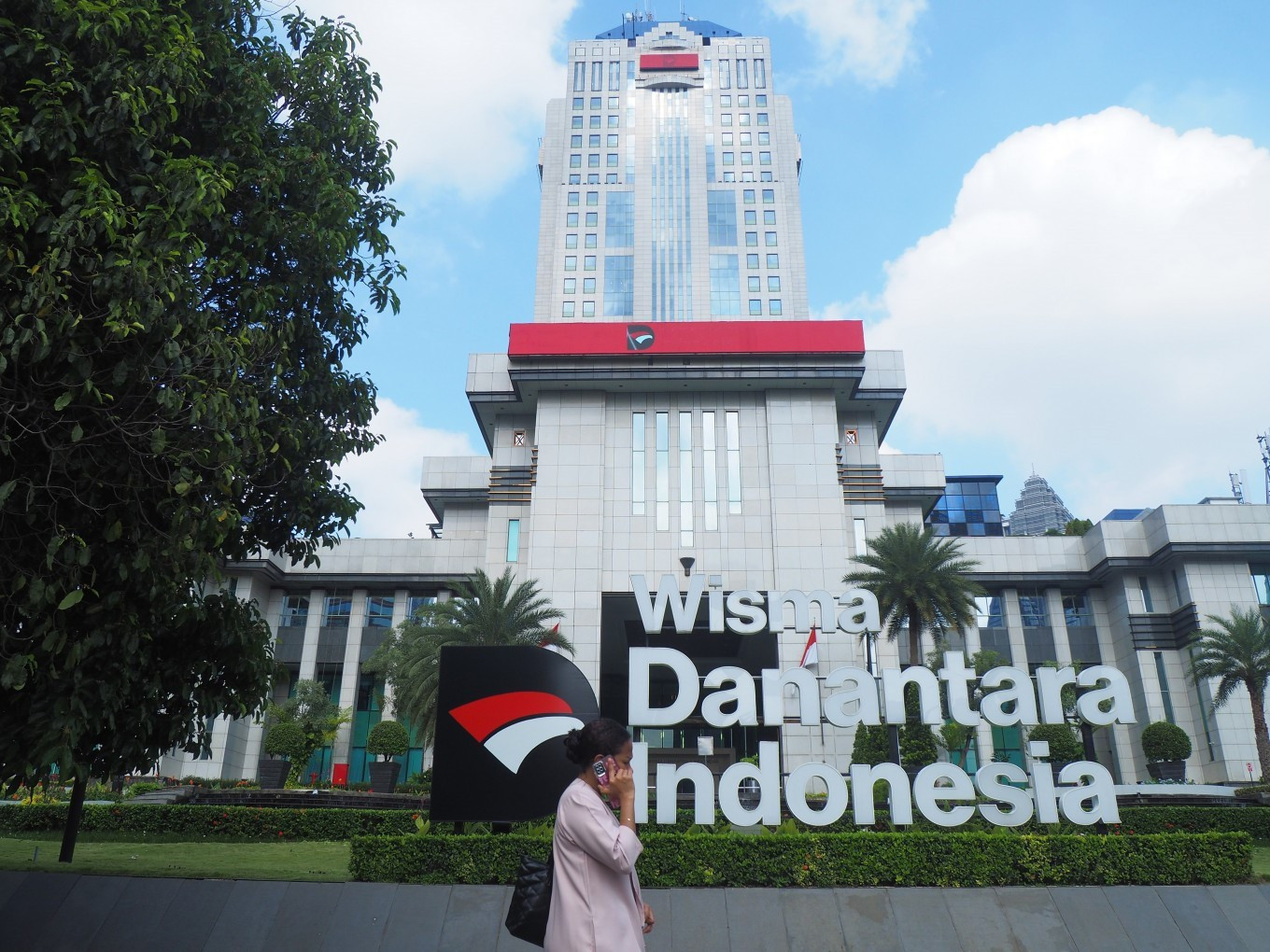 A woman walks past the Wisma Danantara Indonesia building on May 6 on Jl. Jend. Gatot Subroto in South Jakarta. (JP/Iqro Rinaldi)
T
he government has issued Government Regulation (PP) No. 19/2026 on state asset fund Danantara, allowing entities under Danantara Investment Management (DIM) to receive state capital injections from the state budget for purposes of national development and public service. While Danantara recently secured investment grade credit ratings, the new regulation raises concerns about moral hazard, particularly as questions on the fund’s governance, transparency and financial disclosures remain unresolved.
Under the new regulation, Danantara is authorized to establish multiple investment and operational holdings with presidential approval. These holdings may be used for various purposes, including commercial activities, development programs and other strategic objectives as determined by the president. Importantly, holdings established for national development aims are eligible to receive state capital injections.
This provision creates greater flexibility for Danantara to support national development priorities, particularly infrastructure projects. It can also provide a vehicle for state-owned enterprises (SOEs) in carrying out public service mandates and infrastructure projects through dedicated holdings that focus on fulfilling national development goals. In principle, this mechanism allows for more effective mobilization of state capital injections and SOE dividends to support public welfare.
These objectives come with significant risks, however. The success of this model depends heavily on credibility, transparency and accountability. Public funds must be managed prudently and supported by robust governance mechanisms and effective oversight. Without adequate safeguards, a policy designed to accelerate development could instead create inefficiencies, fiscal risks and governance failures.
Moreover, the new regulation further strengthens Danantara’s authority in managing SOEs, as the SOEs Regulatory Agency (BP BUMN), formerly the SOEs Ministry, no longer shares the authority to approve certain strategic matters with Danantara. For example, Danantara now has sole authority to approve the proposed write-off of SOE assets.
Given this context, Danantara’s governance framework warrants greater scrutiny. Danantara has described itself as a sui generis institution: a special entity established by law that operates outside the conventional government structure. Based on this interpretation, Danantara argues that it is only required to submit annual financial reports to the Supreme Audit Agency (BPK).

This position has attracted criticism, considering the scale of the assets under Danantara’s management, projected to reach approximately US$900 billion, including SOE assets and future dividend streams. Governance concerns have become even more pronounced following the government's decision to place Danantara at the center of new strategic initiatives.