TheJakartaPost
Please Update your browser
Your browser is out of date, and may not be compatible with our website. A list of the most popular web browsers can be found below.
Just click on the icons to get to the download page.


Popular Reads
Top Results
No results found. Please check your search term and try again
Can't find what you're looking for?
View all search results
Popular Reads
Top Results
No results found. Please check your search term and try again
Can't find what you're looking for?
View all search resultsManaging Sino-American interdependence
In a world of intertwined global value chains, the US and China have undeniably developed a relationship of “mutually assured economic pain.”
Change text size
Gift Premium Articles
to Anyone
Share the best of The Jakarta Post with friends, family, or colleagues. As a subscriber, you can gift 3 to 5 articles each month that anyone can read—no subscription needed!
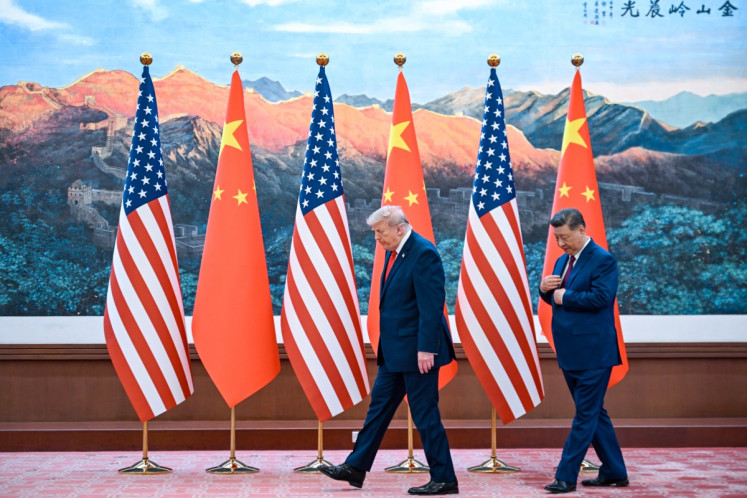
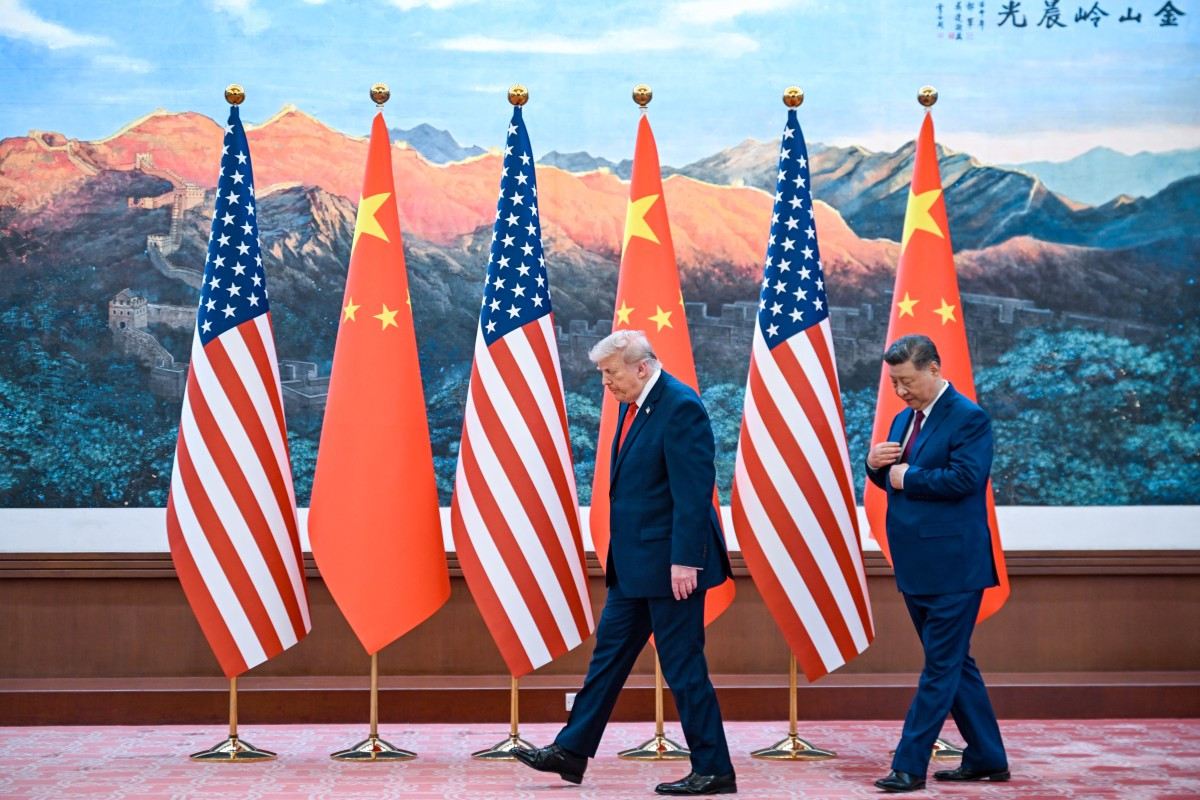 China's President Xi Jinping (right) receives US President Donald Trump after a welcome ceremony at the Great Hall of the People in Beijing on May 14, 2026. (AFP/Kenny Holston)
L
ast month’s summit between United States President Donald Trump and Chinese President Xi Jinping signaled that the Sino-American relationship is moving from intense confrontation back toward something more stable.
Both sides have committed to fostering a “constructive relationship of strategic stability.” Their disagreements have not disappeared, but each has come to realize that continued escalation is costly, dangerous and unsustainable. Competition must be governed by rules, and disputes must be managed.
This judgment rests on sound strategic logic. During the Cold War, the prospect of “mutually assured destruction” prevented the US and the Soviet Union from engaging in a head-to-head military conflict. Neither side trusted the other, but both understood that there could be no real winner from an escalatory war between nuclear powers.
A similar logic applies to the US-China economic relationship. Of course, economic interdependence is not the same as nuclear deterrence, and the potential costs of misjudgments do not rise to the same level. But in a world of intertwined global value chains, the US and China have undeniably developed a relationship of “mutually assured economic pain.” If either side tried to cripple the other through full decoupling, extreme pressure tactics, or moves to sever supply chains, it would also harm its own firms, consumers and financial markets.

This marks an important change in great-power relations. Historically, countries that went to war had only limited economic ties. Even in the case of World War I and II, trade had expanded, but much of it was between different industries. Only after World War II did trade become increasingly intra-industry, and now the US-China economic relationship has gone further. It is both deeper and broader than earlier forms of great-power economic interdependence.



![Women hold up posters that read, “Life is still hard [while] my taxes are used as they like. Stop MBG,” during a protest in Jakarta on June 18, 2026, calling for a review of the free nutritious meal (MBG) program, lower fuel prices and create more jobs for women. (AFP/Bay Ismoyo)](https://img.jakpost.net/c/2026/06/28/2026_06_28_177077_1782607421._medium.jpg)