TheJakartaPost
Please Update your browser
Your browser is out of date, and may not be compatible with our website. A list of the most popular web browsers can be found below.
Just click on the icons to get to the download page.


Popular Reads
Top Results
No results found. Please check your search term and try again
Can't find what you're looking for?
View all search results
Popular Reads
Top Results
No results found. Please check your search term and try again
Can't find what you're looking for?
View all search results‘Atatbon’: Protecting forests beyond the harvest
Beyond the headlines of environmental conflict, Papua’s ancient pig feasts offer modern climate policymakers a profound lesson in generational forest stewardship.
Change text size
Gift Premium Articles
to Anyone
Share the best of The Jakarta Post with friends, family, or colleagues. As a subscriber, you can gift 3 to 5 articles each month that anyone can read—no subscription needed!
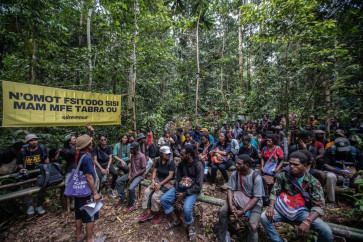
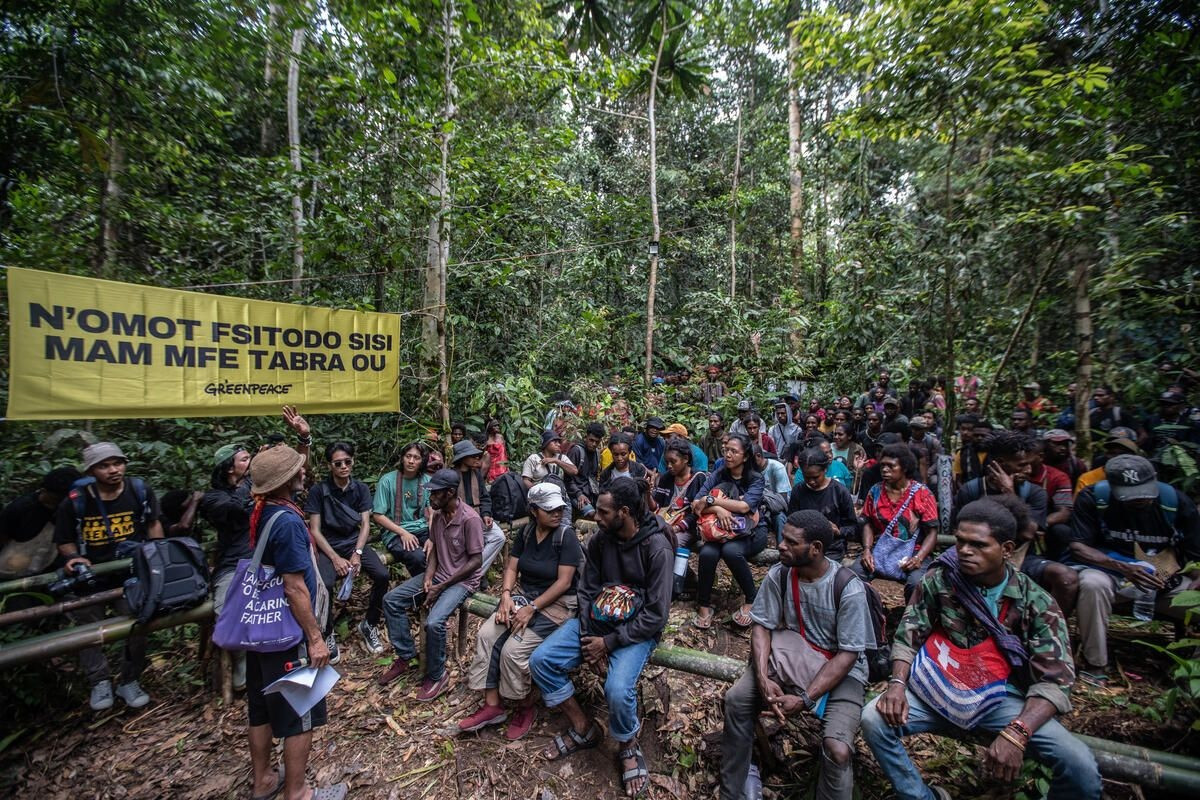 Papuan youths gather in the Knasaimos communal village forest in Manggroholo-Sira, Saifi District, South Sorong, Southwest Papua for the Forest Defender Camp, an initiative organized by Greenpeace Indonesia in collaboration with Sadir Wet Yifi and Bentara Papua from Sept. 20 to 22, 2023. (Greenpeace Indonesia/Jurnasyanto Sukarno)
T
he phrase Pesta Babi (pig feast) currently commands two entirely different meanings in the public consciousness. One is a controversial documentary released this year, detailing deforestation, military escorts and land conflict in southern Papua. The other is a centuries-old ritual - known as ebe akho or mawe by the Dani, and atatbon by the Muyu - that has anchored the social, ceremonial and ecological life of the Papua highlands and the southern river systems for generations.
While the documentary captures modern extraction, the traditional feast represents an ancient system of environmental stewardship: a pig raised for the feast owes a debt to both ancestors and the clan, a debt sustained entirely by the forest.
In Papuan society, a pig is not merely livestock in the commercial sense recognized by an outsider. It sleeps on the floor of the common house, defines a man’s social standing and serves as a vital participant in marriage, mourning, compensation and rites of passage. These animals are treated as kin. Rather than being confined to pens, Papuan pigs roam freely through old-growth forests and fallow gardens, sustained by the same ecosystem that will eventually allow the host clan to feed its guests.
Many pigs are given names. Calling an animal home from the dense canopy requires years of close observation - learning its feeding habits, sleeping spots and preferred pathways. Consequently, raising a pig demands a decade of communal labor that cannot be bypassed by simply purchasing an animal before a ceremony.
For the Dani and Muyu, the pig serves as a living bridge to the supernatural, facilitating communication with ancestors. The commencement of the ebe akho does more than signal a celebration; it confirms that the participating clans have fulfilled their reciprocal obligations to the living and the dead.
Similarly, the Muyu ritual of atatbon cannot simply be assembled when food and guests are abundant. It requires a meticulous sequence of preparations: clearing the ceremonial ground, constructing enclosures, planting the sacred tree and lighting the ritual fire. Each step verifies that the host has respected inherited protocols before any slaughter can occur.

A singular figure, the Amin bon tibri, bears the spiritual weight of these preparations. From the moment the ceremonial fire enters the house, he must observe strict ascetic restrictions, prepare offerings near the sacred waruk tree and perform the initial rites. His role underscores that atatbon is not a measure of material abundance, but of spiritual and communal alignment.