TheJakartaPost
Please Update your browser
Your browser is out of date, and may not be compatible with our website. A list of the most popular web browsers can be found below.
Just click on the icons to get to the download page.


Popular Reads
Top Results
No results found. Please check your search term and try again
Can't find what you're looking for?
View all search results
Popular Reads
Top Results
No results found. Please check your search term and try again
Can't find what you're looking for?
View all search resultsPrabowo's populist economics and public ethics
One important element that appears to be missing from Prabowo's agenda is the cultivation of a strong foundation of public ethics.
Change text size
Gift Premium Articles
to Anyone
Share the best of The Jakarta Post with friends, family, or colleagues. As a subscriber, you can gift 3 to 5 articles each month that anyone can read—no subscription needed!
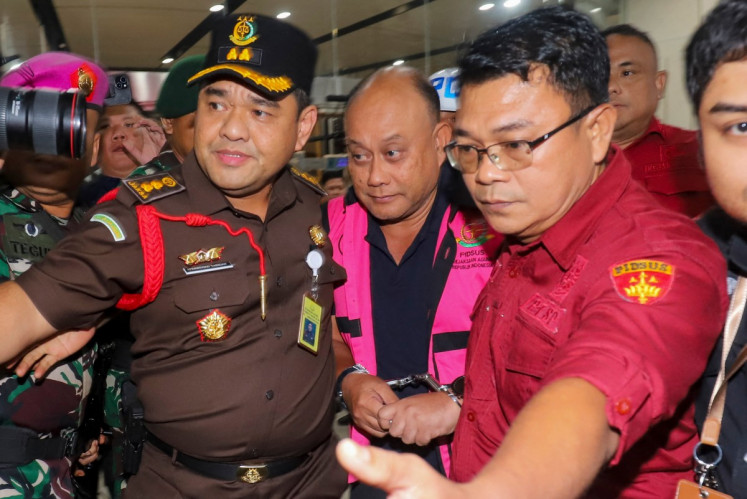
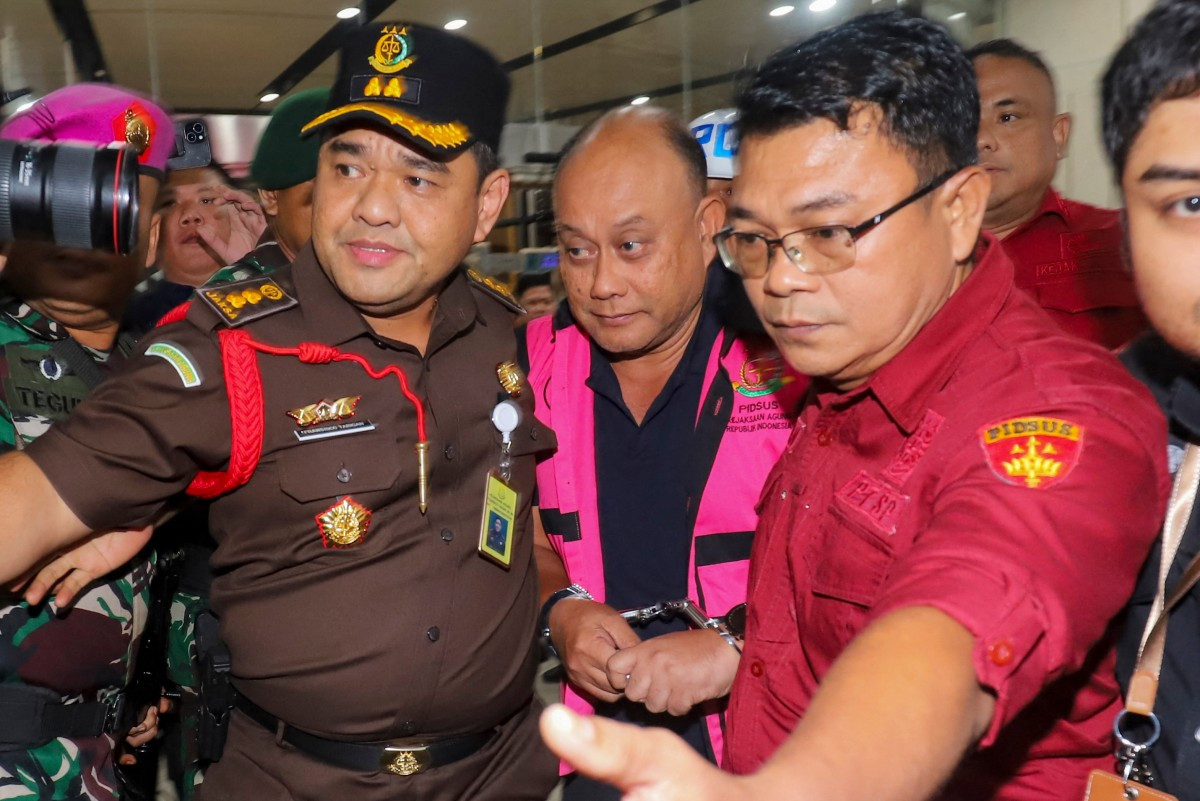 Dadan Hindayana (center), the former head of the agency overseeing the free meals program, is escorted by officers from the Attorney General's Office (AGO) and Indonesian Military (TNI) personnel as he leaves the AGO building in Jakarta on June 3, 2026, following questioning over alleged misappropriation in the implementation of the program. (AFP/Diyah Nasution)
P
resident Prabowo Subianto's policy agenda has been striking in one important respect: it reflects an ambitious attempt to pursue a relatively radical redistribution of economic opportunities through conventional economic mechanisms, rather than relying primarily on subsidies, cash transfers or food assistance, as previous governments have done.
Instead, his administration seeks to build and revive the economic ecosystem of ordinary Indonesians through cooperatives, small business networks and foundations that have long been left behind or constrained by what might be described as Indonesia's ersatz capitalism.
Initiatives such as the free nutritious meal program, the Red and White Cooperatives and the plan to build 3 million affordable homes are all part of this broader vision. However, the government must seriously correct the deviations that occur if the programs are to achieve their good intentions.
At the same time, President Prabowo is also seeking to make Indonesia a wealthier nation through stronger economic growth and capital accumulation. This vision is reflected in the establishment of state asset fund Danantara, designed to consolidate state-owned enterprise assets, as well as the recently launched Indonesia International Financial Center (PFII).
In many respects, Prabowo's strategy resembles the path taken by countries that have sought to reduce inequality while simultaneously strengthening national wealth. China and Vietnam, for example, have pursued economic transformation by combining policies aimed at redistributing opportunities with strategies to accumulate national capital.
Yet there is one important element that appears to be missing from Prabowo's agenda: the cultivation of a strong foundation of public ethics. In its broadest sense, public ethics refers to the moral values and standards that guide the conduct of citizens, public officials and state institutions.

Economic development that focuses primarily on modern institutions and physical infrastructure, while neglecting the cultural and moral foundations that sustain them, risks running into serious difficulties over time. The widespread corruption that has emerged even within flagship public welfare programs reflects not only weaknesses in implementation but also the absence of a shared ethical foundation capable of guiding public officials in exercising power responsibly.