TheJakartaPost
Please Update your browser
Your browser is out of date, and may not be compatible with our website. A list of the most popular web browsers can be found below.
Just click on the icons to get to the download page.


Popular Reads
Top Results
No results found. Please check your search term and try again
Can't find what you're looking for?
View all search results
Popular Reads
Top Results
No results found. Please check your search term and try again
Can't find what you're looking for?
View all search resultsA chief but unrecognized supporter of Indonesia’s independence
Neither Australia nor Indonesia has fully recognized the myriad ways Australia’s 16th prime minister Ben Chifley used his timely influence to end colonial rule.
Change text size
Gift Premium Articles
to Anyone
Share the best of The Jakarta Post with friends, family, or colleagues. As a subscriber, you can gift 3 to 5 articles each month that anyone can read—no subscription needed!
 Set as preferred source
 A participant unfurls a red-and-white flag on Sunday while taking part in the Red and White Parade along Jl. Jenderal Sudirman in Bogor, West Java. (JP/Iqro Rinaldi)
D
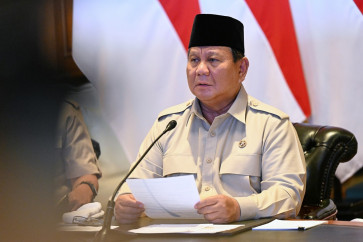
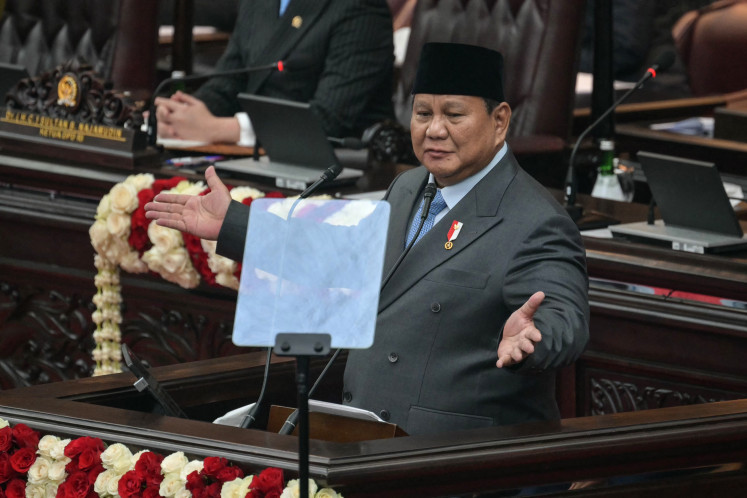
uring independence celebrations two years ago when then defense minister and president-elect Prabowo Subianto visited Canberra, he recalled Australia’s help during Indonesia’s struggle against Dutch recolonization.
As fate would have it, the time in office of Australia’s 16th prime minister, Ben Chifley, was the same timeframe as Indonesia’s war of independence, 1945-1949. But neither Australia nor Indonesia has fully recognized the myriad ways he used his timely influence to end colonial rule.
Both the United States and the United Kingdom railed against Australia’s standing up for “the interests of the Indonesian Republic over Dutch ambitions [to recolonize]”. British officials in Canberra told London that the Australian government had a “strong prejudice in favor of the Indonesians” and an American representative in Java branded the Australian stance as “irresponsible” and “wondered how the Australians ever got the way they are”.
Even today few people realize that much earlier in Chifley’s life (1885-1951) he had developed a strong anticolonial ethos with a focus on Indonesia. In the late 1920s, before any commercial air travel between Australia and Batavia (Jakarta), Chifley visited the archipelago by ship.
Years later, when he casually mentioned this trip to Richard Kirby, a federal judge, he said he’d visited the Netherlands East Indies “just to see what was going on in those parts”. It is indeed a rare moment when a future prime minister, travelling much the same as today’s backpackers, visited Australia’s neighbor under Dutch colonial rule. When Chifley saw colonial rule in operation, he was “disgusted” and his firsthand experience led to deep disapproval of the “near-slavery conditions” that he witnessed.
Chifley himself had experienced hard times even before he was a teenager, working on a farm west of Sydney, near Bathurst, away from his parents. He had little formal education. He became a locomotive driver before standing for parliament. Twice he was unsuccessful before being elected in 1928.

All the time he was educating himself, reading widely about world events. He acquired expertise in economics equal to or better than graduates from the London School of Economics.