The Jakarta Post
Please Update your browser
Your browser is out of date, and may not be compatible with our website. A list of the most popular web browsers can be found below.
Just click on the icons to get to the download page.


Popular Reads
Top Results
No results found. Please check your search term and try again
Can't find what you're looking for?
View all search results
Popular Reads
Top Results
No results found. Please check your search term and try again
Can't find what you're looking for?
View all search resultsHow China’s GDI can support ASEAN’s next phase of growth
Southeast Asian countries are likely to judge China's Global Development Initiative on its ability to address real development needs, produce visible benefits and complement existing ASEAN frameworks.
Change text size
Gift Premium Articles
to Anyone
Share the best of The Jakarta Post with friends, family, or colleagues. As a subscriber, you can gift 3 to 5 articles each month that anyone can read—no subscription needed!
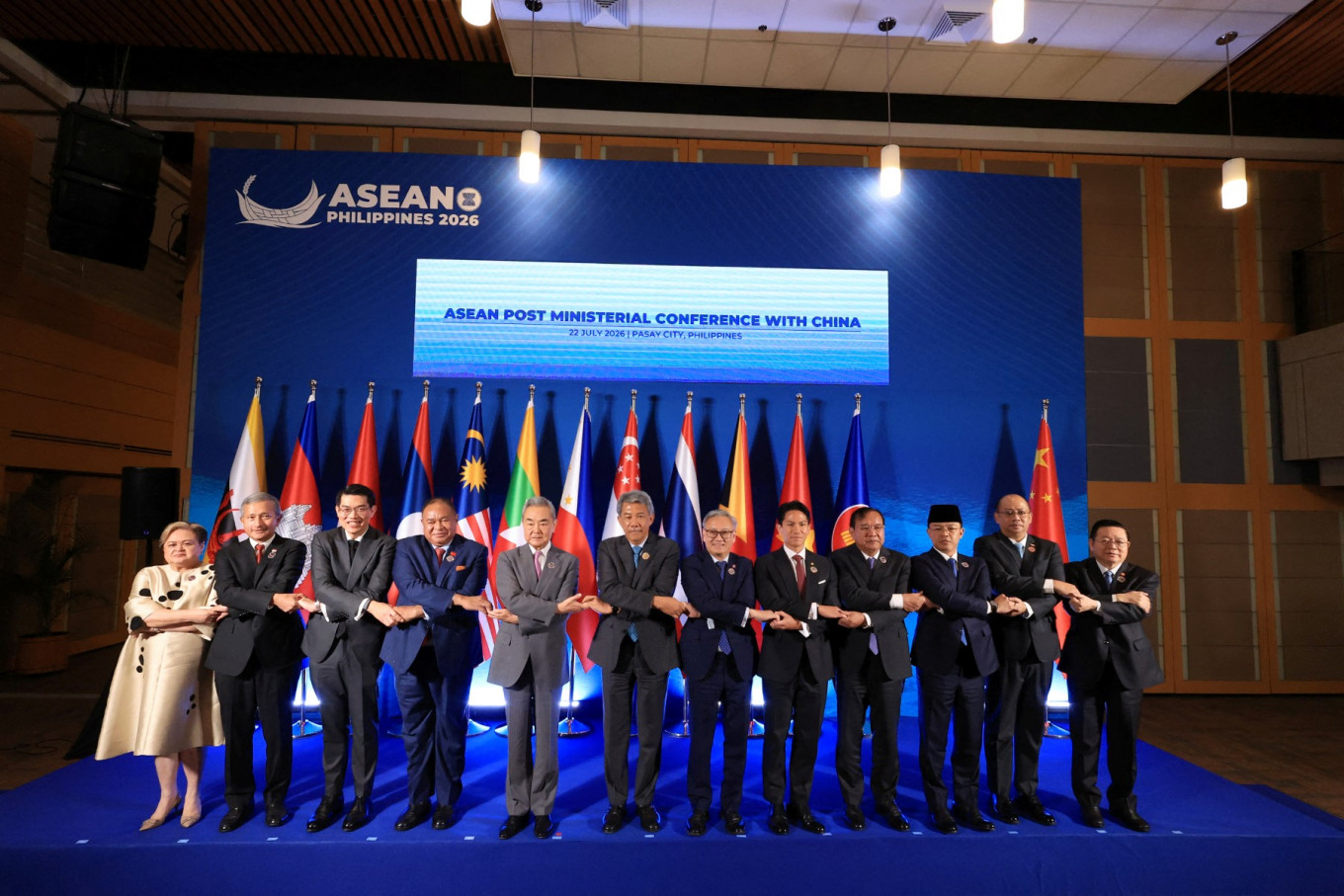 Chinese Foreign Minster Wang Yi poses for a group photo with ASEAN foreign ministers during the ASEAN Post Ministerial Conference with China on the sidelines of the ASEAN Foreign Ministers' Meeting in Pasay, Metro Manila, on July 22, 2026. (AFP/Pool/Eloisa Lopez)
S
outheast Asia is entering a more complex phase of development. For years, the region’s development was often associated with faster growth, more trade and new infrastructure. While these remain important, today’s development blueprint for ASEAN also includes building stronger institutions, narrowing development gaps, improving resilience and ensuring that the fruits of regional integration are shared among its people and communities more evenly.
Against this backdrop, China’s Global Development Initiative (GDI) has clear relevance for Southeast Asia. The GDI’s priorities, poverty reduction, food security, public health, development financing, climate action, industrialization, connectivity and the digital economy, overlap with many of the region’s needs. China offers not just financial might but also infrastructure capabilities, technological strengths and development experience.
However, the true value of the GDI in Southeast Asia will depend not only on what China can finance or build, but also on how well China’s capabilities align with ASEAN’s priorities. Its most impactful contribution may not be creating a separate development path, but helping ASEAN implement its existing commitments and integration plans.
ASEAN’s challenges are deeply interconnected. The region faces climate pressures, technological disruption, supply chain vulnerabilities, persistent development disparities and uneven implementation capabilities.
These issues cannot be addressed through isolated projects. They demand stronger regional systems, better cross-border connectivity and institutions that can translate agreements into tangible action.
The State of Southeast Asia 2026 Survey shows that China remains Southeast Asia’s most influential economic, political and strategic partner. It is widely recognized as an important and capable partner, a country that has the economic resources and political will to deliver outcomes.

Southeast Asian countries are likely to judge the GDI on its ability to address real development needs, produce visible benefits and complement existing ASEAN frameworks.
The survey also highlights ASEAN’s internal constraints. Respondents identified stronger intra-regional trade and investment, more resilient supply chains and accelerated regional integration as important priorities. More significantly, they saw weak implementation capacity and development disparities among ASEAN member states as the biggest impediments to greater intra-regional economic cooperation.
This suggests that ASEAN’s integration challenges are not external but lie within its ability to implement its commitments and ensure that the benefits of regional integration are more widely shared. This is where the GDI can make a practical contribution by bridging the gap between regional ambition and national implementation.
Recent insights from Singapore-based ISEAS-Yusof Ishak Institute researchers on Chinese-built transportation projects in Cambodia, Indonesia, Laos and Vietnam offer a grassroots perspective. Many users associate these projects with reduced travel times, greater convenience and improved access to jobs or business opportunities.
Development cooperation builds confidence most effectively when its benefits are directly experienced by people.
At the same time, infrastructure alone is not enough. Its wider impact may be limited when feeder networks are weak, customs procedures are inefficient or local firms cannot access new opportunities. Ensuring sound fiscal management, high environmental standards, affordability and strong social safeguards will support the long-term success of the projects.
The priority, therefore, is to ensure that the GDI supports the systems that underpin ASEAN integration. This includes strengthening implementation capacity so that officials, regulators and agencies can translate regional agreements into action.
China could support long-term technical cooperation in customs modernization, digital trade regulation, standards, environmental regulation and cross-border data governance. There should be more emphasis on institutional partnerships and joint problem-solving initiatives.
Development cooperation should also connect physical and soft infrastructure. Roads, railways and ports need to be supported by customs systems, logistics networks, digital documentation, compatible standards and local transportation links.
The GDI can add value by linking physical projects with the necessary regulatory, digital and institutional systems to create integrated economic corridors.
Supply-chain resilience is another priority, intertwined with digital and green development. China-ASEAN cooperation can help local industries upgrade, develop skills and enable more small businesses to participate in regional production networks. This cooperation should also support digital infrastructure, clean energy, electric mobility and climate-resilient production that future supply chains will require. China’s strengths in artificial intelligence, renewable energy, batteries and green manufacturing also have potential for cooperation.
The cooperation should also extend to people and communities. Infrastructure and trade matter, but development cooperation will also need to invest in technical and vocational education, digital skills, research partnerships, youth exchanges, local employment, knowledge transfer and community consultation.
These efforts would allow the GDI to move beyond individual projects and support stronger regional integration. By aligning more closely with ASEAN-led initiatives, it can help advance a more resilient and inclusive Southeast Asia, while making China’s development cooperation more visible, trusted and meaningful.
---
The writer is a senior fellow and coordinator at the ASEAN Studies Centre in the ISEAS-Yusof Ishak Institute, and former head of the External Relations Division of the ASEAN Secretariat.