TheJakartaPost
Please Update your browser
Your browser is out of date, and may not be compatible with our website. A list of the most popular web browsers can be found below.
Just click on the icons to get to the download page.


Popular Reads
Top Results
No results found. Please check your search term and try again
Can't find what you're looking for?
View all search results
Popular Reads
Top Results
No results found. Please check your search term and try again
Can't find what you're looking for?
View all search resultsBridging Indonesia’s deepening youth development gap
A successful village-first economic agenda requires transforming raw internet access into real opportunity before millions of disengaged young Indonesians are left behind.
Change text size
Gift Premium Articles
to Anyone
Share the best of The Jakarta Post with friends, family, or colleagues. As a subscriber, you can gift 3 to 5 articles each month that anyone can read—no subscription needed!
 Set as preferred source
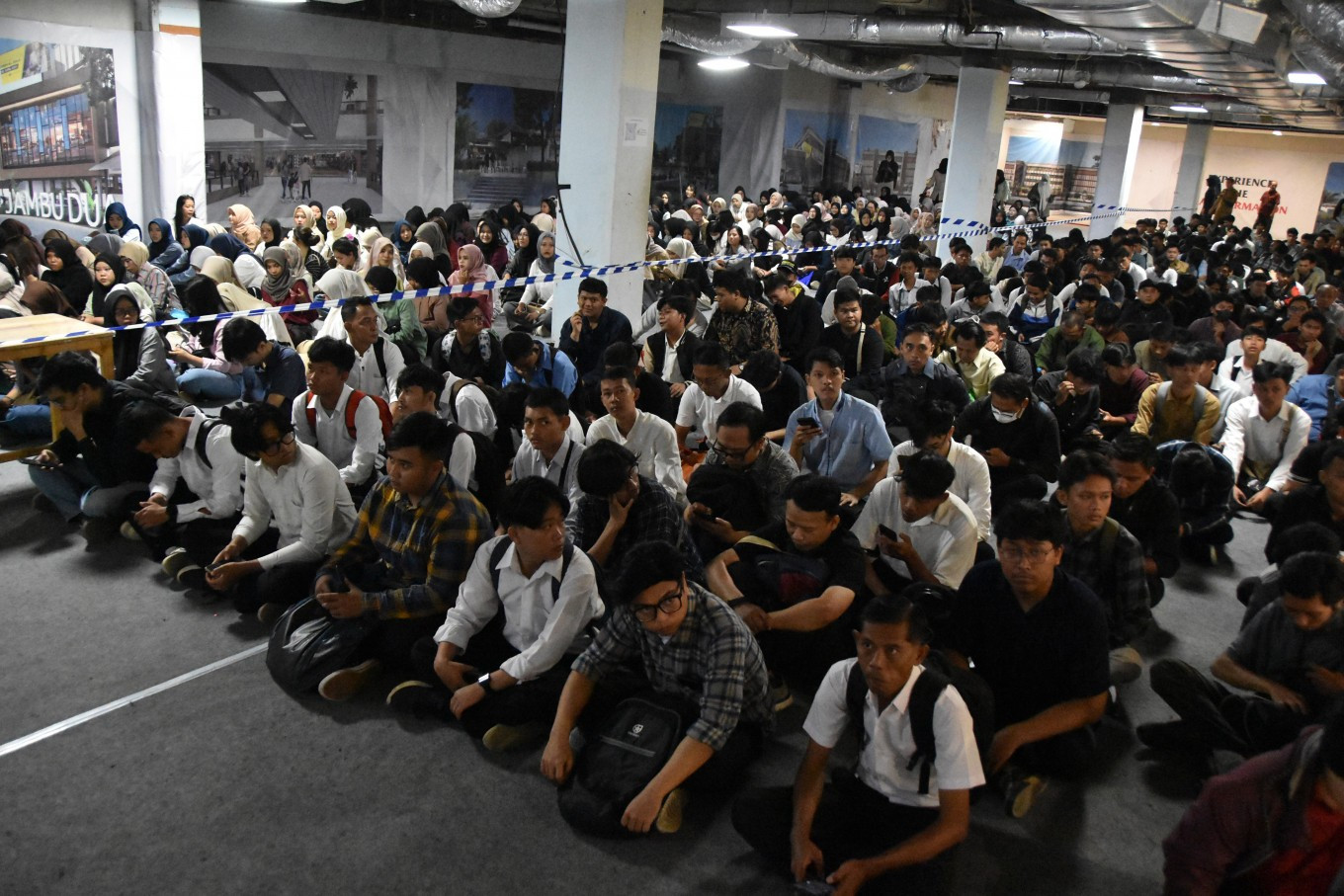 Job seekers wait in line during the opening of the 2026 Bogor Job Fair at Plaza Jambu Dua in Bogor, West Java, Indonesia, on June 8, 2026. (Antara/Arif Firmansyah)
T
he Independence Day on Aug. 17 was observed much as it always is. People took to the streets for parades, public officials attended ceremonies in traditional attire. The commemoration culminated in the time-honored spectacle at the Merdeka Palace led by the sharp choreography of the Paskibraka flag raising squad.
Beyond the fanfare, President Prabowo Subianto’s Aug. 16 state address delivered a far more consequential signal about where the country is headed, at least in the near future. Prabowo framed young Indonesians not merely as job seekers, but as homegrown entrepreneurs “building businesses within their own communities” alongside farmers, fishers, traders and artisans.
The underlying message was clear: Economic opportunity should not force youth to abandon their hometowns for big cities. With better infrastructure and local institutions, villages themselves can become engines of value creation, a vision grounded in the hard-learned lessons of the 1998 Asian financial crisis, when grassroots enterprises kept the economy afloat while corporate giants faltered.
Now comes the challenge: What does a diagnostic look at Indonesia’s younger generation tell us? One useful measure is the Not in Employment, Education or Training (NEET) rate, which refers to young people aged 15 to 24 who are neither working, enrolled in education nor participating in training. It is a broader measure of youth vulnerability than unemployment.
Unlike standard unemployment figures, which count only active job seekers, NEET captures discouraged workers who have given up, early school leavers, and those tied down by unpaid domestic responsibilities. It reveals a much deeper issue of disengagement and stranded human capital.
The numbers reveal just how widespread this issue has become. According to 2024 National Economic Survey (Susenas) data, roughly one in five young Indonesians, or 20.31 percent, translating to nearly 9.9 million people, are classified as NEET. With over 44 million people in this demographic cohort, an elevated rate risks squandering the country's demographic dividend.

Indonesia also lags its regional peers, surpassing the estimated ASEAN average of roughly 16 percent. More strikingly, there is a substantial gender gap: the NEET rate is approximately 26.3 percent among young women, compared with 16.7 percent among young men.