TheJakartaPost
Please Update your browser
Your browser is out of date, and may not be compatible with our website. A list of the most popular web browsers can be found below.
Just click on the icons to get to the download page.


Popular Reads
Top Results
No results found. Please check your search term and try again
Can't find what you're looking for?
View all search results
Popular Reads
Top Results
No results found. Please check your search term and try again
Can't find what you're looking for?
View all search resultsThe world is burning less, but the rhetoric says otherwise
Despite apocalyptic headlines and political rhetoric, global satellite data reveals the planet is on track for its quietest fire season in more than a century.
Change text size
Gift Premium Articles
to Anyone
Share the best of The Jakarta Post with friends, family, or colleagues. As a subscriber, you can gift 3 to 5 articles each month that anyone can read—no subscription needed!
 Set as preferred source
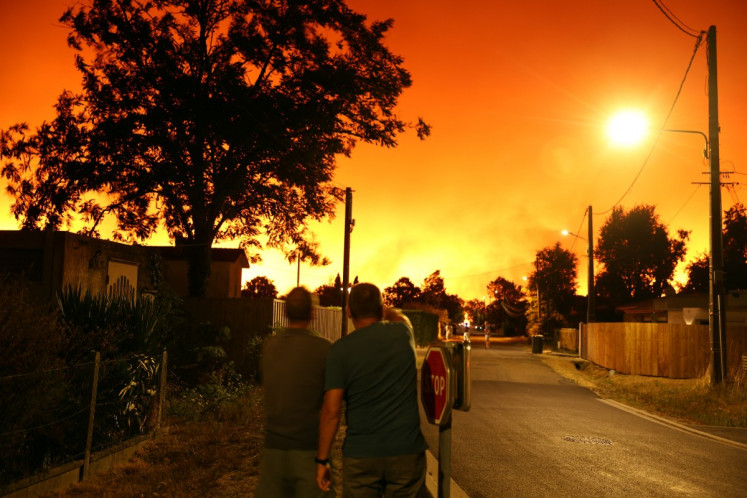
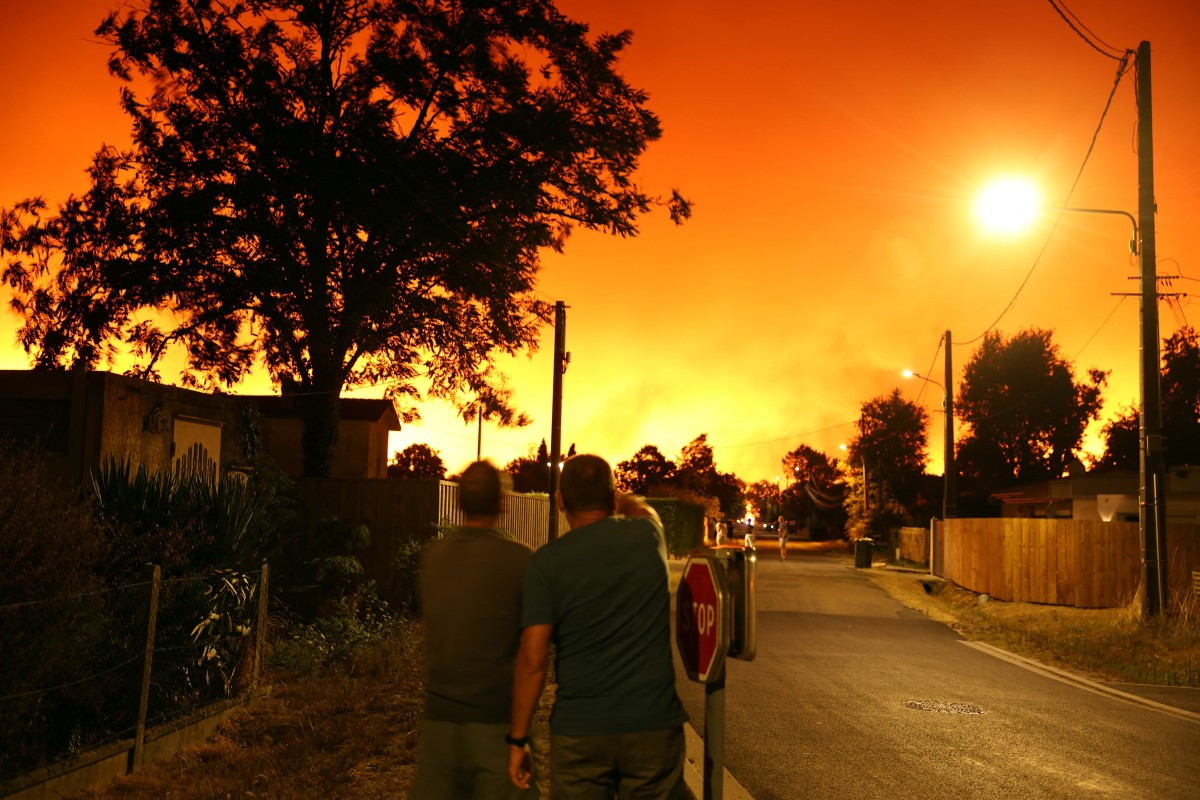 Residents look at the sky illuminated by wildfires in Le Porge, south-western France early on July 23, 2026. A fast-moving wildfire has burned 900 hectares north of Arcachon Bay in southwestern France, forcing the evacuation of more than 4,000 residents and tourists. (AFP/Romain Perrocheau)
T
he recent wildfires across France and Spain have been genuinely devastating. West of Bordeaux, over 220,000 people were forced to flee advancing walls of flame. Outside Madrid, blazes tore through an area twice the size of the capital, displacing nearly 90,000 residents. The families who lost their homes and livelihoods deserve our deepest empathy, and vastly better land management.
What they do not need is the predictable climate lecture that trails every rising plume of smoke. Spanish Prime Minister Pedro Sánchez swiftly labeled the fires a “painful expression” of climate change. A joint statement from the United Kingdom and Spanish governments went further, declaring climate change a “national security emergency” threatening our entire way of life. The political verdict landed before the embers had even cooled: only eliminating fossil fuels can stop the burning.
The irony is striking. Globally, the planet is doing the exact opposite of burning.
Satellite data shows that as of mid-August, total global burned area in 2026 is tracking 42 percent below the 2012–2025 average for this point in the year, putting us on course for the quietest fire season in over a century. If current trends hold, less than 1.5 percent of the world's land area will burn this year, well below the previous satellite record low of 2.2 percent in 2022 and likely lower than any year since 1900.
Climate change is an inherently global phenomenon, which means it demands global data. Seizing on catastrophic blazes in one corner of Western Europe while ignoring a planet that is burning historically less is textbook cherry-picking: keep the data points that fit the narrative, discard the rest.
Consider the inverse. If global burned area had spiked 42 percent above normal, would anyone accept "but the Baltics had a quiet summer" as a serious counterargument? Of course not. Yet that exact logic is routinely used in reverse.

Critics often point to a regional quirk in European surveillance data, where satellite monitoring of "Europe" includes all of Russia and Siberia, potentially masking localized surges. But even if you strip Russia out entirely, Europe without Russia has burned just two-thirds of its 2012–2025 average so far this year; 10 of the past 14 years saw more mid-August burning. France has had a record-breaking disaster and Spain’s season is brutal, but two nations enduring a horrific summer do not equal a continental inferno, let alone a planetary one.