The Jakarta Post
Please Update your browser
Your browser is out of date, and may not be compatible with our website. A list of the most popular web browsers can be found below.
Just click on the icons to get to the download page.


Popular Reads
Top Results
No results found. Please check your search term and try again
Can't find what you're looking for?
View all search results
Popular Reads
Top Results
No results found. Please check your search term and try again
Can't find what you're looking for?
View all search resultsIs Indonesia returning to fiscal orthodoxy?
The new finance minister may reassure nervous markets, but the real test begins when fiscal discipline inevitably collides with President Prabowo’s expansive political ambitions.
Change text size
Gift Premium Articles
to Anyone
Share the best of The Jakarta Post with friends, family, or colleagues. As a subscriber, you can gift 3 to 5 articles each month that anyone can read—no subscription needed!
 Set as preferred source
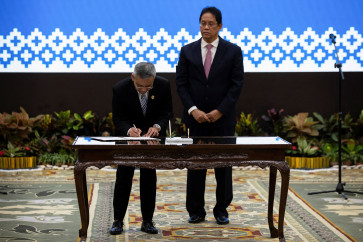
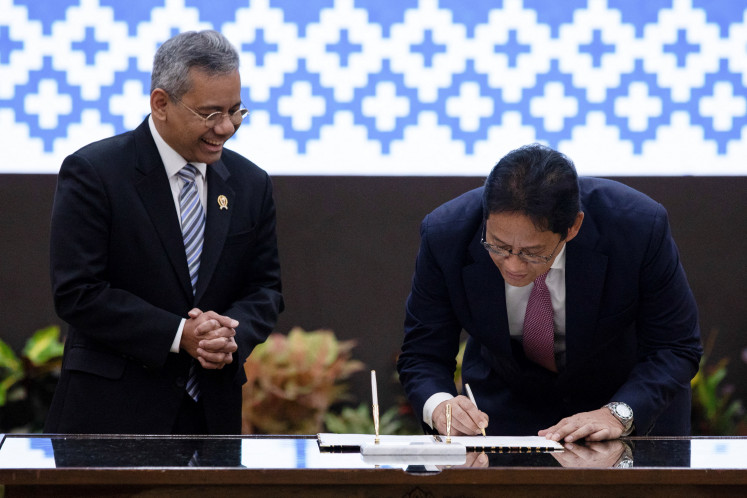
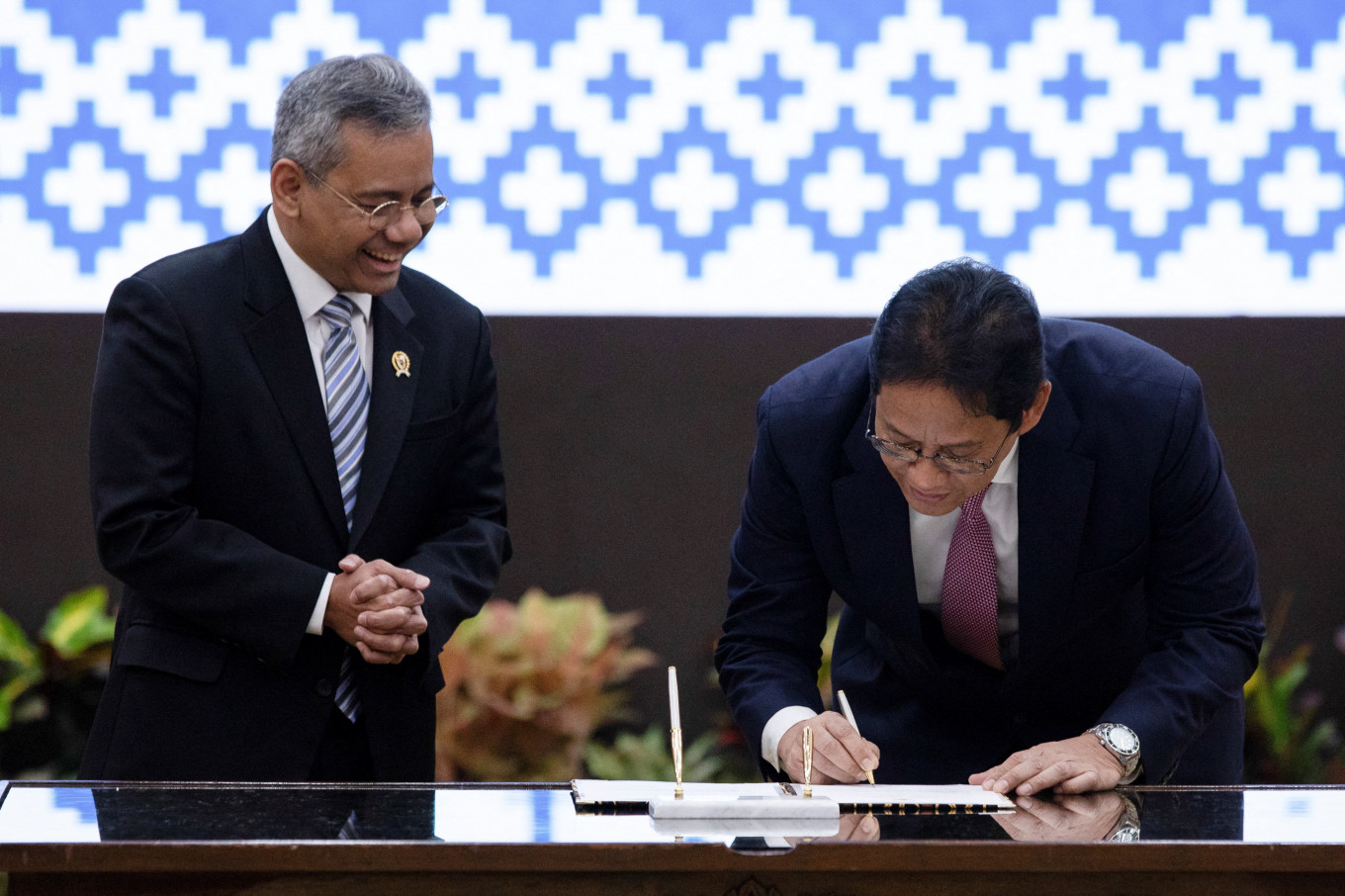 Newly appointed Finance Minister Suahasil Nazara (left) reacts as outgoing Finance Minister Purbaya Yudhi Sadewa signs a document, during a handover ceremony at the Finance Ministry, on Sept. 15, 2026. (Reuters/Garry Lotulung)
P
resident Prabowo Subianto has long advocated for a more interventionist state in Indonesia’s economy, championing food and energy self-sufficiency, assertive industrial policy, and an expanded role for state-owned enterprises. His first two years in office have translated that philosophy into practice, marked by mounting expenditure commitments and fiscal resources increasingly steered toward presidential priorities.
The appointment of Suahasil Nazara as Finance Minister offers an early signal of a more cautious approach to fiscal management. A former head of the Fiscal Policy Agency and deputy finance minister since 2019, Suahasil is an established fixture within Indonesia’s fiscal establishment. Investors welcomed his appointment following a period of heightened uncertainty over economic policy.
Purbaya Yudhi Sadewa’s abrupt dismissal, however, remains unexplained. Nor does Suahasil arrive with an altered presidential mandate: His task is still to fund Prabowo’s agenda. For now, the reshuffle appears less like a fundamental shift in policy direction and more like an effort to restore Indonesia’s macroeconomic credentials.
On paper, the proposed 2027 budget is reassuring. The deficit is projected at 2.4 percent of GDP, with revenue expected to rise by 6.8 percent against a modest 3.9 percent increase in expenditure.
Yet much hinges on the government’s assumption of 6 percent economic growth—which would mark Indonesia’s fastest pace since 2012. Should growth or revenues falter, maintaining the 2.4 percent target would require mid-year spending cuts, making the deficit goal far more demanding than the headline figure implies.
Revenue mobilization presents another vulnerability. While Indonesia urgently requires a stronger revenue base, leaning harder on existing taxpayers is no substitute for broadening the tax net. As the early years of former president Joko “Jokowi” Widodo demonstrated, an aggressive push for revenue risks unsettling the business community without generating durable improvements in fiscal capacity.

The 2026 budget committed Rp 335 trillion (US$13 billion) to the free nutritious meals program, alongside Rp 402.4 trillion for energy security and Rp 164.7 trillion for food security. Set against these expansive outlays, Indonesia’s tax take stagnates at roughly 10 percent of GDP.