The Jakarta Post
Please Update your browser
Your browser is out of date, and may not be compatible with our website. A list of the most popular web browsers can be found below.
Just click on the icons to get to the download page.


Popular Reads
Top Results
No results found. Please check your search term and try again
Can't find what you're looking for?
View all search results
Popular Reads
Top Results
No results found. Please check your search term and try again
Can't find what you're looking for?
View all search resultsIgnoring Myanmar normalizes tyranny upon us
As Myanmar’s people bleed under a brutal junta and regional indifference, Jakarta’s complacency serves as a chilling warning: ignoring the normalization of tyranny abroad only paves the way for creeping militarism at home.
Change text size
Gift Premium Articles
to Anyone
Share the best of The Jakarta Post with friends, family, or colleagues. As a subscriber, you can gift 3 to 5 articles each month that anyone can read—no subscription needed!
 Set as preferred source
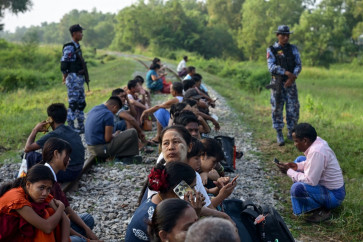
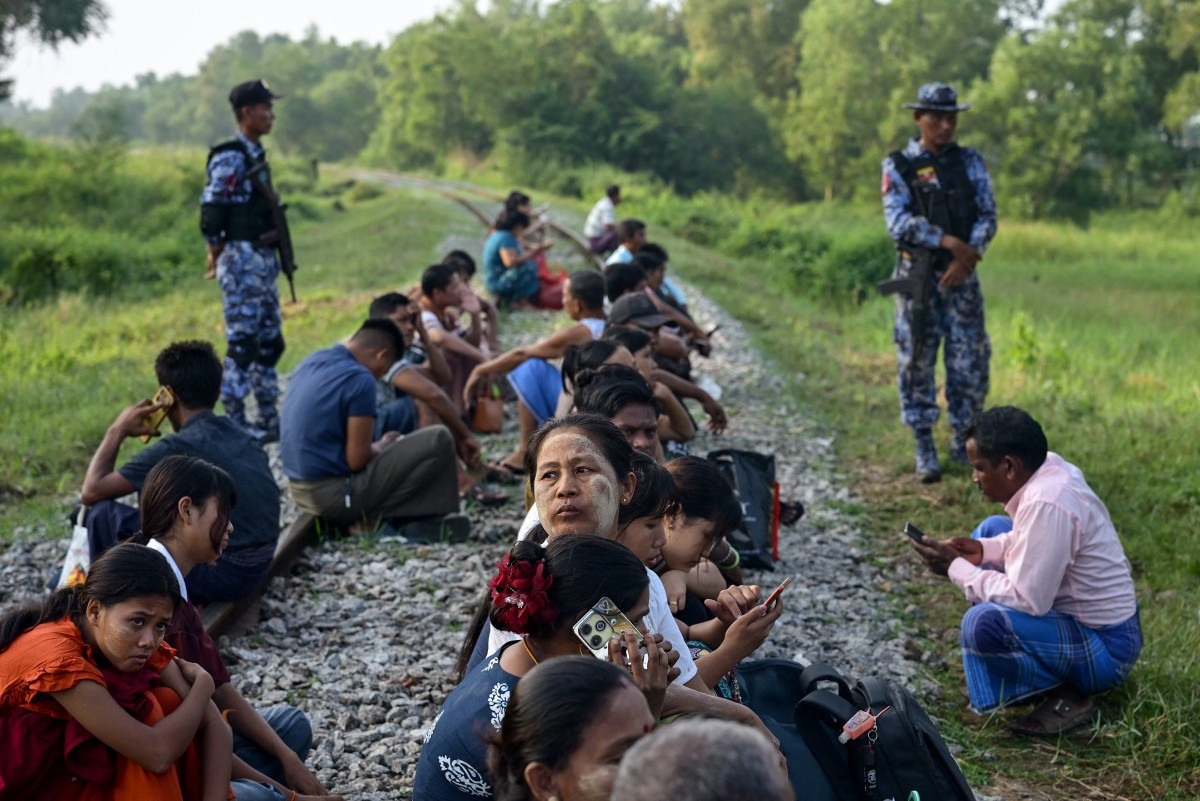 Family members wait outside the Myanmar Navy base in Thanlyin on Oct. 4, 2026 to welcome their loved ones returning from Malaysia. Nearly 1,500 Myanmar migrants from Malaysia arrived in their war-torn home country on Oct. 4, a Myanmar official said, returned under an opaque repatriation scheme that rights monitors say cannot assure their safety. (AFP/Sai Aung Main)
T
he clamor of banging pots and pans, a traditional gesture turned protest against military rule, stands in stark contrast to the silence of a figure in a driver’s seat binding three fingers with cellophane, exhaust smoke steadily filling the cabin. Whether this sequence stages a reenactment or documents an unsparing, defiant suicide under Myanmar’s junta remains deliberately ambiguous. In either case, the driver's three-finger salute aligns him with millions of protesters across Myanmar, Thailand, and Hong Kong who adopted the gesture from The Hunger Games as a universal emblem of resistance.
The scene belongs to Myanmar Diaries, a harrowing cinematic collage assembled from footage shot by anonymous citizens determined to record both overt state atrocities and the eerie cadences of daily survival. The film anchors The Coup Years, a photography and video exhibition running through Oct. 11 in Kemang, South Jakarta. The showcase delivers a chilling chronicle of existence under a regime that weaponized pandemic-era mobility restrictions into brutal instruments of population control, driving a documented surge in suicides in the wake of the 2021 coup.
Equally painful to watch is a young woman murmuring “tell him, don’t tell him”, while picking boba balls one by one from her ice drink and lining them up. We learn that the pregnancy test of the 18-year-old had apparently turned out positive. But she couldn’t tell her boyfriend regardless of the boba balls; he had told her he needed to head to the jungle, as his name was on a wanted list. She is left with his blood-stained shirt.
Featuring the work of mostly Myanmar photographers, the exhibit includes other film screenings, book launches and discussions. Visitors sense the despair but also the extraordinary determination of Myanmar’s women and men, young and old, to hold their ground against every attempt to trample on their very existence. They inspire us to at least reject outright the normalization of tyranny, not only in Myanmar, but also in our own nations.
While the crisis in occupied Palestine rightfully dominates public consciousness, Myanmar’s catastrophe continues in the periphery, its people relentlessly terrorized and slain by their own military. Analysts point to a junta consumed by existential desperation, scrambling to consolidate nationwide control and wrest resource-rich territories from entrenched ethnic resistance armies. Meanwhile, ASEAN continues to hide behind its timeworn mantra of "noninterference", a paralysis so profound that one discussion participant condemned the bloc for bordering on outright genocide denial.
The shuttle diplomacy once championed by former Indonesian Foreign Minister Retno Marsudi, which sought to engage both the junta and the democratic National Unity Government (NUG), is now effectively history. Yet Jakarta has maintained a crucial boundary: it steadfastly refuses to formally recognize the military regime led by coup leader Min Aung Hlaing, whose orchestrated elections are roundly dismissed by citizens and observers alike as a cynical sham. The accountability battle has also reached Indonesian soil. In April, civil society coalitions petitioned Indonesia’s Attorney General’s Office, demanding criminal prosecution of the junta chief under universal jurisdiction for alleged crimes against humanity and acts of genocide.

A recent United Nations report documents escalating atrocities against the Rohingya, driven not only by the junta but increasingly by the Arakan Army as it consolidates its grip over Rakhine State, the Muslim minority’s historic homeland. Caught in the crossfire, those who manage to flee find dwindling sanctuary across the region, where host communities in strained, overcrowded camps grow overtly hostile.