The Jakarta Post
Please Update your browser
Your browser is out of date, and may not be compatible with our website. A list of the most popular web browsers can be found below.
Just click on the icons to get to the download page.


Popular Reads
Top Results
No results found. Please check your search term and try again
Can't find what you're looking for?
View all search results
Popular Reads
Top Results
No results found. Please check your search term and try again
Can't find what you're looking for?
View all search resultsAnalysis: Will Indonesia’s new labor law deliver on its promises?
Change text size
Gift Premium Articles
to Anyone
Share the best of The Jakarta Post with friends, family, or colleagues. As a subscriber, you can gift 3 to 5 articles each month that anyone can read—no subscription needed!
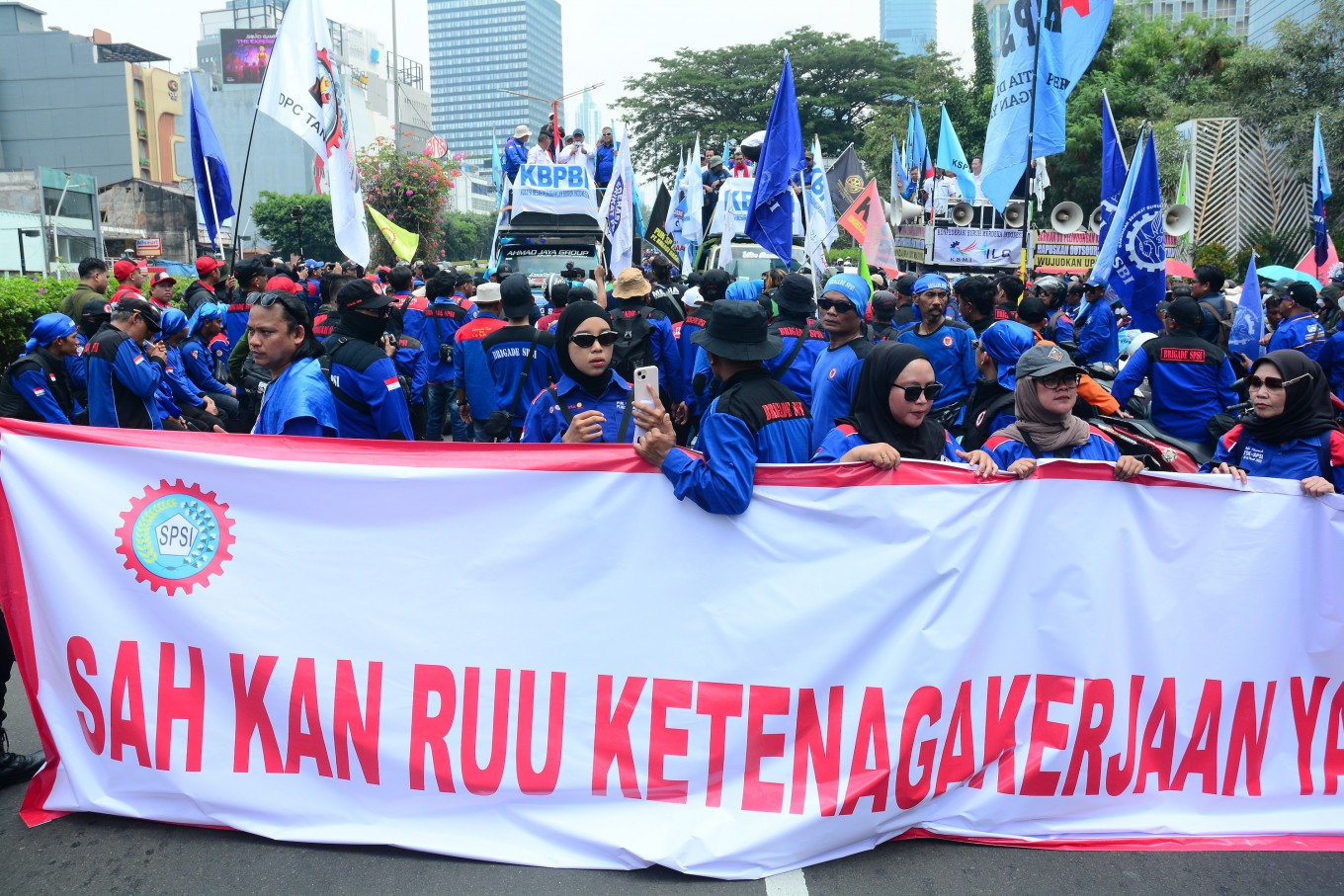 Members of the Grand Coalition for Indonesian Workersʼ Struggle (KBPBI) rally on Sept. 24, 2026, during a demonstration in front of UOB Plaza on Jl. Thamrin in Central Jakarta. (JP/Iqro Rinaldi)
T
he new Labor Protection Law, approved by the House of Representatives on Oct. 6, promises stronger severance entitlements, tighter dismissal rules and greater employment security. But stronger legal protections mean little if employers circumvent restrictions on temporary employment or fail to pay compensation. The real test of the new law lies not in its promises but in whether its provisions translate into effective protection for workers when their livelihoods are most vulnerable.
The legislation moved from a House initiative to final approval in less than six weeks after formal deliberations began on Sept. 14. This compressed timetable enabled lawmakers to meet the Constitutional Court’s deadline but left little time for public scrutiny of its 313 articles. Consultations were held, but assessing their significance requires understanding how competing proposals were considered and incorporated.
Transparency over the agreed provisions is therefore essential. Pending access to the final text, government and union explanations provide a basis for assessing the reform’s direction, although its precise obligations and safeguards still require verification.
Manpower Minister Yassierli outlined 13 areas of reform covering employment protection, workforce development and enforcement. These include paid maternity and miscarriage leave, safeguards for workers with disabilities, a prohibition on withholding job applicants’ diplomas and protections for job seekers, trainees and apprentices. Other measures address flexible work arrangements, outsourcing at state-owned enterprises, competency certification, employment data and wage-setting institutions. Additional labor inspectors and a Labor Inspection Committee are intended to strengthen enforcement.
Across these reforms, two tests stand out: whether workers receive compensation when their employment ends and whether restrictions on temporary employment arrangements improve job security.
Severance protection brings the first test into focus. According to government explanations, the new law has removed a provision allowing severance payments to be reduced to half the prescribed amount. This strengthens workers’ financial entitlements, but a larger entitlement provides limited relief if payment remains uncertain.

The proposed severance reserve could address that gap by requiring funds to be set aside before dismissal occurs. Advance funding would reduce workers’ dependence on an employer’s financial condition at a time when its resources may already be depleted. It could also make employment costs more predictable for businesses by spreading funding obligations over time.