The Jakarta Post
Please Update your browser
Your browser is out of date, and may not be compatible with our website. A list of the most popular web browsers can be found below.
Just click on the icons to get to the download page.


Popular Reads
Top Results
No results found. Please check your search term and try again
Can't find what you're looking for?
View all search results
Popular Reads
Top Results
No results found. Please check your search term and try again
Can't find what you're looking for?
View all search resultsLeaderless haze control
With toxic smoke paralyzing many regions, the government's inertia is exacting a fatal toll that only decisive presidential leadership can stop.
Change text size
Gift Premium Articles
to Anyone
Share the best of The Jakarta Post with friends, family, or colleagues. As a subscriber, you can gift 3 to 5 articles each month that anyone can read—no subscription needed!
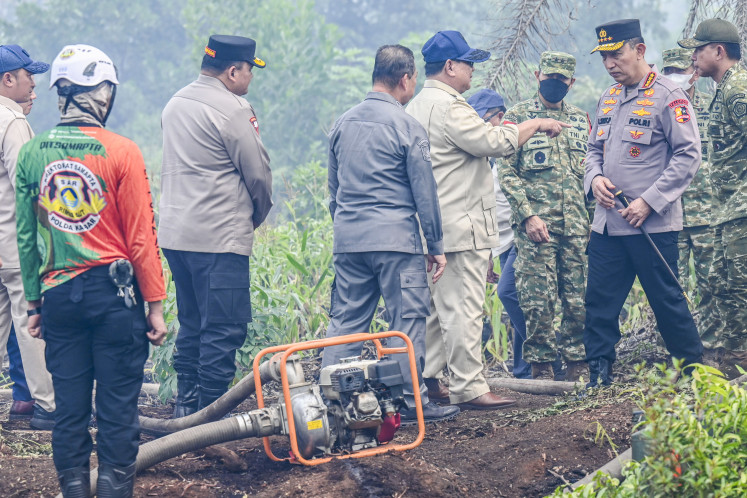
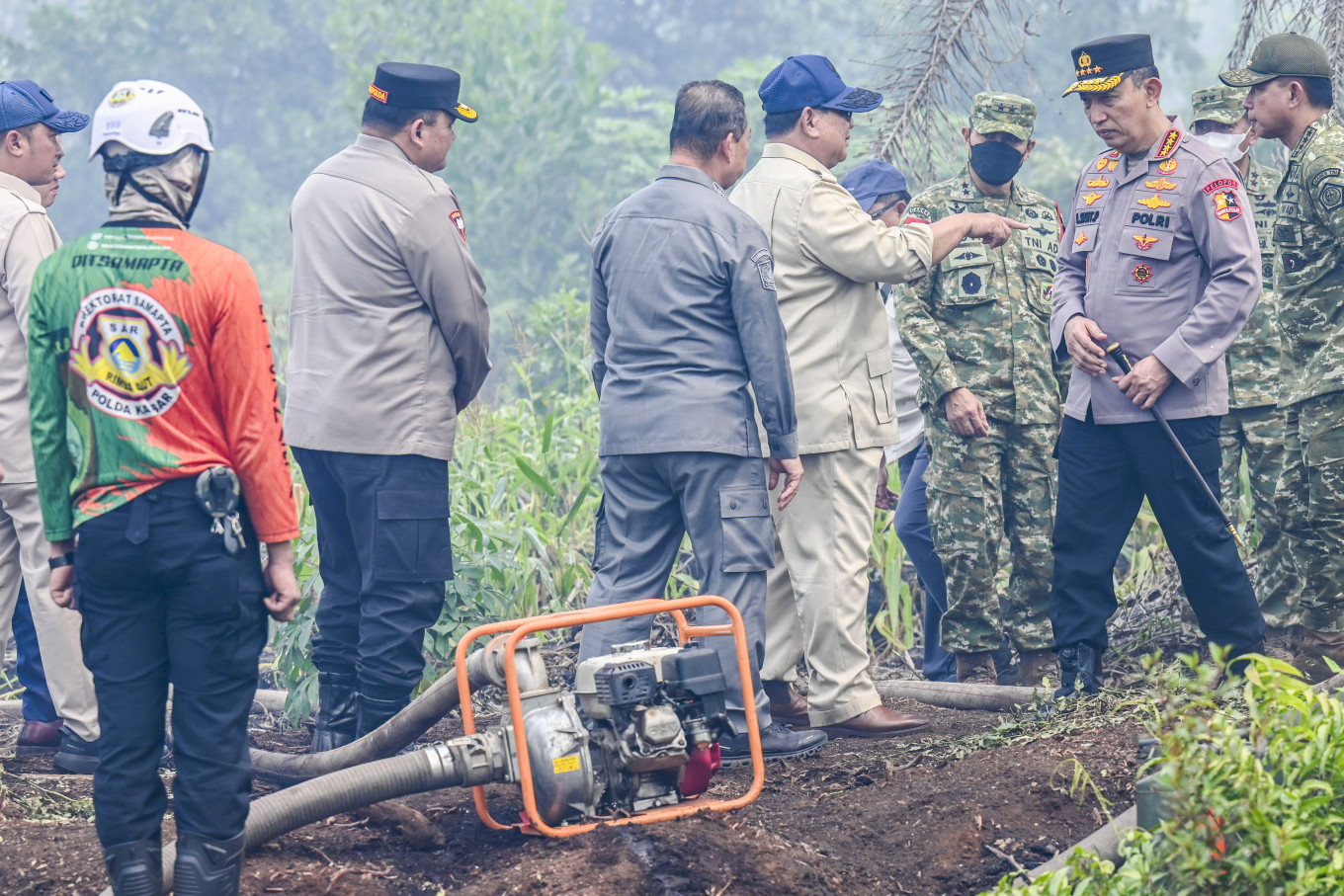 President Prabowo Subianto (center) talks with then-National Police chief Gen. Listyo Sigit Prabowo (second right) and Indonesian Military commander Gen. Agus Subiyanto (right) while inspecting a forest and land fire site in Kubu Raya, Pontianak, West Kalimantan, on Aug. 22, 2026. President Prabowo inspected efforts to tackle forest and land fires in several areas of Kalimantan to ensure the response is swift and effective. (Antara/Galih Pradipta)
T
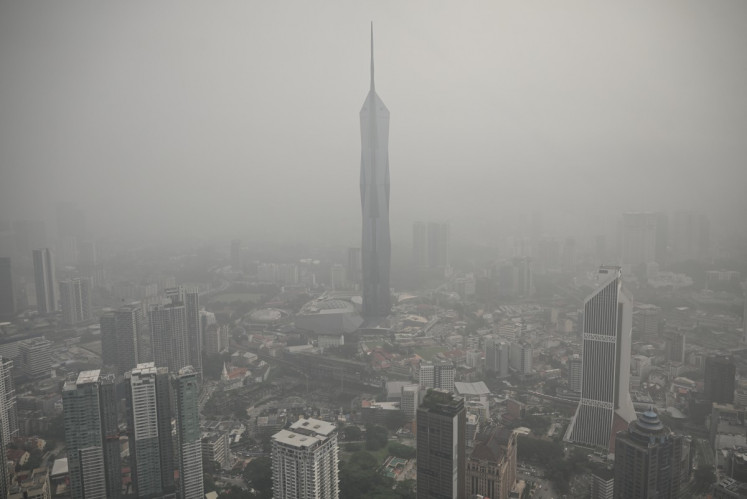
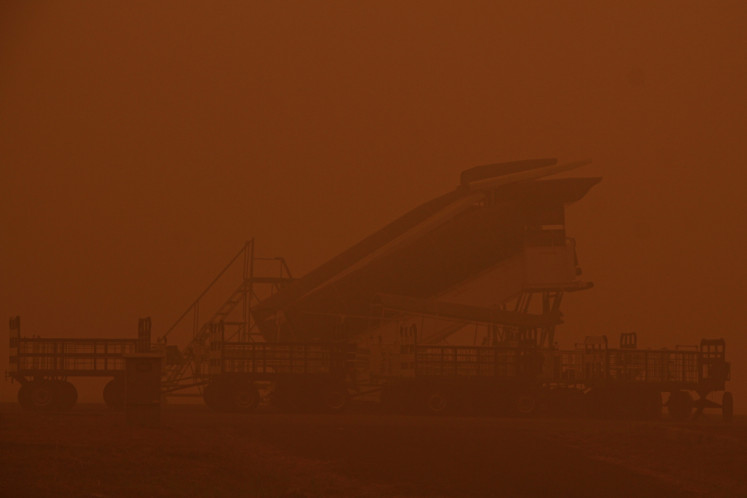
he hazardous haze blanketing large parts of Sumatra and Kalimantan and spilling into neighboring Southeast Asian nations has taken a heavy toll on the population, causing fatalities from acute respiratory illnesses and traffic accidents triggered by near-zero visibility. The disaster has also destroyed homes and displaced vulnerable communities.
The scale of the crisis, which has prompted regional neighbors to close schools, cancel commercial flights and subsidize healthcare costs, demands decisive intervention from President Prabowo Subianto. Strong, hands-on leadership is critical to send a clear message to local officials and corporate concessionaires alike: urgent, coordinated action must be taken immediately to suppress the blazes and prevent further devastation.
By late August, independent forest monitoring platform Nusantara Atlas reported that nearly 900,000 hectares of peatland had burned across the archipelago this year, an area roughly four times the size of Tokyo. An intensified El Niño weather pattern has exacerbated conditions, allowing fires to breach national parks and imperil critically endangered species such as Sumatran elephants and orangutans.

Under these circumstances, it is only natural that neighboring countries have appealed to Jakarta for swift action. Malaysian Prime Minister Anwar Ibrahim contacted Prabowo directly last week regarding the “alarming” transboundary smoke choking the region. Over the weekend, Singapore’s Minister for Sustainability and the Environment, Grace Fu, reached out to Indonesian Environment Minister Jumhur Hidayat to offer firefighting assistance.
Yet the government appears determined to handle the crisis alone, despite severe budget constraints and the exhausted capacity of ground personnel, many of whom have reached their breaking point after weeks of fighting uncontrollable blazes. Worse still, Government Communications Agency (Bakom) chief Syahganda Nainggolan casually downplayed regional transboundary concerns, remarking that Indonesia "sends oxygen" to Singapore and Malaysia during normal times.
Civic volunteers have shouldered a disproportionate share of the burden across six priority provinces in Sumatra and Kalimantan under the coordination of the National Disaster Mitigation Agency (BNPB). Of the 54,418 personnel deployed in the joint operation, 12,950 are civilian volunteers, outnumbering both the military contingent (12,285) and corporate fire brigades (8,950). Tragically, at least four volunteers have lost their lives in the line of duty.

While commendable, the sacrifices of volunteers and exhausted ground crews cannot substitute for state capacity. The administration must present a coherent containment strategy, allocate adequate logistical resources and demonstrate the political will to hold perpetrators criminally accountable.