The Jakarta Post
Please Update your browser
Your browser is out of date, and may not be compatible with our website. A list of the most popular web browsers can be found below.
Just click on the icons to get to the download page.


Popular Reads
Top Results
No results found. Please check your search term and try again
Can't find what you're looking for?
View all search results
Popular Reads
Top Results
No results found. Please check your search term and try again
Can't find what you're looking for?
View all search resultsCan Minister Arrmanatha make Foreign Ministry great again?
Arrmanatha inherits an institutional legacy, but his real test is whether he can restore the ministry’s authority in shaping Indonesian foreign policy.
Change text size
Gift Premium Articles
to Anyone
Share the best of The Jakarta Post with friends, family, or colleagues. As a subscriber, you can gift 3 to 5 articles each month that anyone can read—no subscription needed!
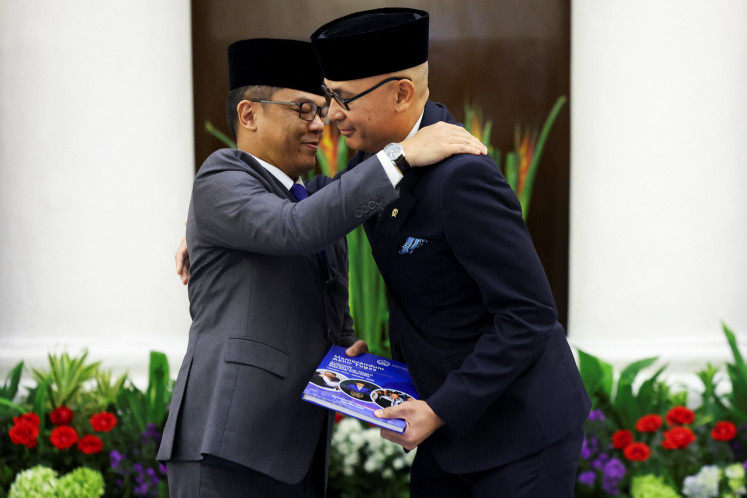
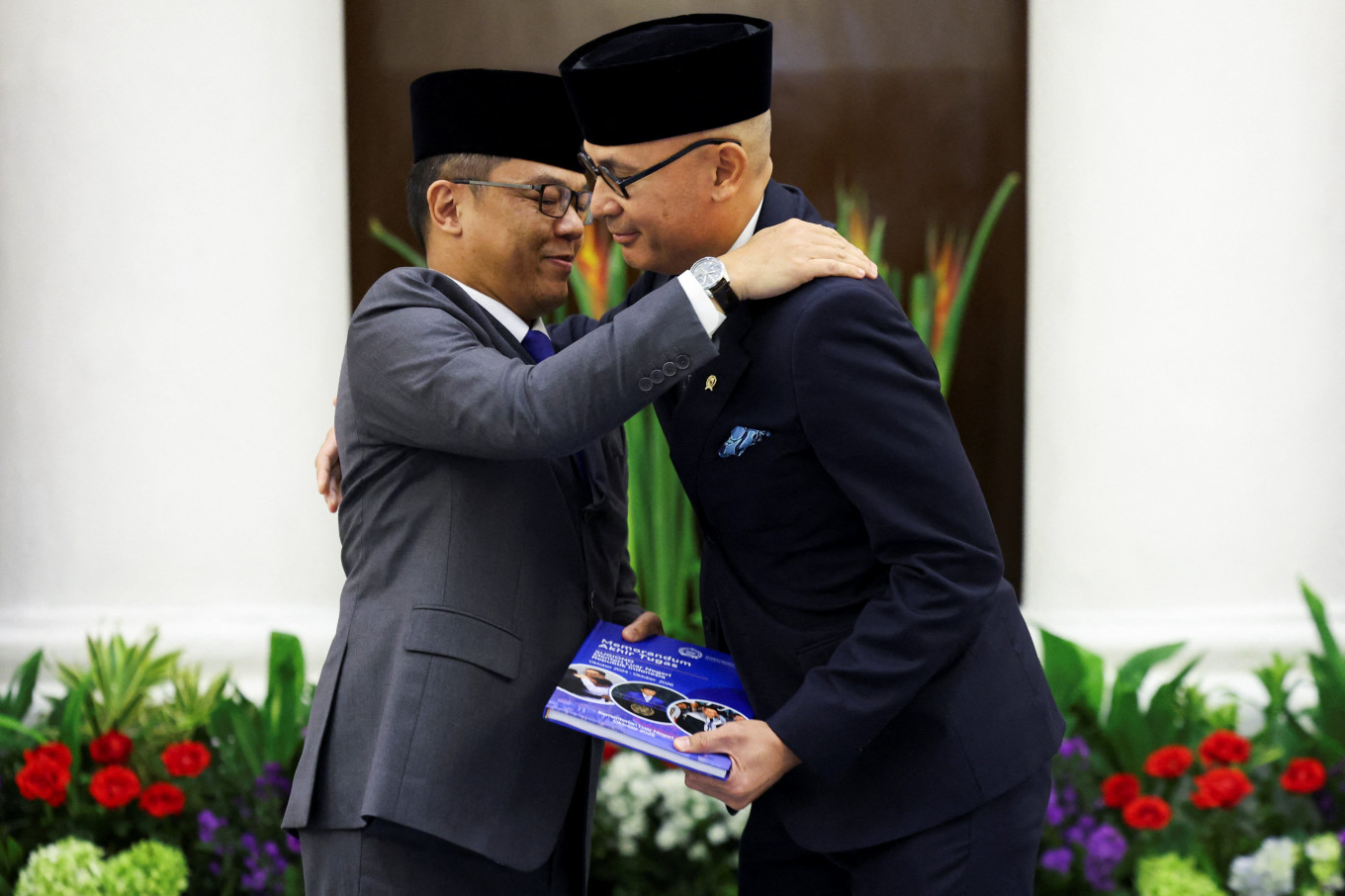 Newly appointed Foreign Minister Arrmanatha Nasir (right) reacts as former foreign minister and current Coordinating Minister for Human Development and Cultural Affairs, Sugiono, embraces him during a handover ceremony at the Foreign Ministry in Central Jakarta on Oct. 12, 2026. (Reuters/Ajeng Dinar Ulfiana)
A
fter two years of tinkering with diplomacy without success, and placing his political appointee in charge of the Foreign Ministry, President Prabowo Subianto has replaced his cadre with a career diplomat as his foreign minister.
It was during the 50th-anniversary commemoration of the Non-Aligned Movement in Bali in 2011 that I met Arrmanatha Christiawan Nasir for the first time. I was then a reporter for The Jakarta Post.
Arrmanatha was articulate, confident and, most strikingly, proud of being a diplomat. He seemed to know exactly what he was doing.
His subsequent rise was remarkable. He moved into a director-level position under then-foreign minister Marty Natalegawa, became spokesperson under Marty’s successor Retno Marsudi, served as Indonesia’s ambassador to France and the United Nations, and was eventually appointed deputy minister by Prabowo.
Now, Arrmanatha’s appointment as minister marks a generational shift within the ministry. A graduate of the ministry’s 23rd diplomatic training class, he is considerably junior to Retno, who belonged to the 12th class. His rise signals the passing of an era shaped by legendary diplomats from 12th and 13th classes, such as Retno, Marty, Dino Patti Djalal, Havas Oegroseno, Desra Percaya, Mahendra Siregar, Ngurah Swajaya and Yuri Thamrin.
That generation combined diplomatic experience with intellectual ambition and the confidence to articulate Indonesia’s interests in its own terms. Arrmanatha inherits this institutional legacy. But his real test is whether he can restore the ministry’s authority in shaping Indonesian foreign policy.

In recent years, foreign policy has increasingly been shaped not at Pejambon, where the ministry is headquartered, but mainly within the President’s inner circle. There is nothing inherently unusual about this. Foreign policy ultimately belongs to the president. The problem arises when those channels substitute for the institutions responsible for developing and executing policy.