TheJakartaPost
Please Update your browser
Your browser is out of date, and may not be compatible with our website. A list of the most popular web browsers can be found below.
Just click on the icons to get to the download page.


Popular Reads
Top Results
No results found. Please check your search term and try again
Can't find what you're looking for?
View all search results
Popular Reads
Top Results
No results found. Please check your search term and try again
Can't find what you're looking for?
View all search resultsEscape from Tehran: Indonesian evacuees recall final hours in Iran
Days after the first bombs launched by the United States and Israel on Iranian cities, explosions were heard across Tehran and other locations, including near the Indonesian embassy complex where evacuees were spending some time before leaving the country.
Change text size
Gift Premium Articles
to Anyone
Share the best of The Jakarta Post with friends, family, or colleagues. As a subscriber, you can gift 3 to 5 articles each month that anyone can read—no subscription needed!
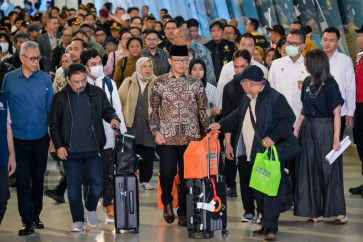
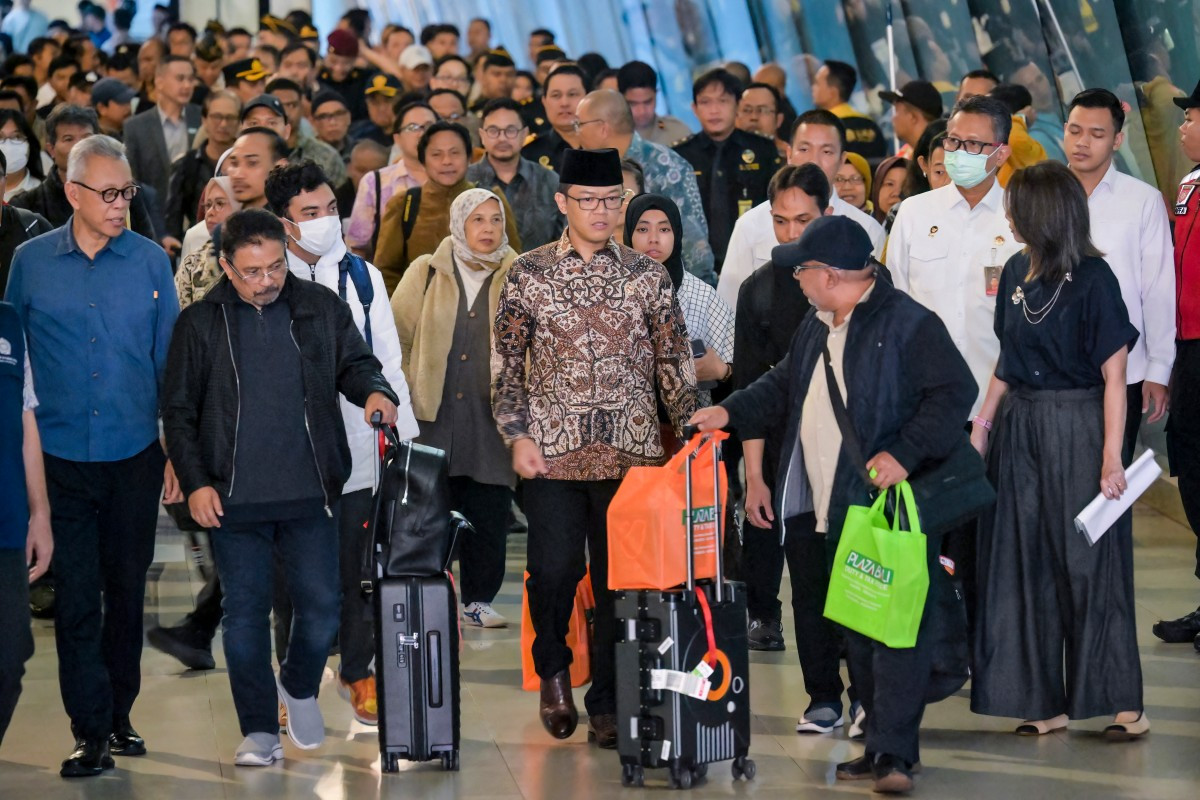 Foreign Minister Sugiono (center) walks alongside Indonesians evacuated from Iran at Soekarno-Hatta International Airport in Tangerang, Banten on March 10, 2026 amid the United States-Israeli conflict with Iran. (AFP/Bay Ismoyo)
W
hen bombs from the United States-Israeli strike against Iran started falling on Tehran, 69-year-old Zulfan Lindan chose to do what many other Indonesians living in the country have yet to do: ask to be evacuated back to Jakarta.
Zulfan was among 32 Indonesians who opted to be evacuated from Iran amid the escalating US-Iran war on Iran, as the Foreign Ministry prioritizes protection of citizens in the war-torn region.
Since the first wave of strikes against Tehran on Feb. 28, Zulfan said he had seen on a nightly basis the city’s streets filled with thousands of protesters venting their anger at Washington’s unilateral actions. Missiles streaking overhead have become so normalized that locals now stop at the street to watch rather than run for cover.
The Indonesian Embassy in Tehran sent out a letter to Indonesians in the country on March 3 along with a form offering evacuation from Iran. Zulfan was among dozens of people who filled out the form, allowing him to secure a ticket home.
Two days later, Zulfan made his way to the embassy in Tehran, preparing to make his journey home while seeing “10 bombs fly over the [embassy] building, each weighing around 1 to 2 kilograms”, as he recalled his final hours in the Iranian capital during a press briefing at Soekarno-Hatta International Airport in Tangerang, Banten on Tuesday.
“The situation at the embassy was gripping,” said Zulfan, a politician of the NasDem Party. “The blasts [from the bombs] rattled all the glass in the embassy. We started considering taking shelter in the basement.”
After the blasts, Zulfan and other Indonesians spent a night at a hotel in the city before setting off just before dawn on March 6 on a nine-hour road trip to Astara, the Iranian city with a border crossing to Azerbaijan. The border has become a key exit point for people seeking to flee Iran.