TheJakartaPost
Please Update your browser
Your browser is out of date, and may not be compatible with our website. A list of the most popular web browsers can be found below.
Just click on the icons to get to the download page.


Popular Reads
Top Results
No results found. Please check your search term and try again
Can't find what you're looking for?
View all search results
Popular Reads
Top Results
No results found. Please check your search term and try again
Can't find what you're looking for?
View all search resultsHedging security in the Gulf is risky
The US' strategic credibility has been dealt a severe blow, and the Gulf states have ended up in an exceptionally unenviable position.
Change text size
Gift Premium Articles
to Anyone
Share the best of The Jakarta Post with friends, family, or colleagues. As a subscriber, you can gift 3 to 5 articles each month that anyone can read—no subscription needed!
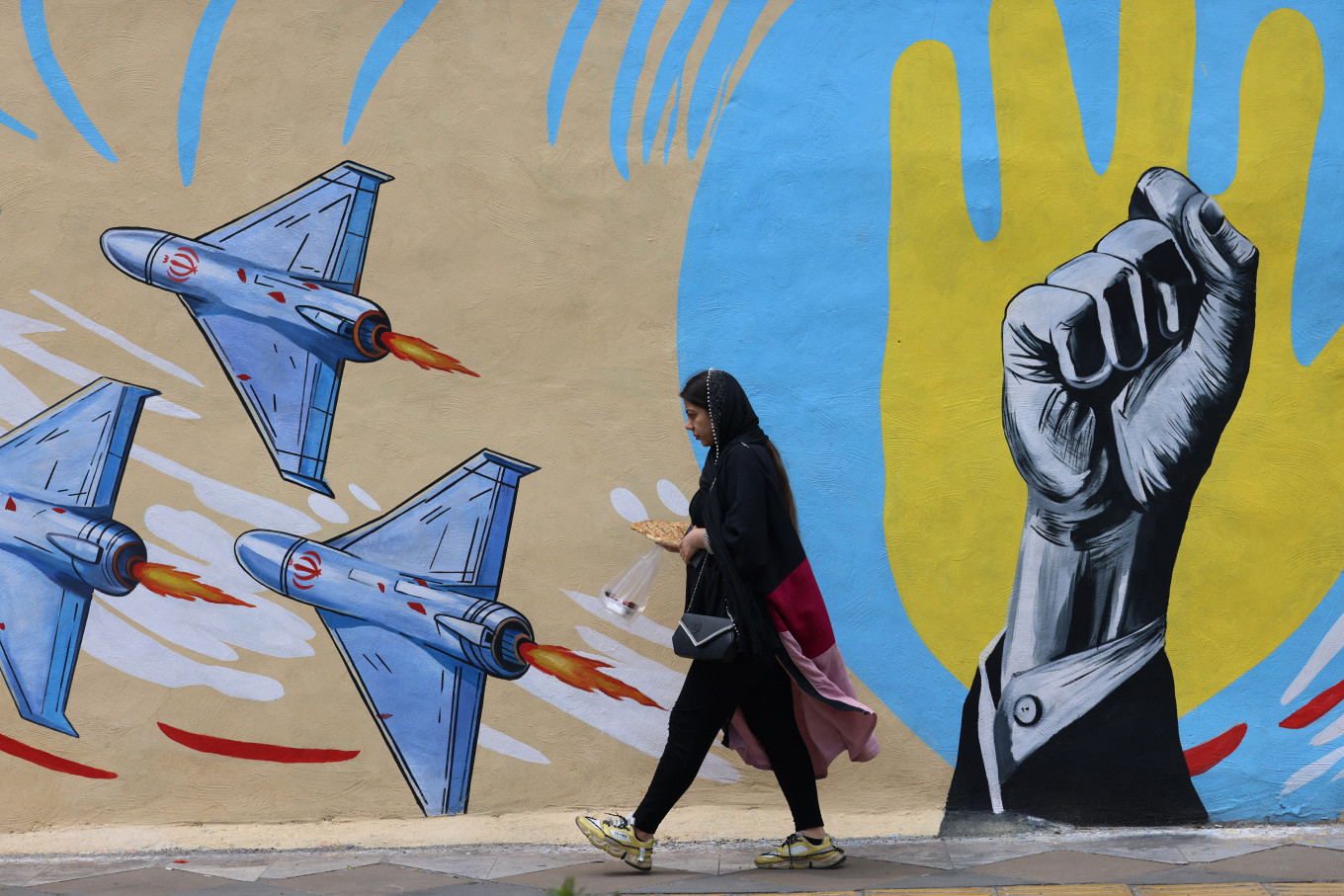 A woman walks past an anti-United States and anti-Israel mural on April 8 in Tehran. (AFP/Atta Kenare)
N
o one knows whether the ceasefire between the United States and Iran will pave the way for a diplomatic settlement to end the war. But two things are already clear: The US' strategic credibility has been dealt a severe blow, and the Gulf states have ended up in an exceptionally unenviable position.
The Gulf states are, for the most part, strategic hedgers. Despite their acute vulnerability, rooted not least in their geography, they have not secured formal security guarantees from an external power. Instead, they emphasize accommodation, attempting to strike a balance between protectors (especially the US) and threateners (such as Iran).
But this does not diminish the importance of the informal US security guarantee, which has been essential to the Gulf states since the 1979 Iranian Revolution. These countries know that the US guarantee is not free, so they have sought to ensure that their well-being is in US interest by hosting US military bases and propping up the petrodollar system.
Over the last 15 years, however, the Gulf states’ faith in US protection has weakened, beginning when US President Barack Obama’s administration implicitly supported the 2011 Arab Spring uprisings, and ultimately backed NATO-led military action against Libyan dictator Muammar el-Gaddafi. This alarmed the Gulf states, which feared being caught up in the upheaval. Only Qatar saw these events as an opportunity, and moved to strengthen the regional influence of the Muslim Brotherhood, which Saudi Arabia and the United Arab Emirates regard as a terrorist group.
The 2015 Joint Comprehensive Plan of Action compounded the Gulf states’ fears. While the deal promised to limit Iran’s nuclear program, Iran’s neighbors worried that the JCPOA’s terms were too narrow, enabling the country to use sanctions relief to channel more funding toward ballistic missiles and regional proxies. Obama embraced it anyway, an obvious sign of these countries’ lack of influence in Washington. Add to that America’s declining dependence on imported oil, and the underpinnings of the Gulf’s relationship with the US appeared to be cracking.
Enter Donald Trump. By withdrawing the US from the JCPOA in 2018, he gave the Gulf states hope that their ties to the US could be renewed. To support this outcome, Bahrain and the UAE signed the Abraham Accords, which paved the way for normalization of diplomatic relations with Israel.

Nonetheless, when Iranian drones attacked oil-processing facilities operated by Saudi Aramco, Saudi Arabia’s state-owned oil company, in 2019, the US did nothing. This trend continued under Trump’s successor, Joe Biden: the US refrained from getting involved after Iranian proxies carried out an attack on the UAE in 2022.