TheJakartaPost
Please Update your browser
Your browser is out of date, and may not be compatible with our website. A list of the most popular web browsers can be found below.
Just click on the icons to get to the download page.


Popular Reads
Top Results
No results found. Please check your search term and try again
Can't find what you're looking for?
View all search results
Popular Reads
Top Results
No results found. Please check your search term and try again
Can't find what you're looking for?
View all search resultsOil, gas and coal are officially a systemic financial risk
As geopolitical shocks turn the global energy market into an "everything crisis", the shift from volatile commodities to stable renewable infrastructure is no longer just a climate goal; it is a financial necessity.
Change text size
Gift Premium Articles
to Anyone
Share the best of The Jakarta Post with friends, family, or colleagues. As a subscriber, you can gift 3 to 5 articles each month that anyone can read—no subscription needed!
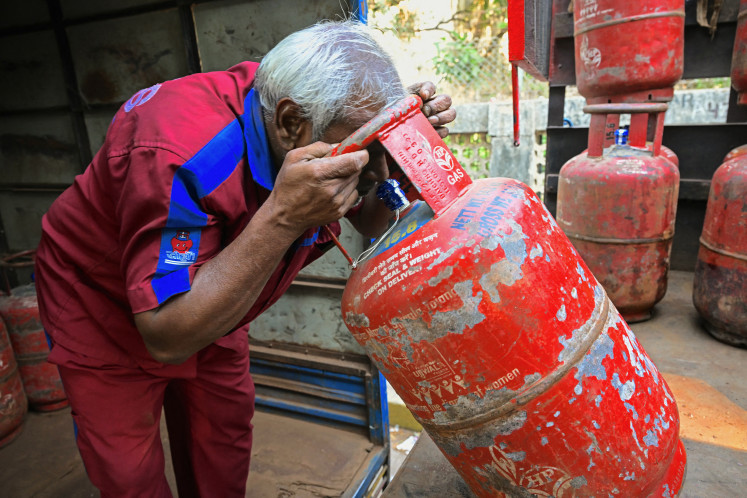
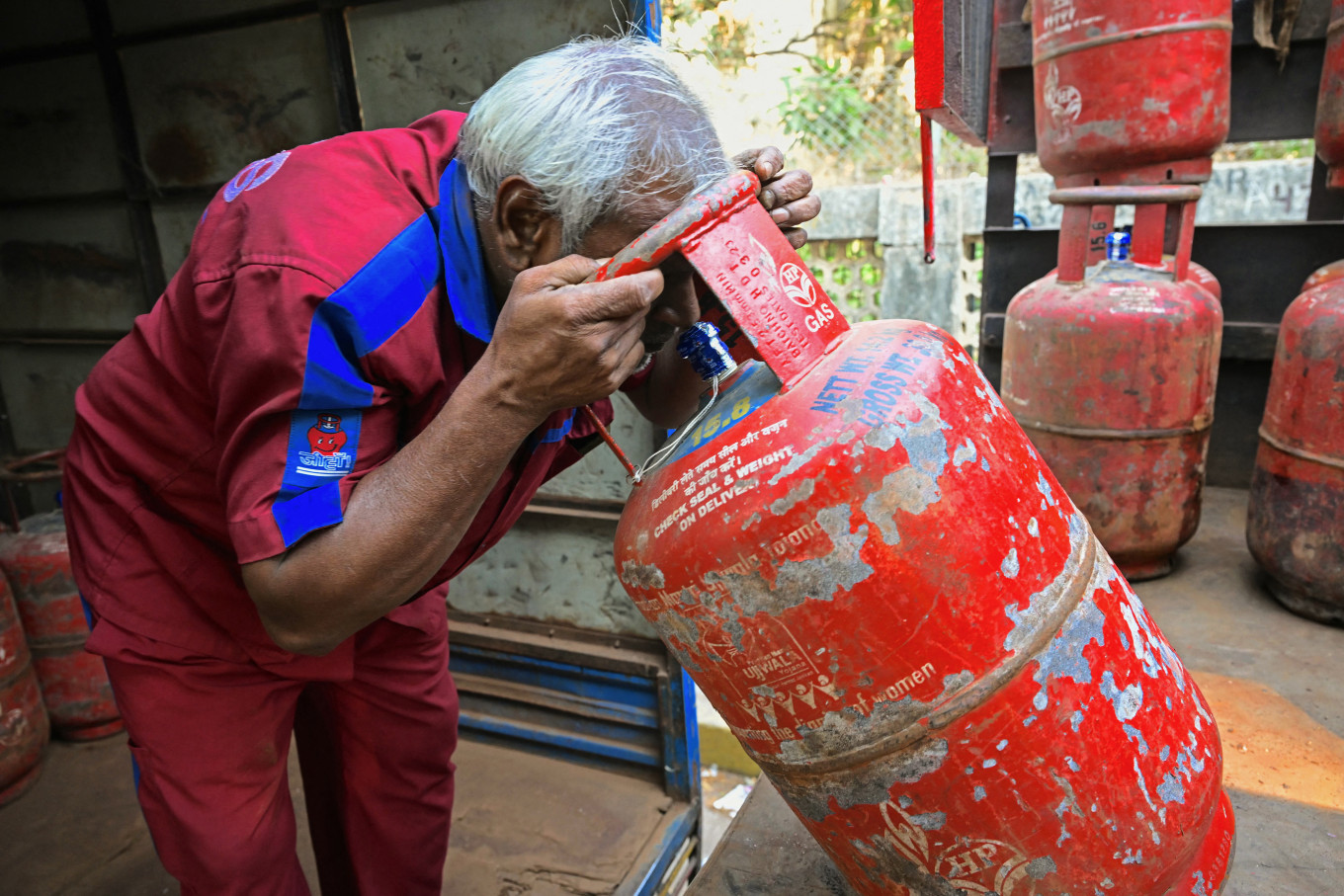 A deliveryman inspects a cylinder of liquefied petroleum gas (LPG) for leakage March 10, 2026, while unloading a batch of cylinders from a truck at a distribution point in Mumbai, India. (AFP/Indranil Mukherjee)
T
he ongoing war in Iran has triggered what analysts describe as the most serious global energy shock since the 1970s oil crisis, or perhaps worse. We are undergoing a domino effect where “the oil crisis has become the everything crisis” (CNN), and governments around the world are scrambling to manage inflation for consumers as well as the impact on industries.
This is not just a price crisis. These shocks reverberate through credit markets, insurance systems and sovereign balance sheets, edging the world toward a global financial crisis.
At a surface level, there appear to be traditional winners. Demand for coal has increased, described by some as a windfall and “comeback” for the coal sector (The Economist).
Historically, oil, gas and coal have functioned as substitutes: When oil is disrupted, gas or coal can act as buffers, and vice versa. Energy portfolios often diversify across these three commodities on the assumption that disruption in one will be hedged by another.
Despite being different commodities, however, all three rely on a concentrated number of suppliers, long logistical supply chains and complex trade agreements. Because they are treated as substitutes, shocks to one inevitably affect the others. A winner today can quickly become a loser tomorrow.
The evidence increasingly shows that all three are risky bets.

Liquefied natural gas (LNG), once viewed as a “transition fuel”, is highly exposed to the same geopolitical and logistical risks as oil. With around 20 percent of the global LNG supply removed, prices have spiked 143 percent, particularly in Asia where import dependence is high.